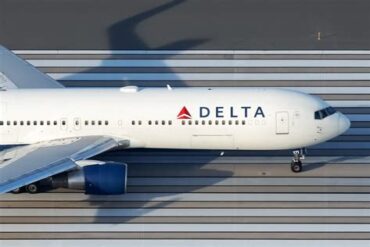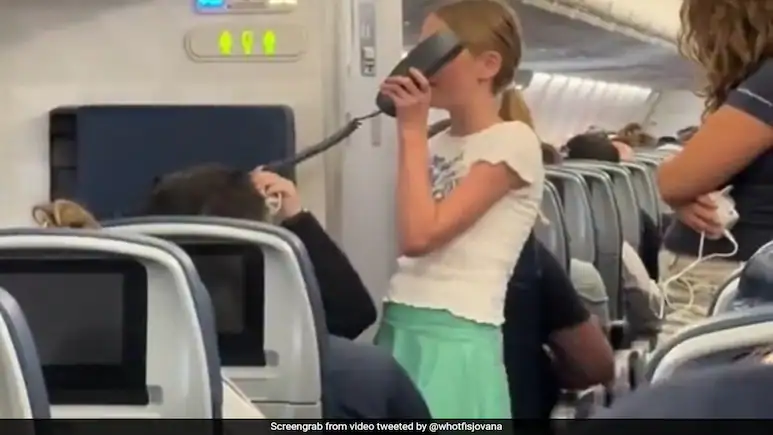
In a moment that quickly became viral for all the wrong reasons, Delta Air Lines found itself at the center of social media controversy after a young girl’s impromptu performance of “How Far I’ll Go” from Disney’s Moana disrupted an already delayed flight to Orlando. What some hailed as heartwarming, many others described as the culmination of their “worst nightmare and personal hell.”
Flight Delay Turns Into Unexpected In-Flight Entertainment
The chaos began as Delta flight passengers were already enduring a substantial delay. Originally postponed due to severe weather, the flight to Orlando faced a two-hour standstill on the tarmac. Once in the air, things took another turn when the plane was unable to land immediately, circling its destination for an additional two hours. What might have been just another unfortunate delay soon escalated into a polarizing spectacle when a flight attendant invited a child to sing over the cabin intercom system.
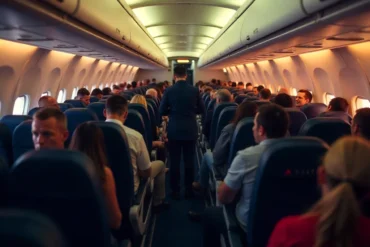
Passengers who had already missed connections and sat stewing in frustration were suddenly treated—or subjected—to a full performance of How Far I’ll Go. While the child’s rendition may have been heartfelt, the circumstances amplified passengers’ mounting irritation. As the lyrics echoed through the aircraft, many passengers found their in-flight entertainment abruptly cut off, replaced by a live performance none of them had agreed to witness.
Social Media Reactions: A Tale of Two Sides
The incident might have remained confined to the aircraft cabin if not for social media. Passengers quickly took to TikTok, X (formerly Twitter), and Instagram to share clips of the performance. One widely shared video shows passengers half-heartedly singing along, while others grimace in visible discomfort. The online commentary was immediate and polarizing.
One TikTok user commented: “NEVER PERFORM FOR PEOPLE BEING HELD CAPTIVE ???.” Another user expressed, “This is actually my worst nightmare and personal hell.” Perhaps the most scathing remarks came not at the girl, but at the parents: “No hate to the girl, but the PARENTS should know how to read a room. Not everything should be centered around your child. She isn’t Moana. Life isn’t a Disney movie.”
Delta Issues Official Statement Amidst Growing Criticism
As the clip amassed hundreds of thousands of views, Delta Air Lines was prompted to issue an official response. In a statement shared with Newsweek, the airline remarked, “We appreciate the customer sharing her talents and apologize to our customers for the delay in their travels.” Though brief, the statement tried to strike a balance between acknowledging the girl’s intentions and apologizing to affected passengers.
Yet, many felt the statement lacked sincerity or accountability. Delta did not clarify whether this kind of performance was authorized or encouraged, nor did they address the interruption of onboard entertainment systems. For customers, already frustrated by the prolonged delay, the vague response was seen as a corporate attempt to sidestep real criticism.
Parenting in Public Spaces: Where’s the Line?
This incident raises broader questions around parental responsibility in confined public spaces. While the intention to entertain or distract a child during a long and frustrating delay is understandable, the decision to amplify that child’s voice to the entire cabin was viewed by many as inconsiderate. The distinction between cute and intrusive often hinges on context, and in this case, a captive audience already dealing with fatigue and missed appointments wasn’t feeling charmed.
This isn’t the first time the question of etiquette on flights has sparked debates. From toddlers kicking seats to parents ignoring crying babies, air travel often becomes a microcosm for broader societal tensions about shared space and boundaries. Yet, few incidents have struck quite the same cultural nerve as this.
Viral Culture and the Fine Line Between Fame and Backlash
The desire to go viral or create a memorable moment is often an invisible undercurrent in public behavior. Some speculated that the performance might have been encouraged or recorded in hopes of becoming a light-hearted internet hit. Instead, it sparked outrage.
In an era where TikTok clips and Instagram reels can gain global traction within hours, the motivation to capture “wholesome” content sometimes trumps the consideration of those around. The backlash in this case highlights just how delicate the balance is between celebration and disruption.
Airline Customer Experience: More Than Just Logistics
This incident also underscores how airline customer experience now goes far beyond safe arrival. In an increasingly digital age, every moment on a plane can become content. As passengers grow more vocal and empowered through social media, airlines face increased pressure to manage not just operations, but cabin culture.
While Delta did not endorse the performance explicitly, their failure to prevent or properly manage it was seen by some as symptomatic of a broader lack of situational awareness. With competition fierce in the skies, small moments—good or bad—can heavily influence brand perception.
In contrast, rival airlines like JetBlue and United, often criticized in the past for service mishaps, have recently doubled down on digital listening and rapid incident response strategies. For Delta, this misstep, though minor in logistical terms, might prove costly in reputation.
The Passenger Perspective: Why Consent Still Matters
Perhaps the most critical issue lies in the concept of passenger consent. On a flight, personal autonomy is already reduced—you’re confined in a small space, with no escape until landing. In such a setting, anything unexpected or uninvited becomes amplified. For passengers who had their in-flight entertainment interrupted, the feeling of being forced to listen to a child’s solo felt less like a novelty and more like a violation of personal space.
Some argued that Delta should establish clearer boundaries for what kind of in-cabin announcements or performances are appropriate. Allowing crew to invite passengers—especially children—to address the entire plane without consulting others is a slippery slope.
Lessons for Airlines and Families Alike
While it’s easy to reduce the situation to a viral punchline, it carries valuable lessons for both airlines and traveling families. For parents, empathy and context are vital. A child’s need for distraction is real—but so is every other passenger’s need for peace, especially during stressful situations.
For airlines, it’s time to re-evaluate how cabin crew manage long delays and high-tension moments. Encouraging communal activities, if done with care and consideration, can foster unity. But without consent and a read on the room, these gestures risk backfiring.
Final Thoughts: Singing in the Wrong Key
What was likely meant to be a sweet distraction during a trying moment instead became a flashpoint in the ongoing conversation around shared space, consent, and the performance of joy in high-stress public environments. The young girl’s voice may have been pure, but the timing—and forced nature—of her performance left a sour note for many.
As one viral comment summarized: “She may have sung ‘How Far I’ll Go’, but I was wondering how long I’d be stuck listening.”
Delta may have intended to make the skies friendlier, but in this case, it flew straight into turbulence of a different kind.