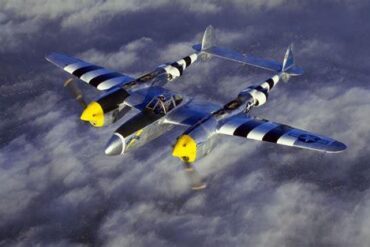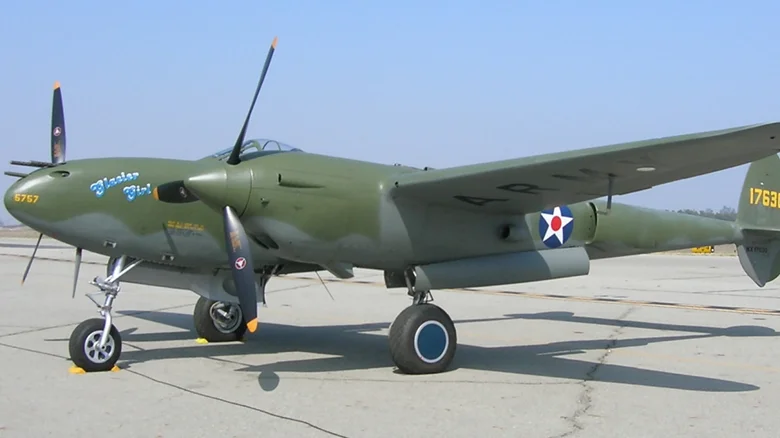
The story of Glacier Girl, a Lockheed P-38 Lightning fighter, reads less like aviation history and more like a resurrection narrative carved out of ice and time. Built during the height of World War II, the P-38 was already a standout aircraft—its twin-boom silhouette and formidable versatility made it one of the most recognizable fighters in the American arsenal. Yet among the thousands produced, none carries a legacy as improbable and captivating as this aircraft that vanished beneath Greenland’s frozen expanse, only to return to the skies decades later.
In July 1942, Glacier Girl was part of a squadron attempting a transatlantic journey to bolster Allied forces in Europe. Mechanical issues and worsening weather forced the formation—two B-17 Flying Fortress bombers and six P-38 fighters—to make an emergency landing on the Greenland ice sheet. What began as a temporary setback became a permanent abandonment. Crews were safely evacuated, but the aircraft were left behind, slowly entombed by accumulating snow and shifting ice. Over the years, the planes disappeared beneath a staggering 268 feet of solid ice, effectively erased from sight and memory.
For half a century, Glacier Girl remained frozen in silence, preserved in a subzero tomb. It wasn’t until 1992 that the Greenland Expedition Society undertook an ambitious mission to locate and recover the lost aircraft. Using advanced radar technology, they pinpointed the buried squadron and began a painstaking excavation process. What they found astonished even seasoned experts: despite decades under immense pressure and extreme cold, large portions of the aircraft remained remarkably intact.
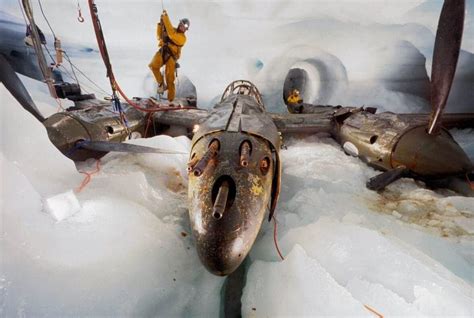
Recovering Glacier Girl was no simple dig. Engineers had to melt vertical shafts through the ice, working in hazardous conditions to extract the aircraft piece by piece. The process took four months and cost approximately $638,000, but that was only the beginning. Once retrieved, the disassembled fighter was transported to Middlesboro, Kentucky, where a dedicated team began the long journey of restoration. The goal was not merely preservation—it was to make Glacier Girl fly again.
The Decade-Long Restoration of a WWII Icon
Restoring a P-38 Lightning is no ordinary undertaking, and Glacier Girl presented unique challenges. Exposure to ice had preserved some components while warping or destroying others. Engineers and historians worked meticulously, sourcing rare parts, fabricating replacements, and restoring original systems wherever possible. Incredibly, about 80% of the aircraft’s original components were reused, a testament to both wartime manufacturing quality and the preservative effects of the ice.
Initially projected to take two years, the restoration stretched into a full decade, with total costs approaching $3 million. Every rivet, wire, and panel demanded precision. The team wasn’t just rebuilding a plane—they were reconstructing a piece of history, ensuring it remained authentic while meeting modern safety standards.
Return to the Skies: A 60-Year Comeback Flight
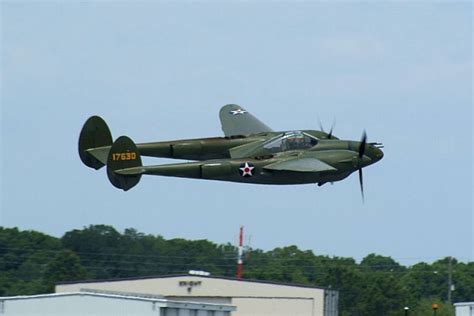
In October 2002, Glacier Girl achieved what once seemed impossible. Renowned pilot Steve Hinton, a respected figure in the Warbird community, took the restored fighter into the air for its first flight since 1942. The 30-minute journey was more than a test flight—it was a symbolic triumph of engineering, determination, and historical preservation.
The aircraft performed beautifully, reaffirming the P-38’s reputation as one of the most advanced fighters of its era. Designed for speed, range, and heavy firepower, the Lightning had once dominated skies across multiple theaters of war. Now, six decades later, it proved it still had life left in its wings.
Why Glacier Girl Matters in Aviation History
Today, Glacier Girl stands as one of only six airworthy P-38 Lightnings remaining out of the 10,113 originally built. That rarity alone makes it invaluable, but its story elevates it further. This is not just a surviving aircraft—it is one that was lost, buried, and reborn.
The plane has changed hands over the years, eventually becoming a centerpiece of the Air Legends Foundation and later appearing at the Lone Star Flight Museum in Houston. Wherever it flies, it draws awe from crowds, not just for its distinctive design but for the extraordinary journey it represents.
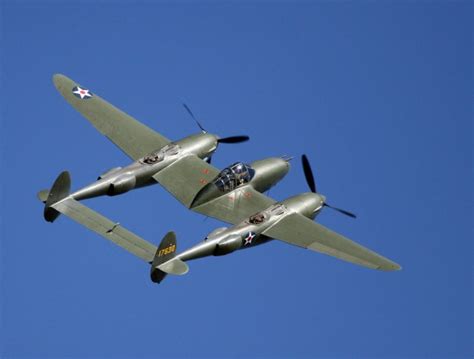
Glacier Girl embodies more than technological achievement; it reflects the resilience of human ingenuity. From a forced landing on a remote ice sheet to a triumphant return to the skies, its story underscores a powerful truth: even after decades beneath crushing ice, history can be brought back to life—and sometimes, it can still fly.