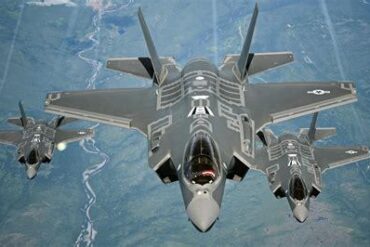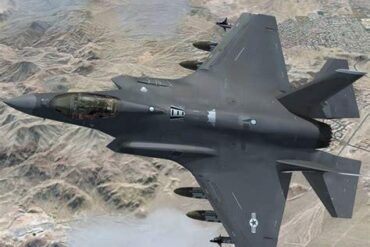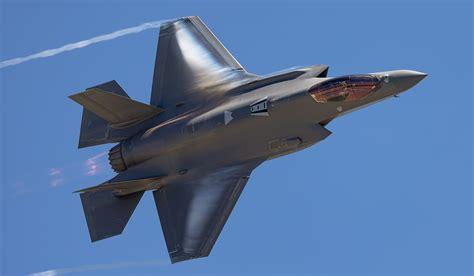
The question of the average lifespan of the F-35 fighter jet cuts to the heart of modern airpower strategy. In an era where stealth, sensor fusion, and networked warfare define battlefield dominance, longevity is not just a technical metric — it is a strategic commitment. The F-35 Lightning II is designed to serve not merely as a fighter, but as the backbone of allied tactical aviation for decades. Understanding how long it can realistically remain in service reveals both engineering ambition and operational reality.
The Official Airframe Lifespan of the F-35
The baseline figure is precise: 8,000 flight hours per airframe. This number, drawn from U.S. Department of Defense acquisition reporting, represents the structural lifespan engineered into each aircraft from the moment it leaves the production line. “Airframe” refers to the entire structural body of the jet. Engines can be swapped. Avionics can be upgraded. Software can be rewritten. But every hour spent in the sky counts toward that finite structural clock.
An 8,000-hour lifespan places the F-35 firmly within the range expected of modern fourth- and fifth-generation fighters. However, unlike legacy aircraft, the F-35 was engineered with stealth coatings, internal weapons bays, and advanced composite materials that demand precise maintenance cycles. Longevity is therefore not just about structural endurance, but sustainment discipline.
How Annual Flight Hours Shape Real-World Service Life
Flight hour accumulation varies significantly by variant. According to government sustainability data, the F-35A averages approximately 187 flight hours per year, while the carrier-based F-35C averages roughly 336 hours annually. These numbers dramatically influence projected calendar lifespan.
At 187 hours per year, an F-35A could theoretically remain operational for about 43 years before reaching its 8,000-hour limit. The more intensively flown F-35C would approach that limit in roughly 24 years. These projections are mathematical models, not guarantees. Operational tempo, combat deployments, and evolving training requirements can accelerate or slow the clock.
This is where theory meets reality. Aircraft rarely operate under perfectly consistent annual usage patterns. A surge deployment or extended maritime patrol cycle can significantly compress projected timelines.
Maintenance, Availability, and the Sustainment Challenge
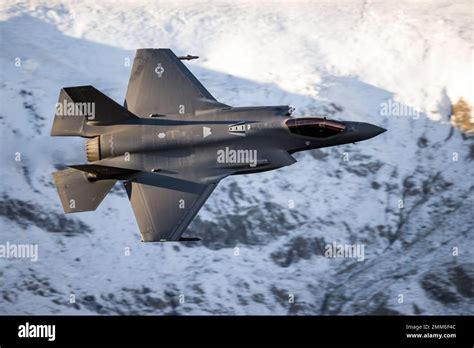
Structural lifespan alone does not determine how long the F-35 will remain in service. Availability rates matter just as much. A 2024 internal audit by the Department of Defense Office of Inspector General revealed that only about 50% of F-35 aircraft were mission capable during that fiscal year. Sustainment bottlenecks, spare parts shortages, and maintenance delays limited how often jets actually flew.
Paradoxically, lower availability can extend calendar lifespan. If aircraft are flying fewer hours annually, they accumulate structural fatigue more slowly. However, this is not a strategic advantage — it signals logistical friction rather than deliberate preservation.
The F-35’s advanced stealth coatings and integrated systems demand specialized maintenance environments. Unlike older fighters that could tolerate rugged field conditions, the Lightning II operates more like a flying data center wrapped in composite armor. That sophistication increases capability but complicates sustainment.
Variant Differences and Service Entry Timeline
The F-35 program began operational fielding in 2011. The F-35A entered U.S. Air Force service first and achieved regular operational status by 2016. The F-35B, designed for short takeoff and vertical landing operations, became operational with the U.S. Marine Corps in 2015. The carrier-based F-35C joined Navy operational service in 2019.
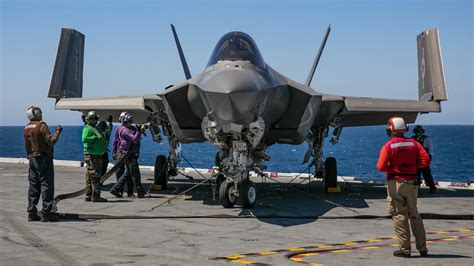
Each variant faces different structural stresses. Carrier landings subject the F-35C to repeated high-impact arrestments. The F-35B’s lift fan system introduces additional mechanical complexity. These operational environments influence wear patterns, though the 8,000-hour structural baseline remains consistent.
Planned Operational Horizon: Into the 2070s and Beyond
Despite theoretical hour limits, the U.S. military intends to operate the F-35 fleet until approximately 2077 to 2088, depending on service branch and modernization cycles. This extended timeline suggests mid-life upgrades, structural refurbishments, and evolving mission roles will sustain relevance long after early production jets approach retirement thresholds.
Historically, fighter aircraft often exceed initial structural expectations through service life extension programs. Reinforcement of key structural components, advanced fatigue monitoring systems, and software-driven capability upgrades can transform a finite-hour platform into a multigenerational asset.
The F-35 was never designed as a short-term solution. Its architecture anticipates decades of iterative modernization. Sensors can be enhanced. Data links can be upgraded. Weapons integration can evolve. Structural hours are finite, but capability growth is not.
In practical terms, the average lifespan of the F-35 fighter jet sits at 8,000 flight hours, translating to roughly two to four decades of operational use depending on variant and tempo. Strategically, however, its lifespan is measured less in hours and more in influence. The Lightning II is engineered to remain a defining element of allied airpower well into the second half of the 21st century.