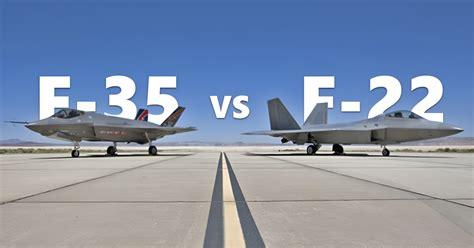
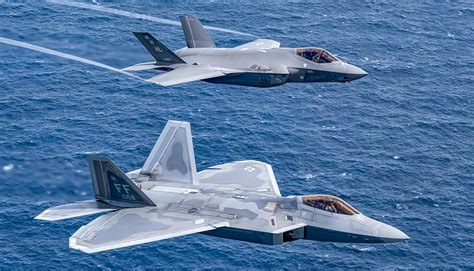
The term stealth fighter conjures images of near-invisible aircraft slicing through hostile skies, avoiding detection while striking with precision. Among modern warplanes, the F-22 Raptor and the F-35 Lightning II are heralded as paragons of stealth and technological superiority. Yet despite their classification under the same fifth-generation banner, their approaches to stealth differ significantly—raising the critical question: which is stealthier, the F-22 or the F-35?
Fundamental Design Philosophies: Air Superiority vs. Multirole Versatility
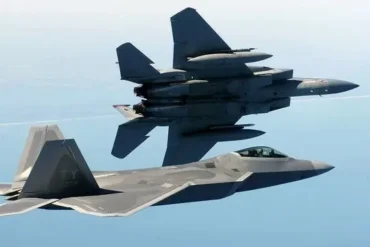
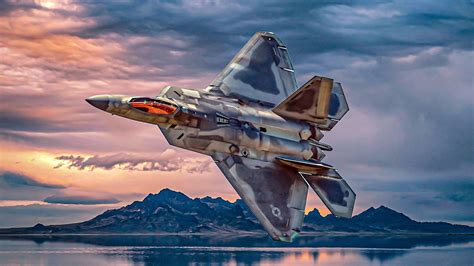
The F-22 Raptor, developed by Lockheed Martin, was conceived with a singular mission in mind: air dominance. This allowed designers to emphasize stealth performance over all other considerations. The aircraft’s angular surfaces, internal weapon bays, and meticulously engineered coatings were all built to make the Raptor virtually invisible to radar, especially from the front.
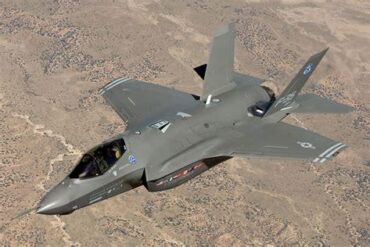
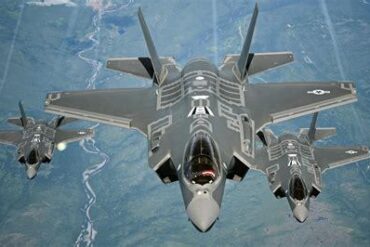
In contrast, the F-35 Lightning II had to serve as a multirole platform from the outset. It had to perform air-to-ground strikes, electronic warfare, reconnaissance, and support missions across various military branches. That broader mission scope required compromises. Designers had to balance stealth with maintainability, affordability, and sensor fusion capabilities—resulting in a jet that, while still stealthy, is not quite as elusive as its older cousin.
Radar Cross Section (RCS): The Raptor’s Head-On Superiority
When it comes to radar stealth, the F-22 remains the gold standard. Its design is optimized specifically to defeat X-band radar, the frequency band most commonly used by adversary fighter jets and air defense systems. Thanks to the aircraft’s angular faceting, edge alignment, and radar-absorbent material (RAM) coatings, the F-22’s radar cross section is significantly smaller—especially from a head-on perspective.
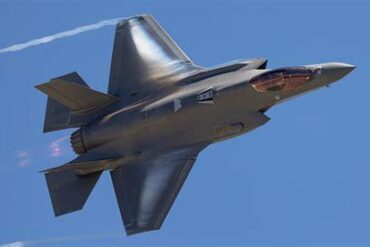
The F-35 still maintains a low-observable profile, but its stealth characteristics are not as refined. Its slightly rounder geometry, larger canopy, and compromises made for cost efficiency result in a somewhat larger RCS, particularly from the side and rear. This is not to say the F-35 is ineffective—it can still penetrate contested airspace—but when it comes to raw radar invisibility, the F-22 is ahead.
Infrared Signature: Heat Management and Engine Design
Stealth isn’t just about radar evasion. Infrared detection systems (IRST) are becoming increasingly sophisticated, capable of picking up the heat signatures emitted by aircraft engines. Here again, the F-22’s design excels.
The Raptor features flat, shielded thrust-vectoring nozzles, which help to diffuse and mask the heat from its twin engines. These nozzles are also partially buried and strategically angled to reduce the aircraft’s heat footprint from the ground and air.
By contrast, the F-35 employs a single, circular nozzle that is more exposed to thermal sensors. While the jet incorporates advanced heat sinks and internal ducting to reduce IR emissions, it simply cannot match the F-22’s infrared stealth performance.

Acoustic Signature: Sound Matters in Stealth
Surprisingly to some, sound is also a stealth factor. While it’s true that modern fighter jets are loud by default, quieter operations can be critical in certain tactical scenarios, especially at lower altitudes.
The F-22 is notably quieter than the F-35. Its Pratt & Whitney F119 engines, combined with serrated nozzle edges and acoustic baffling, help to muffle its sound signature. Furthermore, the F-22 is capable of supercruise, sustaining supersonic speeds without using afterburners, which significantly reduces engine noise during high-speed flight.
In contrast, the F-35’s F135 engine is the most powerful fighter jet engine ever built, but it is also among the loudest. Takeoffs and low-altitude maneuvers generate acoustic signatures that are easily detectable. The F-35 lacks supercruise, often relying on afterburners that increase both noise and IR emissions.
Visual Signature: The Importance of Appearance in Detection
Visual detection still plays a vital role in modern warfare, particularly in dogfight scenarios or during low-altitude reconnaissance. The F-22 Raptor is compact, matte-coated, and carefully contoured to minimize reflection and visibility. Its fuselage, wing shapes, and panel alignments all contribute to a reduced visual profile, making it harder to spot from the ground or air.
The F-35, while sleek in its own right, has a bulkier frame, a larger canopy, and a profile optimized for fuel storage and multi-role versatility. This makes it more visible than the F-22 under certain lighting conditions or from specific angles, especially when viewed from above or behind.
Electromagnetic Emissions (EMCON): Silent Hunters vs. Connected Warriors
One of the more subtle aspects of stealth is a jet’s electronic emissions signature, also known as EMCON (Emission Control). In this domain, the F-22 again pulls ahead.
The F-22 was designed to operate with minimal electronic emissions, activating its powerful AN/APG-77 AESA radar only when absolutely necessary. When active, the radar operates in low-probability-of-intercept (LPI) modes with frequency agility, making it difficult for enemy systems to detect.
Conversely, the F-35’s strength lies in constant connectivity. Its advanced systems like MADL (Multifunction Advanced Data Link), DAS (Distributed Aperture System), and EOTS (Electro-Optical Targeting System) require continuous communication. While these signals are encrypted and hard to intercept, their emission levels are higher, increasing detectability in high EMCON threat environments. In short, the F-35 is more like a node in a networked battlespace, while the F-22 operates like a lone hunter—silent, stealthy, and lethal.
Survivability vs. Stealth: The Trade-off That Defines the F-35
Though the F-22 wins in nearly every category of stealth—radar, infrared, acoustic, visual, and electromagnetic—it’s important to understand why the F-35 was built differently. The F-35 was never meant to replace the F-22 in air superiority roles. Instead, it was envisioned as a versatile multirole platform, capable of operating from aircraft carriers, austere airstrips, and in coordinated joint missions across the globe.
The trade-offs in stealth allowed the F-35 to integrate world-leading sensor fusion, modular weapons systems, advanced avionics, and superior interoperability with NATO and allied forces. While not the stealthiest aircraft, it is arguably the most technologically integrated fighter jet ever built.
Conclusion: The Stealth Champion Is Clear
In the realm of pure stealth, the F-22 Raptor remains the undisputed champion. Its lower radar cross section, superior IR suppression, quieter acoustic profile, reduced visual visibility, and stricter electromagnetic discipline all point to a design optimized for surviving and dominating in contested airspace.
The F-35 Lightning II, while still stealthy and revolutionary in its own right, makes deliberate compromises to fulfill a broader mission set. It is the better aircraft for networked operations, ground attack, and multirole missions, but when it comes to vanishing from enemy sensors, the F-22 still flies in a league of its own.
Ultimately, the question isn’t just which jet is stealthier—it’s about what type of war each was designed to fight.