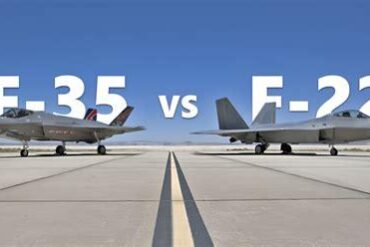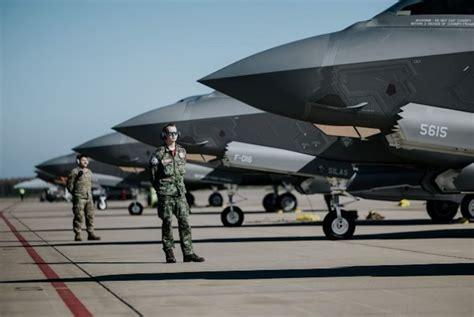
The global defense landscape has been reshaped by Lockheed Martin’s F‑35 Lightning II program, a multinational venture uniting 19 partner nations in the acquisition of this cutting-edge stealth fighter. No country can rely solely on domestic production to meet every strategic requirement, so governments look abroad for platforms that deliver advanced capabilities, interoperability, and long‑term support. Since its combat debut in 2015, the F‑35 has become the centerpiece of air fleets from Tokyo to Canberra, prompting widespread investment in aircraft that combine supersonic speed, low observability, and networked sensors into a single, versatile platform.
The Rise of a Fifth‑Generation Fighter
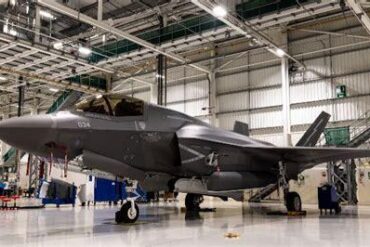
From Mach 1.6 top speeds to integrated electronic warfare suites, the F‑35 Lightning II represents a generational leap over legacy jets. Its stealth design minimizes radar cross‑section, allowing it to penetrate contested airspace with minimal detection. Advanced radar and targeting systems fuse data from onboard sensors and allied assets to present pilots with an unrivaled situational picture. Beyond air‑to‑air combat, the F‑35 excels in ground-attack and intelligence‑gathering roles, giving commanders a single asset capable of close air support, strategic strike, reconnaissance, and electronic attack—thus reducing logistical footprints and training burdens for partner air forces.
F‑35 Variants and Their Strategic Roles
Lockheed Martin produces three core F‑35 variants, each tailored for specific operational environments:
- F‑35A: Conventional takeoff and landing (CTOL) version, most widely ordered due to ease of maintenance and lower unit cost.
- F‑35B: Short takeoff/vertical landing (STOVL) capability enables operations from austere fields and amphibious ships, making it a favorite of small navies and marine forces.
- F‑35C: Equipped with larger wings and reinforced landing gear for carrier operations, offering increased range and payload capacity but at higher production cost.
These divergent designs allow partner nations to select the model that best fits their force structure, from runway‑dependent air bases to forward-deployed expeditionary units.
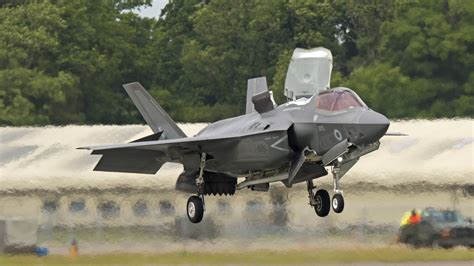
Belgium & Poland: Modernizing Former F‑16 Fleets
Belgium and Poland joined the F‑35 family in 2018 to replace aging F‑16 fleets, ordering 34 and 32 F‑35A airframes respectively. Production for Belgium began in 2022 and for Poland in 2023, but delivery has been gradual. Each country currently “owns” one or two jets, housed at U.S. bases for pilot training and maintenance familiarization. Belgium’s first F‑35A shipped on December 3, 2024, while Poland received its inaugural pair in late 2024. Full fleet deliveries are scheduled through 2025, with Belgian officials anticipating physical arrival of their complete squadron by autumn 2025. Early training ahead of home deployment ensures immediate operational readiness upon arrival.
Denmark’s Measured Rollout and Tech Refresh Challenges
Denmark’s decision in 2016 to acquire 27 F‑35As built upon a decades‑long relationship with Lockheed Martin, stretching back to the T‑33 Shooting Star and F‑16 Fighting Falcon. Parliament approved funding in 2017, and the first aircraft was delivered in 2021 but did not touch Danish soil until 2023. As of May 2025, Denmark has taken delivery of 15 jets, with six remaining at Luke Air Force Base for testing. Final deliveries have been pushed to 2026 due to delays in the Technology Refresh 3 computer core upgrade, a vital component underpinning every F‑35 system. Denmark’s defense planners accept these delays as necessary to ensure the fleet’s future cyber‑resilience and mission effectiveness.
Israel: Pioneering Operational Customization
Israel became the first international F‑35 partner when it selected the aircraft in 2010. The Israeli Air Force received its first two F‑35As in 2016, declared them combat‑ready in 2017, and promptly integrated proprietary electronic warfare and communications systems. As of 2023, Israel officially fields 39 F‑35s, though exact numbers are obscured by regional security events. Iranian media claimed to have downed five Israeli jets in mid‑June 2025; Israel denied these assertions, highlighting the opaque nature of wartime reporting. Regardless, the combination of stealth and bespoke Israeli avionics has given the IAF a qualitative edge in the Eastern Mediterranean theater.
Japan: Balancing Domestic Production with Foreign Technology
Japan’s aerospace industry has long upgraded foreign fighter designs, exemplified by the Mitsubishi F‑2 derived from the F‑16. In 2011, the Ministry of Defense selected the F‑35A as the JSDF’s next-generation fighter, later expanding its order to include the F‑35B STOVL variant for island defense operations. F‑35As are assembled at the Nagoya Final Assembly and Check-Out facility, while F‑35Bs come from Lockheed Martin’s Texas plant. Tokyo plans to acquire 105 F‑35As and 42 F‑35Bs; 38 airframes have arrived by 2025. Production bottlenecks have prompted Japanese military planners to debate upgrading legacy fleets or ordering additional Lightning IIs to maintain readiness amid regional tensions.
United Kingdom: High‑Profile Carrier Strike Capability
The Royal Navy and RAF opted exclusively for the F‑35B variant, ordering 74 jets in Phase 1 and later expanding that commitment to 138. Britain received its first F‑35Bs in 2012, achieving vertical landing proficiency by 2014. RAF Marham, the UK’s Lightning II hub, saw two additional jets arrive on May 8, 2025, bringing the active total to 39 with 48 expected imminently. These stealth fighters form the backbone of the UK Carrier Strike Group, operating from HMS Queen Elizabeth and shore bases to project power globally.
Netherlands: A Key Production Partner with Security Concerns
As the second foreign partner to join the F‑35 program, the Netherlands ordered 57 (later possibly 58) F‑35As and contributes vital components to the global supply chain. By September 2024, 40 Dutch‑flown jets had been delivered. However, concerns within The Hague focus on U.S. control over beyond‑line‑of‑sight communications and targeting systems—a perceived “kill switch” that could disable Dutch jets during political disputes. Despite these uncertainties, the Netherlands remains deeply invested in the F‑35’s multinational maintenance and upgrade network.
Republic of Korea: Rapid Fielding amid Regional Threats
Facing a belligerent northern neighbor, South Korea ordered 40 F‑35As in 2014 to replace F‑4 and F‑5 fleets, receiving the first airframe in 2019. By 2022, all 40 jets were operational. In 2023, the ROKAF requested 20 additional F‑35As, initially earmarked for a new transport vessel capable of hosting fighters; that ship is now designated for unmanned drones, leaving the second order’s fate uncertain. The existing stealth fleet enhances deterrence on the peninsula and integrates seamlessly with U.S. and allied forces during joint exercises.
Norway & Australia: Completing Orders, Expanding Roles
Norway pioneered early F‑35 adoption, ordering 52 F‑35As in 2008. The first jet flew in 2015, arrived domestically in 2017, and the Royal Norwegian Air Force (RNoAF) completed its full fleet delivery on April 1, 2025—becoming the first partner to fulfill its original commitment. RNoAF will employ its Lightning IIs for national defense and NATO rapid response duties.
Australia ordered 72 F‑35As, receiving the first two in December 2018 and the final nine of the original batch in December 2024—these airframes shipped with the Technology Refresh 3 upgrade. Canberra subsequently raised its total requirement to 100 jets, partnering with over 70 Australian firms to build parts and support global maintenance, creating thousands of local jobs and cementing Australia’s role in the F‑35 supply chain.
Italy & the United States: From Domestic Assembly to Fleet Supremacy
Italy blends domestic production with procurement, ordering 60 F‑35As and 30 F‑35Bs. The first Italian-assembled jet flew in 2015, based at Amendola by 2016. By September 2024, Italy had received 90 airframes and expanded its order by 15 A and 10 B to reach 115 under a €7–7.5 billion budget increase.
As the F‑35’s creator, the United States remains the largest operator. Since selecting the jet in 2011, the USAF ordered 1,763 F‑35As, the USMC 353 F‑35Bs and 67 F‑35Cs, and the USN 273 F‑35Cs. Today, the U.S. fleet comprises 1,707 jets (over 500 A, ~100 C and the remainder B), with continued orders ensuring the Lightning II dominates U.S. military aviation into the coming decades.
Emerging Customers and Procurement Debates
Several nations that placed orders are still awaiting their first deliveries: Canada (88 F‑35As ordered in 2023), the Czech Republic (24 A in 2024), Finland (64 A in 2021), and Singapore (8 A and 12 B). Political and fiscal reviews in Canada and Switzerland—prompted by cost concerns and the specter of U.S. software control—may alter or delay these acquisitions. As procurement debates unfold, Lockheed Martin must balance production rates with partner priorities and geopolitical sensitivities, ensuring the F‑35 Lightning II remains the premier fifth‑generation fighter for years to come.