Singapore Airlines and Cathay Pacific stand as two of Asia’s most influential long-haul carriers, each anchored by a reputation for refinement, reliability, and a global reach that far exceeds the size of their home markets. Both rely heavily on connecting traffic, weaving together journeys that span Europe, Asia, Australia, and North America from their powerful hubs at Singapore Changi Airport and Hong Kong International Airport. Their strategic positions have allowed each airline to build a formidable widebody fleet, the very foundation of their intercontinental operations. In assessing which carrier holds greater widebody strength, several layers demand exploration: fleet size, fleet composition, cargo operations, and the regional networks feeding their long-haul routes.
Singapore Airlines carried 26.5 million passengers in FY2024, while Cathay Pacific transported 22.8 million in 2024. Passenger numbers, however, tell only part of the story. Beneath the surface lies a sharper distinction: Cathay Pacific ultimately fields the larger widebody fleet, giving it a structural advantage in long-haul capacity even as Singapore Airlines continues to dominate brand perception and service accolades.
Strategic Geography and Long-Haul Identity
Both carriers are shaped profoundly by geography. Singapore Airlines benefits from the unique connectivity of Southeast Asia, with Singapore serving as one of the world’s most efficient transfer hubs. Its position allows it to draw travelers from South and Southeast Asia, linking them seamlessly to Europe, Australia, and the United States.
Cathay Pacific, meanwhile, sits atop Hong Kong’s status as a gateway to China and a global financial capital. Its location has long made it one of the most convenient jumping points for transpacific travel, particularly for routes into North America. The different geographic dynamics create different fleet needs: Singapore Airlines leans on fuel-efficient long-range aircraft capable of ultra-long-haul service, while Cathay Pacific balances long-distance capabilities with aircraft optimized for high-frequency Asian routes.
A Detailed Look at Their Widebody Fleets
Widebody aircraft remain the backbone of both airlines, powering intercontinental flights and strengthening their reputations as global carriers. Their operating philosophies, however, diverge.
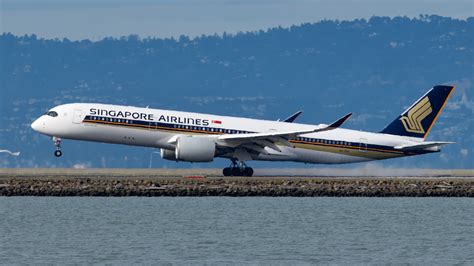
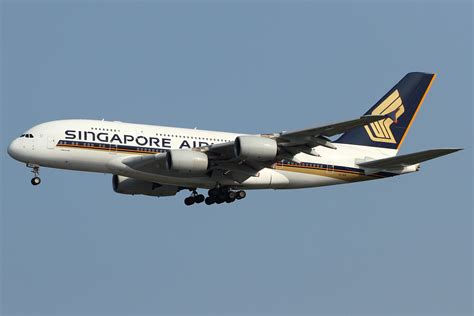
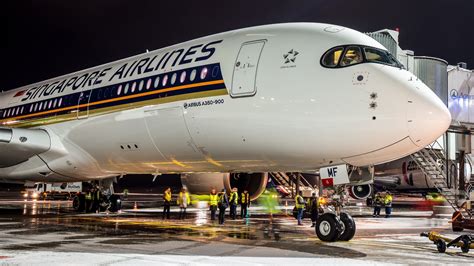
Singapore Airlines centers its long-haul operations around the Airbus A350-900. This aircraft type forms the largest share of its fleet and supports missions ranging from regional hops to ultra-long-haul routes such as Singapore–New York. The airline also maintains a nine-frame fleet of A380-800s, a symbolic reminder of its history as the A380’s launch customer and a statement of luxury, used primarily on trunk routes with intense demand.
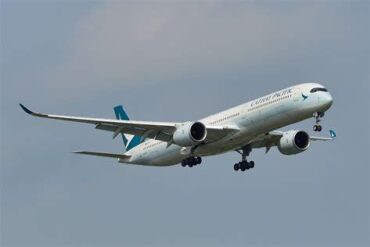
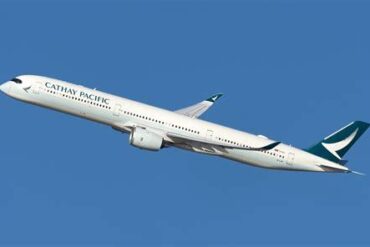
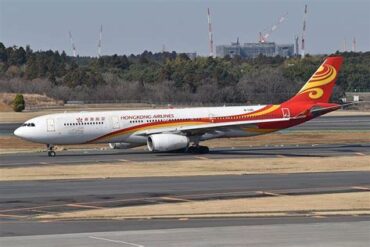
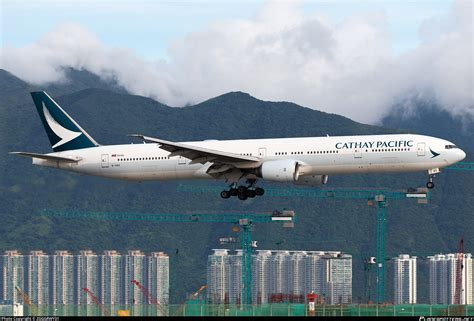
Cathay Pacific, by contrast, deploys a more diversified widebody family. Its Airbus A330-300 fleet covers dense regional markets across Asia, while the A350-900 and A350-1000 offer efficient long-haul capability. The airline also relies heavily on the Boeing 777-300ER, one of the world’s most versatile long-range aircraft.
In total, Singapore Airlines operates 116 widebodies, while Cathay Pacific leads with 136. That difference is significant: Cathay’s larger widebody footprint reflects Hong Kong’s historic role as a major transit gateway and the carrier’s wider emphasis on long-range and high-capacity regional operations.
Fleet Evolution and Long-Term Strategy
Both airlines once operated major Boeing 747 fleets, and both have gradually replaced their four-engine giants with fuel-efficient twin-engine aircraft. Singapore Airlines retired the A330-300 in 2020 and shifted toward a more streamlined mix built around the A350 and Boeing 787-10. Cathay Pacific followed a similar path, phasing out older 747s and reshaping its operation around the A350 family and the 777.
Looking forward, each carrier’s long-term orders reveal deeper strategic intentions. Singapore Airlines has 31 Boeing 777X aircraft on order, signaling its intent to maintain a strong presence in ultra-long-haul markets that demand high capacity and comfort. Cathay Pacific, meanwhile, has committed to acquiring 30 Airbus A330-900neos, which will modernize its regional widebody fleet and further improve fuel efficiency.
These procurement decisions underscore each airline’s identity: Singapore Airlines doubling down on long-range global prestige, Cathay Pacific enhancing regional versatility to support its busy Asian network.
Narrowbody Operations: Small Fleets With Big Purpose
Unlike many Asian airlines, both carriers rely only lightly on narrowbodies. Cathay Pacific operates the Airbus A321neo, a modern narrowbody ideal for short-haul routes into mainland China and nearby Asian cities. Singapore Airlines uses the Boeing 737 MAX 8, which has fully replaced its former 737-800 fleet.
Singapore Airlines uses the MAX for a broader range of Asian destinations, including the longest MAX route in its system, Singapore–Busan. Cathay Pacific’s A321neo fleet, on the other hand, serves intensely competitive short-haul markets where frequency is critical.
Despite their importance, these narrowbody fleets remain small compared to regional giants like China Eastern or ANA. Widebodies remain the heart of both carriers’ strategies.
Cargo Divisions: Expanding Beyond Passenger Traffic
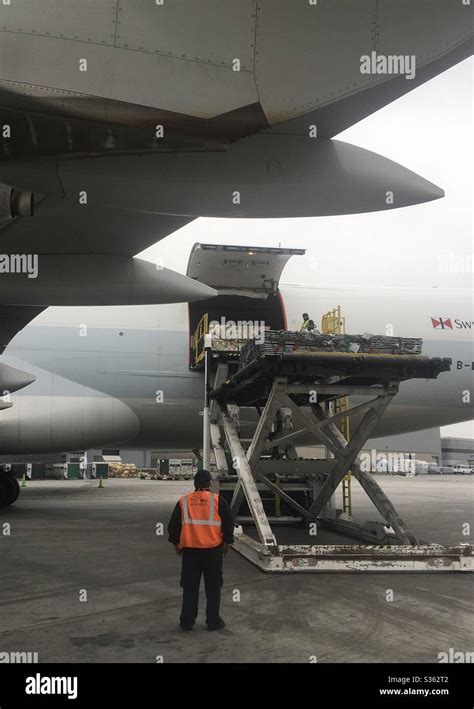
Cargo operations add another dimension to the rivalry. Cathay Pacific has long been one of the world’s foremost cargo carriers, supported by Hong Kong International Airport’s immense freight traffic. Its fleet includes 20 Boeing 747 freighters—the iconic 747-400ERF and the more modern 747-8F.
Singapore Airlines Cargo is smaller, with five Boeing 777-200F freighters serving major cargo hubs. Although smaller in size, the division maintains a respected presence in the global freight market.
Both carriers plan for the next generation of freighters: each has ordered the Airbus A350F. Featuring one of the industry’s largest cargo doors and exceptional fuel efficiency, the A350F will significantly modernize their cargo fleets. These decisions illustrate a shared commitment to capturing global cargo demand, especially as e-commerce accelerates.
Route Networks: Regional Strength Supporting Global Ambitions
Each airline maintains extensive regional networks crucial to feeding their long-haul routes. Cathay Pacific’s busiest route in 2025 is Hong Kong–Taipei, with an impressive 4,292 round-trip flights per year. This short but high-demand sector has long been a cornerstone of Cathay’s schedule.
Other key routes include Hong Kong–Singapore, Hong Kong–Bangkok, and Hong Kong–Shanghai Pudong. These short- to medium-haul routes allow Cathay to funnel passengers into its transpacific and European flights.
Singapore Airlines builds its regional strength through routes such as Singapore–Jakarta, Singapore–Kuala Lumpur, and Singapore–Bangkok. These routes rank among the busiest in Southeast Asia and serve as vital arteries that support its global network.
Broader Airline Group Strategies
Both airlines operate low-cost subsidiaries that enable them to reach different market segments without compromising the prestige of their mainline brands. Singapore Airlines owns Scoot, which serves cost-sensitive travelers across Asia and the Middle East. Cathay Pacific controls HK Express, performing the same function within Hong Kong’s travel ecosystem.
These subsidiaries help parent groups maintain passenger volume while protecting their mainline fleets for premium, long-haul operations.
Modernization and Future Competitiveness
Both carriers are preparing for the future with next-generation widebodies. The Boeing 777X will form a major part of their long-haul fleets once deliveries begin. Singapore Airlines’ early commitment to the 777X underscores its pursuit of high-capacity, long-range leadership. Cathay Pacific’s future A330-900neo fleet will refresh its regional backbone, improving cost efficiency across the busiest sectors in its network.
These choices reflect the different textures of their networks: Singapore Airlines optimizing for ultra-long-haul prestige, Cathay Pacific enhancing both long-haul strength and regional consistency.
Final Assessment: Which Airline Holds the Widebody Crown?
Evaluating widebody strength requires looking beyond passenger numbers or service reputation. In pure fleet size, Cathay Pacific clearly leads with 136 widebody aircraft, outpacing Singapore Airlines’ 116. The breadth of Cathay’s fleet—spanning A330s, A350s, and 777s—provides flexibility across both regional and long-haul markets. Singapore Airlines, however, brings a more tailored mix built around the A350-900, complemented by the A380 for premium high-density routes.
Singapore excels in service innovation and ultra-long-haul endurance. Cathay Pacific leads in widebody volume and maintains a stronger cargo presence. Their differences highlight two distinct approaches to global connectivity: one refined and long-range focused, the other versatile and regionally empowered.
Both remain essential pillars of Asian aviation, and both are gearing up with next-generation aircraft that will shape long-haul travel for decades. Their competition continues not only in the sky but in how effectively they adapt to the evolving needs of global travelers.
In the end, Cathay Pacific holds the numerical advantage in widebody aircraft, but Singapore Airlines counters with a powerful blend of fleet efficiency, geographic strategy, and long-range capability—ensuring this rivalry remains one of the most fascinating in modern aviation.