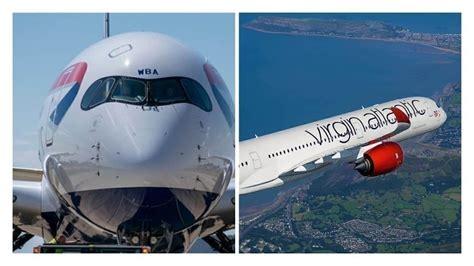
The Airbus A350-1000 stands as one of the most significant evolutions in the long-haul market, a widebody platform built to balance efficiency, comfort, and flexibility in global networks. As the stretched sibling of the A350-900, it delivers higher capacity, stronger performance, and an architecture built heavily on composite materials that reduce fuel consumption and maintenance demands. For carriers such as British Airways and Virgin Atlantic—two airlines united by geography but divided in design philosophy—the A350-1000 has become both a brand-defining canvas and a strategic asset.
More than 70% of the aircraft’s structure is composed of advanced composites, titanium, and next-generation aluminum alloys, with composite elements alone representing over half of the total build. This mix creates lighter weight, improved durability, and a lower environmental footprint. Meanwhile, passengers benefit from Airbus’s Airspace cabin—high ceilings, whisper-quiet acoustics, ample overhead bins, and fully LED-driven lighting scenarios that adapt to each phase of flight.
The A350-1000’s impressive range of 9,600 miles allows carriers to deploy it across ultra-long sectors, while the 221-inch cabin width unlocks more generous seating possibilities than many competing models.
British Airways’ Airbus A350-1000: A Corporate Flagship Focused On Privacy & Consistency
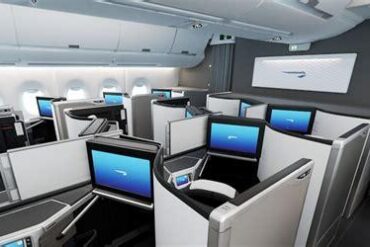
British Airways intentionally positions its Airbus A350-1000 as the modern flagship of the fleet, emphasizing consistency, privacy, and a polished corporate aesthetic. The airline’s 18 aircraft are configured with 331 seats, a deliberate three-class layout that eliminates First Class and allows a renewed focus on business and premium economy performance. The highlight—undisputed and meticulously engineered—is the Club Suite, which debuted on this aircraft type.
The Club Suite is arranged in a 1-2-1 pattern with direct aisle access for every guest, but the crucial breakthrough is the sliding privacy door, a feature that enhances personal space and provides a markedly more exclusive environment. The seat offers a fully flat bed, considerable personal storage, and a layout that aligns closely with the carrier’s desire for a consistent high-end product on its premium routes. Reviews frequently point to the reassuring solidity of the suite’s design: thoughtful lighting, a good balance between workspace and relaxation, and a feel that prioritizes business travelers’ desire for a “private office in the sky.”
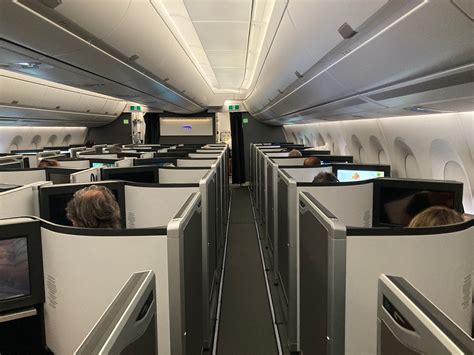
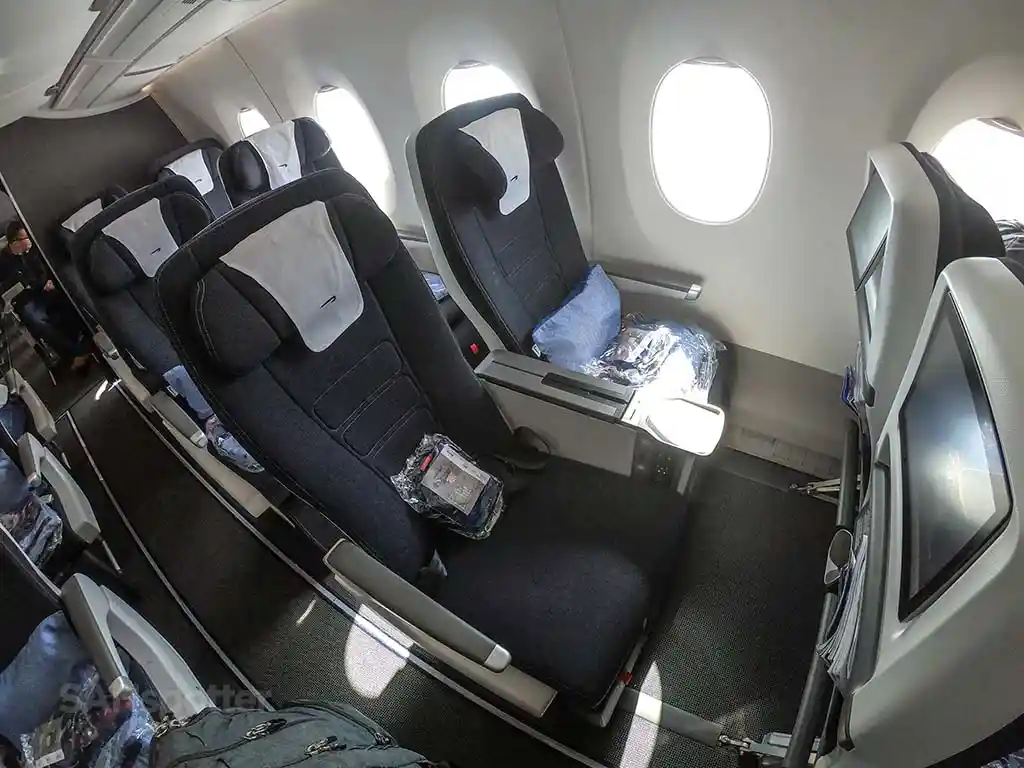
Premium economy—World Traveller Plus—delivers similarly sober design language, leaning into practicality with wide seating, quiet cabin ambiance, and predictable service delivery. Meanwhile, the World Traveller cabin benefits from the A350-1000’s quieter ride and strong environmental control systems.
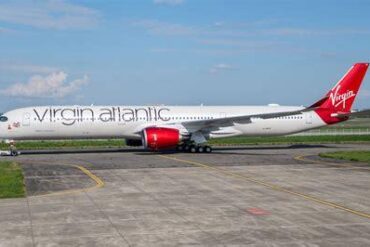
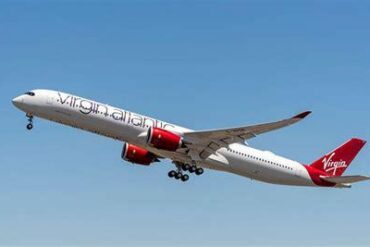
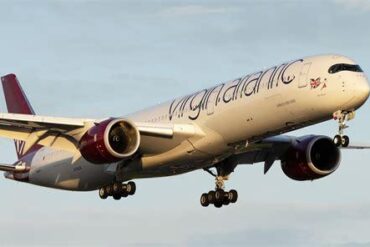
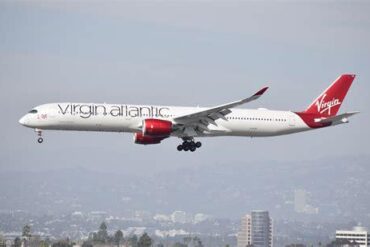
Virgin Atlantic’s Airbus A350-1000: A Showcase Of Brand Personality & Social Energy
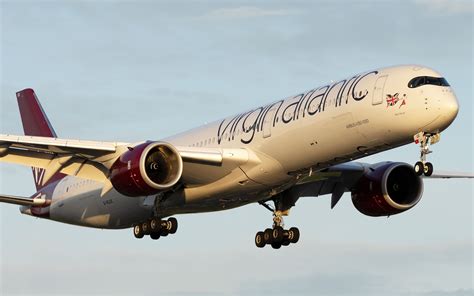
Virgin Atlantic takes a wildly different approach. Its Airbus A350-1000 is built around mood, personality, and social experience, a design philosophy that is unmistakably Virgin from the moment passengers step onboard. The airline operates 12 aircraft in a 335-seat layout, again split across three cabins, but the real divergence begins in Upper Class.
Rather than corporatized privacy, Virgin pursues atmosphere. Upper Class seats are arranged in a 1-2-1 pattern and offer a fully flat bed, generous surface space, elegant arches, and striking ambient lighting that shifts across deep purples, soft pinks, and warm tones inspired by the airline’s iconic identity. The outward-facing configuration provides visibility and airiness, noticeably avoiding the enclosed feel of some premium suites.
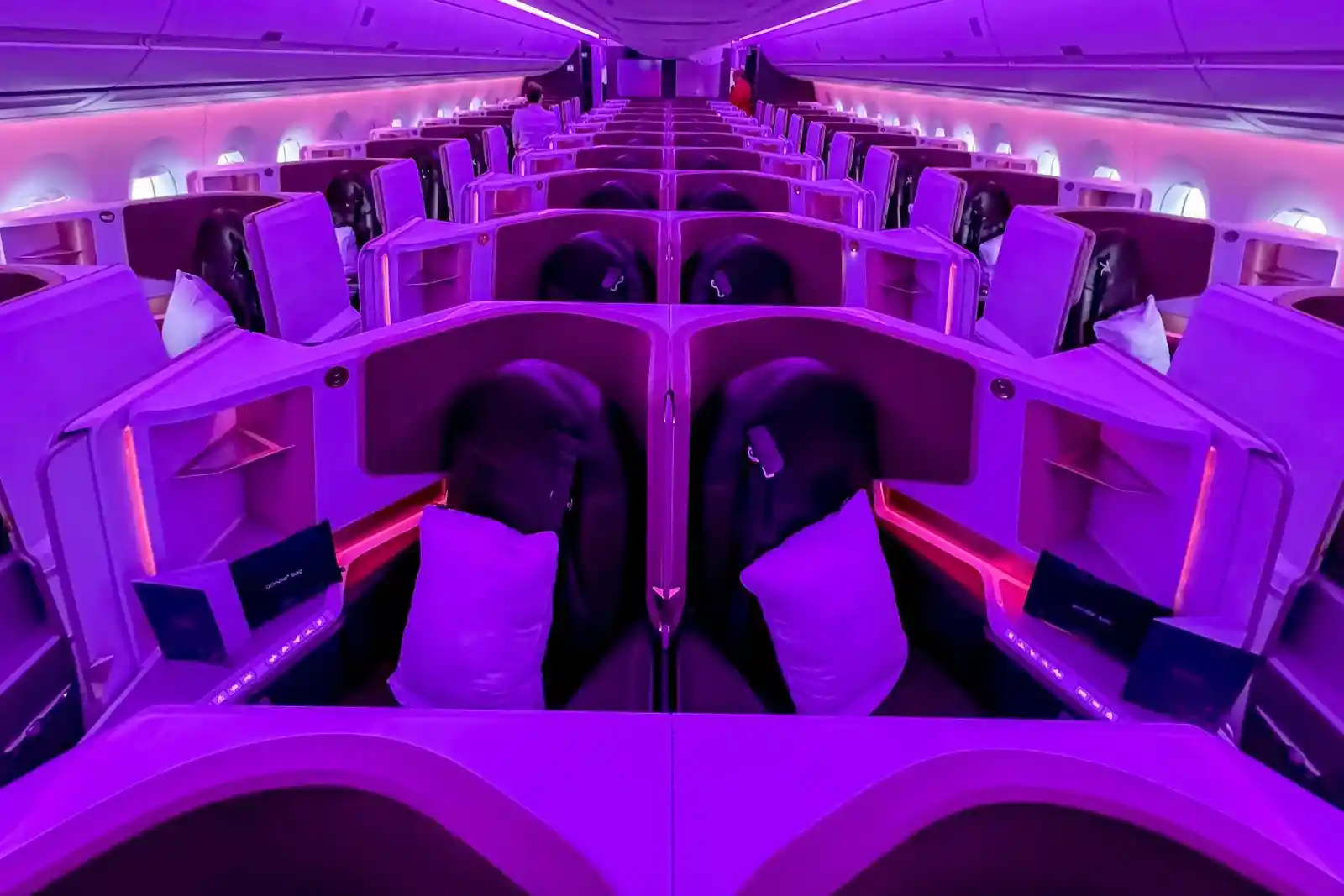
But the single most defining choice—the one that cements Virgin Atlantic’s A350-1000 as unmistakably its own—is the transformation of cabin real estate into social zones. The traditional bar has evolved into The Loft, a curved, lounge-like social space where passengers can sit, talk, enjoy a drink, or watch content on the large screen integrated into the wall. Then there is The Booth, a two-person seating corner on select aircraft, designed for shared dining, casual conversation, or simply stretching away from the seat.
This philosophy is not merely design flair—it’s a brand-identity strategy. Virgin’s A350s are crafted as flying extensions of its lounge experience, giving even long-haul flights a touch of Heathrow Clubhouse charm.

Operational Deployment: Flagship Routes With Distinct Strategies
British Airways and Virgin Atlantic both base their A350-1000 fleets at London Heathrow, but the way they deploy the aircraft reveals deep contrasts in strategy. British Airways spreads its A350-1000s across a broader mix of premium business and leisure destinations. Routes such as Dallas/Fort Worth, Delhi, Hong Kong, Vancouver, and Austin see frequent A350-1000 operations. This dispersal reflects the airline’s desire for a consistent premium product across multiple long-haul markets—especially those with expanding corporate demand.
Virgin Atlantic, on the other hand, uses the aircraft more selectively. The A350-1000 often appears on its highest-value trunk routes—the kind that anchor the airline’s identity and generate substantial yields. Services to New York JFK remain a core deployment, joined by Los Angeles, Lagos, and periodic appearances on routes to San Francisco, Toronto, and Washington Dulles. The strategy is one of concentration: the A350-1000 becomes a halo product, supporting Virgin’s image as a boutique long-haul specialist.
Cabin Economics: Two Philosophies, One Aircraft
From an economic perspective, the A350-1000 is inherently efficient, thanks to its substantial fuel savings and lightweight structure. Airbus positions the model as generating up to a 25% improvement in fuel burn, operating cost, and emissions compared with previous-generation widebodies. For both British Airways and Virgin Atlantic, this creates a generous performance envelope within which cabin configuration choices become strategic revenue decisions.
British Airways uses a premium-heavy layout, with more than 30% of seats dedicated to business and premium economy travelers. There is no First Class, but Club Suite acts as an elevated hybrid between business and first, delivering high yield while reducing cabin complexity. In slot-restricted markets such as Heathrow, maximizing revenue per available seat mile (RASM) becomes essential, and BA’s configuration allows it to monetize the aircraft aggressively without expanding frequency.
Virgin Atlantic’s strategy emphasizes brand distinctiveness over maximum seat count. The 335-seat layout leaves space for The Loft and The Booth, areas that do not generate direct per-seat revenue but do generate brand loyalty and allow fare premiums for the Upper Class experience. Virgin’s approach leans toward high-value leisure travelers and couples, using soft-product charm and emotional appeal to maintain pricing power.
Passenger Experience: Privacy vs. Personality
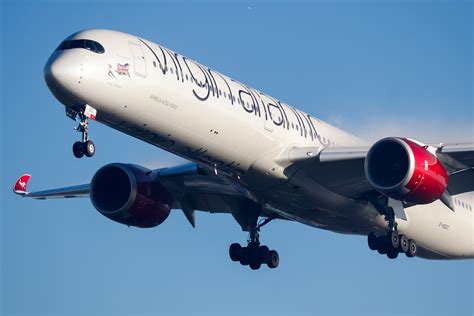
For travelers, the distinction between the two carriers becomes quickly apparent. British Airways aims for calm, controlled, private spaces—segments of the cabin that feel like boardrooms in the sky. Everything is refined and restrained, prioritizing predictability and comfort. Virgin Atlantic, meanwhile, aims to create moments—lighting that shifts to set a mood, social spaces that feel like a hotel lounge, and design cues that make the aircraft feel lively rather than corporate.
In business class, the differences materialize clearly. The Club Suite appeals to those who want isolation, quiet, work efficiency, and a door to shut the world away. Virgin’s Upper Class appeals to travelers who enjoy warm design, stylish flair, and the option of stepping away from the seat to socialize.
Economy cabins also reflect the broader philosophies. British Airways leans toward a uniform, professional environment with clean lines and minimalist styling. Virgin Atlantic’s main cabin incorporates subtle mood lighting and more expressive color palettes, adding a touch of personality even in its most affordable cabin.
The Broader Implications For Each Airline’s Brand Future
British Airways uses the A350-1000 as a harmonizing tool, part of an effort to stabilize its premium message across an increasingly diverse fleet. The Club Suite has slowly begun to appear on more aircraft, but the A350-1000 remains the benchmark—an embodiment of what British Airways wants its long-haul business class to be.
Virgin Atlantic uses the aircraft to further its evolution into a premium-identity airline, one that aligns more closely with the experiential philosophies of Delta Air Lines. For Virgin, the A350-1000 is not just about comfort—it is about identity, atmosphere, and emotional resonance.
Across their fleets, both airlines rely heavily on the A350-1000, but in distinct and complementary ways. British Airways sees a workhorse flagship; Virgin Atlantic sees a brand ambassador.
Conclusion: Two Visions, One Aircraft
The Airbus A350-1000 has become a stage on which British Airways and Virgin Atlantic express their vastly different long-haul identities. One leverages privacy, consistency, and corporate focus; the other uses mood, sociability, and design personality. Both approaches are valid, commercially smart, and deeply aligned with their passengers’ expectations.
The result is a compelling case study in how a single aircraft type—even with identical structural and performance capabilities—can become two entirely different experiences depending on the airline behind it. Passengers stepping from one carrier’s A350-1000 into the other truly feel as though they have entered two different worlds, divided not by technology but by philosophy.