The transatlantic business class battlefield has quietly evolved into one of the most refined and competitive arenas in global aviation. On routes linking London and the United States, few rivalries are as tightly matched—or as closely scrutinized—as that between British Airways and Virgin Atlantic. Both airlines have invested heavily in redefining premium travel, not just in terms of comfort, but in the psychology of space, privacy, and brand identity.
Yet beneath the polished marketing and glossy cabin photos lies a more pragmatic question: what does each experience actually cost—and more importantly, what do you truly get for that price?
Transatlantic Pricing Reality: Where Fares Align and Where They Diverge
On paper, pricing across key routes tells a surprisingly nuanced story. For travelers flying between London Heathrow Airport and John F. Kennedy International Airport, the fares in June 2026 converge at roughly $5,800 round-trip for both Club Suite and Upper Class. This is not coincidence—it is the result of intense competition on the world’s most lucrative premium corridor.
This parity reflects a deeper economic truth: neither airline holds decisive pricing power on this route. With multiple daily departures and a steady stream of corporate travelers, pricing becomes compressed to the point where differentiation shifts away from cost and toward product experience.
Move westward, however, and the equilibrium breaks. Flights to San Francisco show a sharp divergence, with Virgin Atlantic pricing Upper Class at approximately $8,700, while British Airways commands closer to $10,000. A $1,300 premium is not trivial—it signals either stronger demand for BA’s product or reduced competitive pressure due to scheduling and frequency.
Miami sits somewhere in between. With fares hovering between $8,500 and $8,700, the gap is negligible enough that it effectively disappears in decision-making. At that level, travelers are no longer buying a ticket—they are choosing an experience.
What British Airways Club Suite Actually Delivers
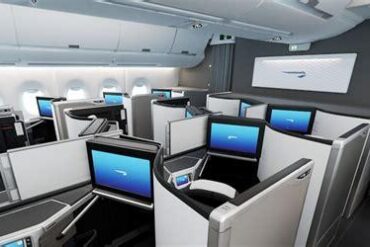
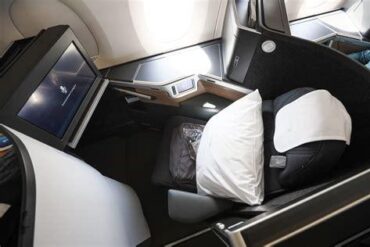
British Airways’ Club Suite represents a decisive break from its past. The airline’s previous business class product had long been criticized for its lack of privacy and awkward seating layout. Club Suite corrects that with a modern, door-equipped design that aligns with global premium standards.
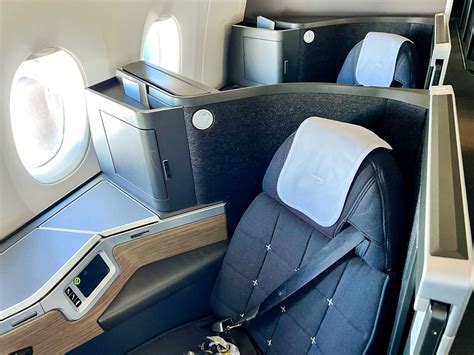
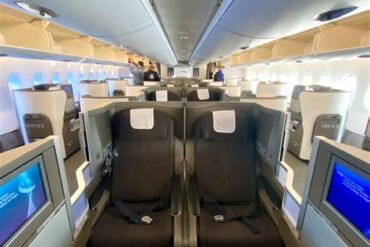
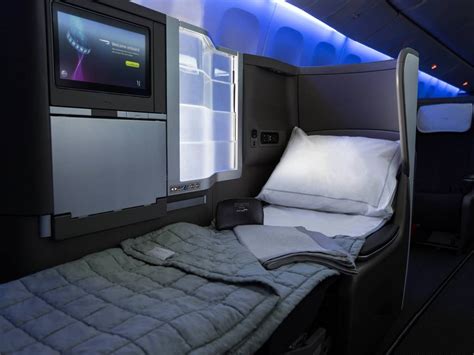
At its core, the Club Suite is built around a modified Collins Aerospace Super Diamond seat. The design prioritizes privacy above all else, with a fully closing door that creates a near first-class cocoon. The bed extends to 79 inches, paired with high-quality bedding from The White Company, including a mattress topper that significantly enhances sleep comfort on overnight flights.
The cabin layout is uniformly 1-2-1, ensuring direct aisle access for every passenger. However, consistency is not absolute across the fleet. Aircraft such as the A350-1000 and Boeing 787-8 guarantee the new product, while parts of the 787-9 fleet remain in transition. This variability introduces a critical booking consideration: not every “business class” ticket guarantees the same experience.
Onboard dining has seen a quiet but meaningful upgrade. Catering by Do&Co introduces a structured, multi-course service that feels more curated than transactional. The progression—from canapés to dessert and cheese—leans toward a restaurant-style rhythm rather than the rushed service often associated with legacy carriers.
At Heathrow, Club Suite passengers access the Galleries Club lounge. While functional and well-equipped, it reflects a more traditional approach: buffet dining, standard bar service, and a quieter, less theatrical atmosphere.
Virgin Atlantic Upper Class: Style, Social Space, and Inconsistency
Virgin Atlantic approaches premium travel from a fundamentally different angle. Where British Airways leans into privacy and understated luxury, Virgin embraces personality, sociability, and a slightly rebellious tone that has defined the brand for decades.
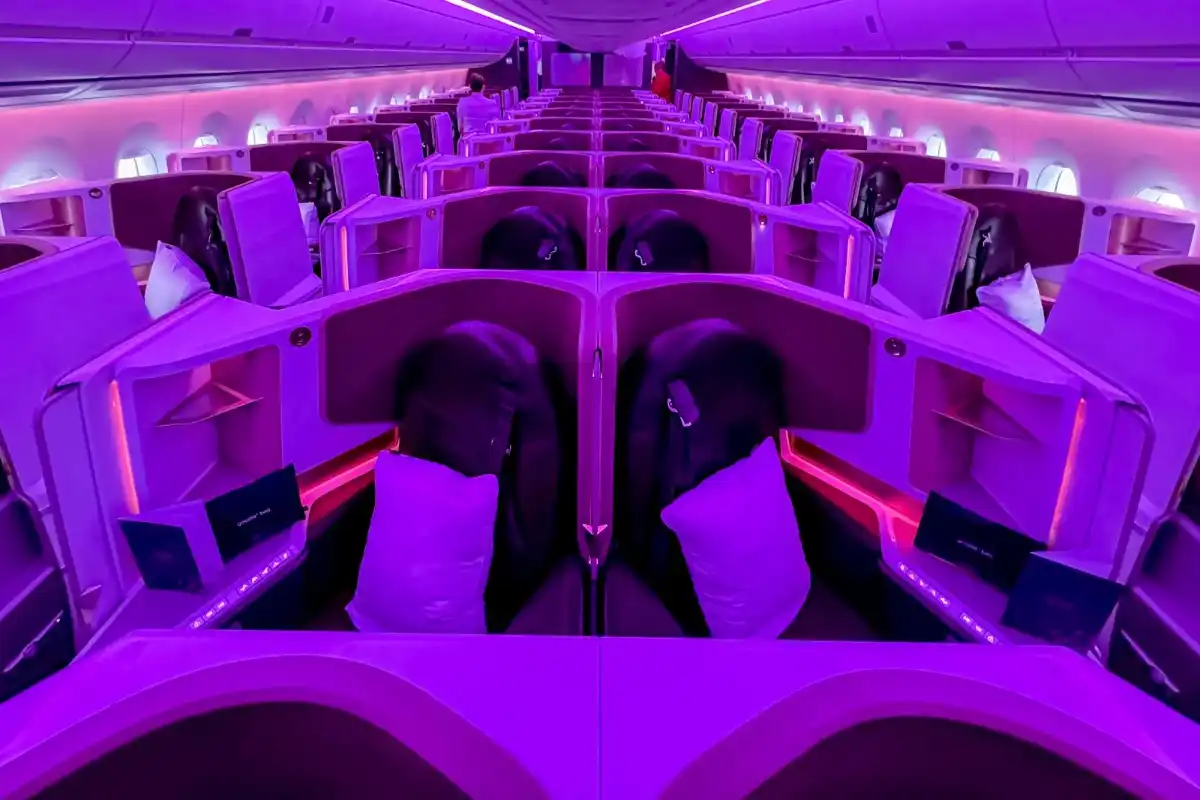
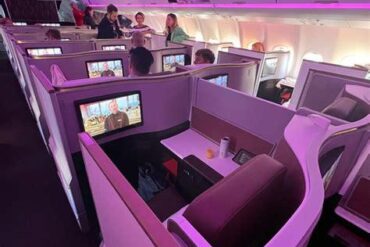
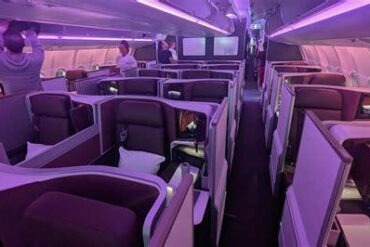
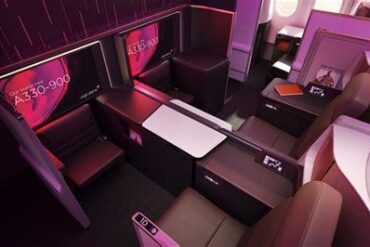
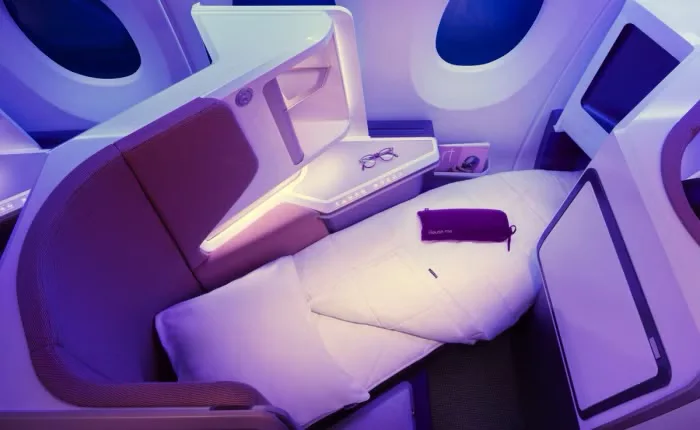
On its flagship Airbus A350-1000, Upper Class is a strong contender. The cabin features a 1-2-1 layout with fully flat beds and partial-height privacy doors. While these doors do not fully enclose the seat like BA’s Club Suite, they provide enough separation to create a sense of personal space.
The standout feature, however, is The Loft—a communal area where passengers can step away from their seats to work, dine, or simply stretch. It introduces a social dimension rarely seen in business class, subtly shifting the experience from isolation to optional interaction.
Yet Virgin’s product suffers from inconsistency. The A330-900neo offers a different, forward-facing seat that feels more contemporary, while the Boeing 787-9 retains an older inward-facing configuration that lacks both privacy and intuitive ergonomics. Unlike British Airways, where the new standard is becoming dominant, Virgin’s experience can vary dramatically depending on aircraft assignment.
Where Virgin truly excels is on the ground. The Upper Class Wing at Heathrow provides a seamless, almost theatrical start to the journey. From private check-in to expedited security access, the process feels curated rather than procedural. This flows directly into the Clubhouse lounge, widely regarded as one of the best business class lounges in the world.
Dining here is à la carte, cocktails are crafted rather than poured, and the overall ambiance feels closer to a boutique hotel than an airport facility. Spa treatments and attentive service further elevate the pre-flight experience, creating a sense that the journey has already begun before boarding.
Seat, Sleep, and Space: Where the Cabin Experience Splits
At cruising altitude, the differences between these two products become more subtle—but no less important.
Both airlines offer fully flat beds, direct aisle access, and modern inflight entertainment systems. On paper, they are equals. In practice, the nuances matter.
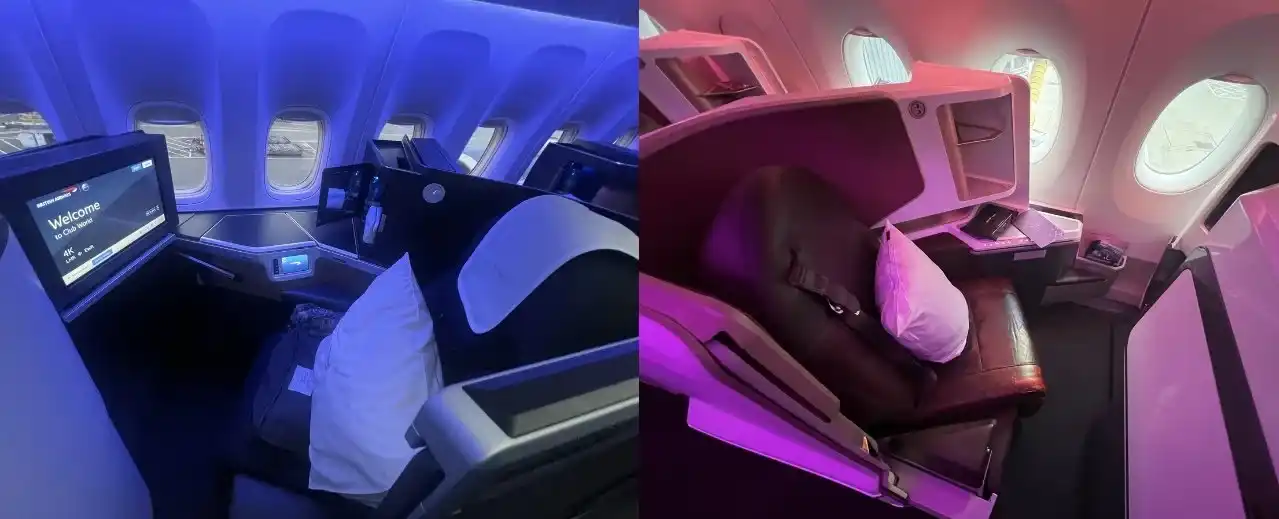
British Airways’ fully closing suite door provides a more complete barrier against light and noise. On overnight eastbound flights, this translates into better sleep quality—an advantage that frequent travelers quickly learn to value. The sense of enclosure is closer to first class than traditional business class.
Virgin Atlantic’s approach is more open. Even on the A350, the partial door leaves a degree of exposure to the aisle. Some travelers appreciate this openness, particularly on daytime flights where the cabin feels more dynamic. Others find it less conducive to rest.
The Loft introduces a wildcard. For passengers who dislike being confined to their seat, it offers a rare sense of freedom. For those prioritizing sleep and privacy, it is largely irrelevant.
Dining and Service Philosophy: Precision vs Personality
Dining in business class is no longer just about food—it is about pacing, presentation, and emotional tone.
British Airways, through its partnership with Do&Co, delivers a more structured and refined experience. Courses arrive with deliberate timing, and presentation leans toward classic European elegance. It is predictable in the best possible way—consistent, polished, and quietly confident.
Virgin Atlantic takes a more relaxed approach. The menu is still multi-course, but the delivery feels less formal. Service interactions tend to be more conversational, reflecting the airline’s broader brand identity. For some, this creates a more enjoyable atmosphere. For others, it lacks the precision expected at this price point.
Loyalty Programs and Strategic Value
Beyond the seat and service lies a longer-term consideration: loyalty.
British Airways’ integration into the oneworld alliance gives its Avios currency a broader ecosystem. Frequent travelers can earn and redeem across multiple global carriers, making it particularly valuable for those who travel beyond the transatlantic corridor.
Virgin Atlantic’s Flying Club, while strengthened by its partnership with Delta, operates within a more limited network. For travelers primarily flying between the UK and the US, this is sufficient. For those seeking global flexibility, it is less compelling.
This distinction rarely influences a single booking—but over time, it can significantly shape overall travel strategy.
Joint Venture Complexity: When You’re Not Flying What You Book
An often-overlooked factor in transatlantic pricing is the role of joint ventures. British Airways partners with American Airlines, while Virgin Atlantic aligns with Delta. This means that when booking through either airline’s website, passengers may end up flying on a partner aircraft.
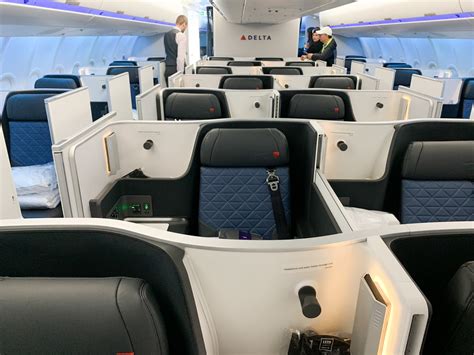
The implications are subtle but important. A ticket sold by Virgin Atlantic might place you in Delta One, while a British Airways booking could result in an American Airlines business class seat. Pricing can vary between platforms, sometimes unpredictably, due to differences in fare availability and revenue-sharing algorithms.
For travelers expecting a specific product, this introduces an additional layer of complexity. The airline selling the ticket is not always the one delivering the experience.
Final Verdict: When Price Matters Less Than Precision
At a certain level—typically above $5,000 round-trip—price ceases to be the dominant factor. The decision shifts toward alignment: which product better matches the traveler’s priorities.
British Airways Club Suite is the more consistent and privacy-focused option. It excels on overnight flights, where sleep quality and personal space are paramount. Its design philosophy is inward-looking, emphasizing control, quiet, and predictability.
Virgin Atlantic Upper Class is more experiential. At its best—on the A350 with access to the Clubhouse—it delivers a journey that feels less like transportation and more like hospitality. It is outward-looking, social, and distinctly styled.
The real differentiator, however, is not the seat or the fare. It is the combination of aircraft type, route dynamics, and personal preference. On some flights, the two products are nearly identical in value. On others, they diverge sharply.
And that is the quiet truth of modern business class: the ticket buys access to a category, not a guarantee of experience. The difference lies in the details—and those details are where informed travelers gain the edge.