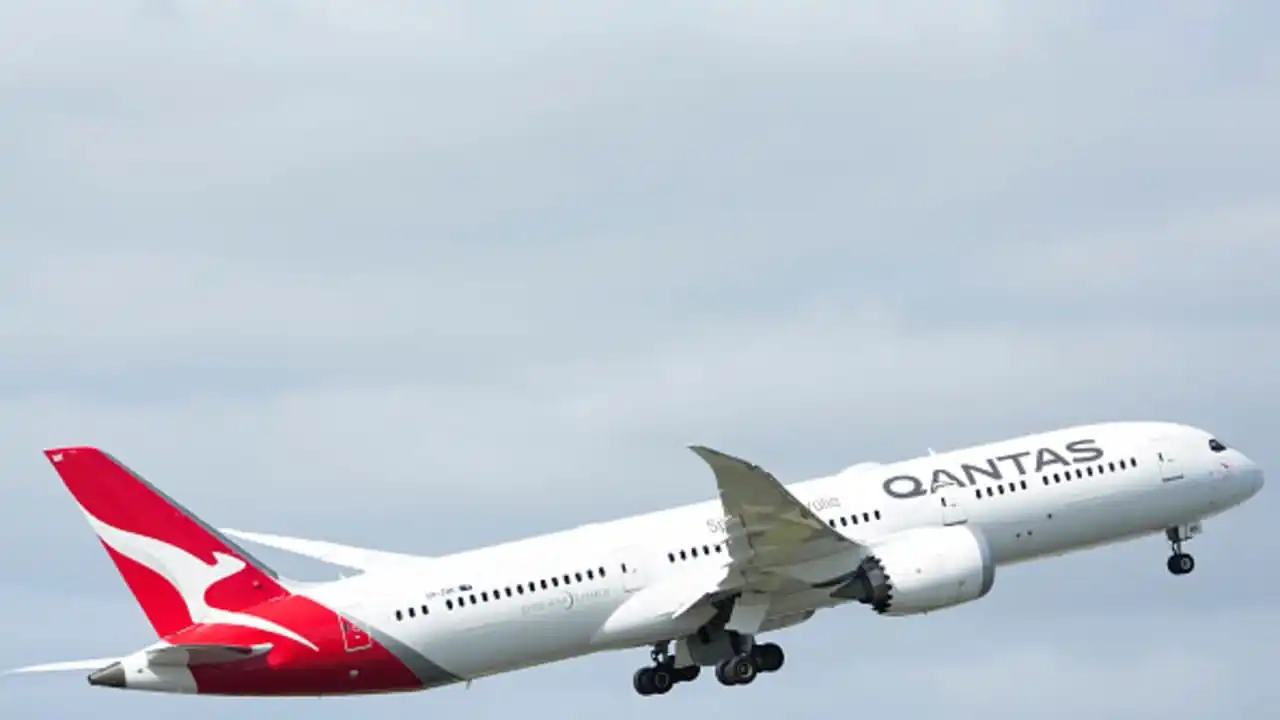
Qantas is once again operating some of the longest nonstop passenger flights in the world, with its August 2026 schedule featuring 11 services whose maximum scheduled block times stretch from 14 hours 30 minutes to an extraordinary 17 hours 40 minutes. These flights connect Australia with major destinations across North America, Europe, Africa, and South America, demonstrating the enormous geographic reach of the Qantas long-haul network.
The longest service is particularly remarkable. The Dallas/Fort Worth–Melbourne route reaches a maximum block time of 17 hours and 40 minutes, putting it only 20 minutes short of the 18-hour threshold. Qantas also operates several other flights exceeding 16 hours, while its network continues to rely heavily on the Boeing 787-9 Dreamliner, alongside the Airbus A380 and Airbus A330-200.
Qantas’ August schedule contains an average of 25 daily long-haul departures from Australia, representing a 5% decline compared with the same month a year earlier. Those departures are concentrated at Brisbane, Melbourne, Perth, and Sydney, with the airline continuing to balance ultra-long-haul flying against aircraft availability, winds, airspace restrictions, and commercial demand.
Qantas’ 11 Longest Nonstop Flights in August 2026
The ranking is based on maximum scheduled block time, rather than pure flying time or great-circle distance. Block time measures the journey from chocks-off to chocks-on, incorporating taxiing, the airborne portion, and some allowance for operational delays. It is therefore the figure most closely reflected in published airline schedules and booking systems.
The 11 longest nonstop Qantas services in August are:
- Dallas/Fort Worth–Melbourne: 17 hours 40 minutes, three weekly Boeing 787-9 flights
- Dallas/Fort Worth–Sydney: 17 hours, with four weekly Airbus A380s and three weekly Boeing 787-9s
- London Heathrow–Perth: 16 hours 50 minutes, daily Boeing 787-9
- Perth–Rome: 16 hours 40 minutes, daily Boeing 787-9
- Los Angeles–Melbourne: 15 hours 55 minutes, five weekly Boeing 787-9s and two weekly Airbus A380s
- Vancouver–Sydney: 15 hours 15 minutes, four weekly Boeing 787-9s
- Los Angeles–Sydney: 15 hours, daily Airbus A380
- San Francisco–Sydney: 14 hours 55 minutes, three weekly Boeing 787-9s
- Sydney–Johannesburg: 14 hours 50 minutes, three weekly Airbus A380s
- Santiago–Sydney: 14 hours 35 minutes, three weekly Boeing 787-9s
- Los Angeles–Brisbane: 14 hours 30 minutes, up to daily Airbus A330-200
This produces a network spanning 11 routes, 12 airports, and approximately 86,572 network miles, illustrating how Qantas uses its long-range fleet to connect Australia directly with distant international markets.
Melbourne–Dallas/Fort Worth Remains Qantas’ Longest Flight
The standout route is Melbourne to Dallas/Fort Worth, although the longest scheduled block time occurs on the return journey from Texas to Victoria. The route covers approximately 7,814 nautical miles (14,472 kilometers) on a great-circle basis, but the actual flight path can be longer because aircraft do not necessarily follow a perfect great-circle track.
The Dallas–Melbourne sector can reach 17 hours and 40 minutes, making it Qantas’ longest nonstop service in August 2026. Under different seasonal schedules, the ranking can change because winds and operational requirements significantly influence block times.
Qantas has operated the Melbourne–Dallas/Fort Worth service since December 2022. The route connects two major oneworld hubs and benefits from Qantas’ joint venture relationship with American Airlines. That partnership is especially important because the route is not simply an Australia–Texas city pair; Dallas/Fort Worth acts as a gateway into American Airlines’ extensive domestic network.
Performance data also indicates that the service has attracted strong demand. U.S. Department of Transportation data for the 12 months through April 2026 showed Qantas carrying 81,198 round-trip passengers on the nonstop Melbourne–Dallas/Fort Worth service, producing an 83.2% load factor.
That was higher than the 80.6% load factor recorded on Qantas’ Sydney–Dallas/Fort Worth service and above Qantas’ 80.2% average load factor across its U.S. network. While load factor alone cannot determine profitability, the figures indicate that Melbourne–Dallas has developed into a meaningful long-haul market.
American Airlines Connections Strengthen the Route
The Melbourne–Dallas/Fort Worth operation becomes even more significant when connecting passengers are considered. Booking data suggests that more than 60% of passengers using the Qantas Melbourne–Dallas/Fort Worth service also connected with American Airlines.
That connectivity gives the route a role far beyond the two cities printed on the ticket. Passengers can travel from Australia through Melbourne and Dallas/Fort Worth to a wide range of destinations across North America, while American Airlines passengers can use the Qantas service to access Australia.
Among the strongest connecting markets were Toronto, Orlando, New York LaGuardia, Boston, and Chicago O’Hare. Other notable connecting flows included Canberra–Washington via Melbourne and Dallas/Fort Worth, as well as Perth–Orlando, Perth–Houston, Perth–Toronto, and Perth–Denver.
These flows help explain why Qantas can sustain an extremely long route that would otherwise face a much narrower local market.
Why Perth–London Does Not Currently Top the List
Ordinarily, Perth–London Heathrow would be expected to occupy the top position among Qantas’ longest nonstop services. The airline’s famous Western Australia–United Kingdom operation is one of the defining examples of modern ultra-long-haul aviation.
In August, however, the situation is different. Flights from Perth toward London are currently operating with a stop in Singapore Changi Airport, largely because of prevailing winds and restrictions affecting the most efficient routing. Qantas could theoretically reduce payload and carry additional fuel to maintain a nonstop operation, but doing so would not make economic sense.
The return London Heathrow–Perth service remains nonstop and has a maximum block time of 16 hours and 50 minutes. Qantas expects nonstop Perth–London service to return in the opposite direction in February 2027.
Perth–Rome Benefits From a Shorter European Routing
Another important European service is Perth–Rome Fiumicino, which reaches 16 hours and 40 minutes. The route benefits from being somewhat shorter than Perth–London, allowing Qantas to continue operating it nonstop despite the challenging operational environment.
The daily Boeing 787-9 service is particularly notable because six flights each week begin or end in Sydney, while another operates as a terminating service. This gives the route additional network importance rather than treating it solely as a Perth–Rome market.
Qantas’ European strategy demonstrates how aircraft range is only one part of ultra-long-haul planning. Wind conditions, airspace availability, payload, fuel requirements, and economics all determine whether a theoretical nonstop route can be operated commercially.
Boeing 787-9 Dominates the Ultra-Long-Haul Network
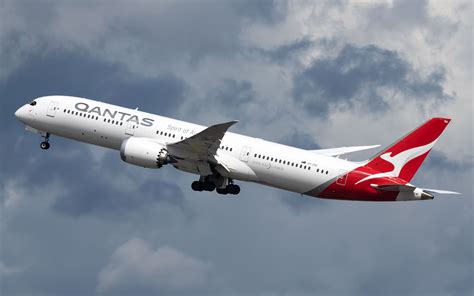
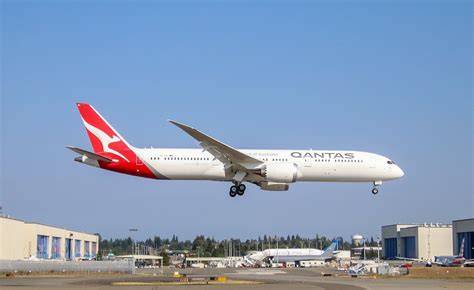
The Boeing 787-9 Dreamliner is the most important aircraft in Qantas’ longest-flight strategy. Its combination of range, fuel efficiency, and relatively modest passenger capacity makes it particularly suitable for routes where demand is strong but not necessarily large enough to justify an Airbus A380.
The Airbus A380 nevertheless remains crucial on several high-demand routes. Qantas uses the superjumbo on Dallas–Sydney, Los Angeles–Sydney, Los Angeles–Melbourne, and Sydney–Johannesburg. The A380 provides substantial capacity while offering the range needed for these demanding missions.
The fleet mix also shows that ultra-long-haul flying does not require a single aircraft type. Qantas is using different aircraft according to market size, route distance, and operational requirements.
What These 18-Hour Flights Reveal About Qantas
Qantas’ August 2026 schedule shows that the airline has built one of the world’s most geographically ambitious long-haul networks. The 17-hour-40-minute Dallas–Melbourne service comes remarkably close to 18 hours, while multiple other routes comfortably exceed 15 or even 16 hours.
The network also highlights an important reality of ultra-long-haul aviation: the longest theoretical route is not always the longest operational route. Weather, winds, airspace restrictions, fuel economics, payload limitations, and connecting demand can all change the ranking.
For passengers, these services provide something that was once considered extraordinary: the ability to cross oceans and continents without changing aircraft. For Qantas, they represent a carefully calculated use of long-range aircraft and strategic partnerships.
With future fleet changes still approaching, the airline’s ultra-long-haul network could become even more ambitious. For now, however, Dallas/Fort Worth–Melbourne stands as Qantas’ longest nonstop flight in August 2026, with a maximum scheduled block time of 17 hours and 40 minutes—just 20 minutes short of the headline-grabbing 18-hour mark.