The geography of the United States has always invited ambition. From Atlantic harbors to Pacific volcanoes, the country stretches wide enough to demand true long-haul endurance—without ever crossing a border. In 2026, that reality sharpens dramatically. The longest domestic flights in the US now approach nearly 12 hours gate-to-gate, redefining what “domestic” truly means in aviation terms.
At the top of the list sits a route few would have predicted just months ago. Boston to Honolulu now claims the crown as the nation’s longest domestic nonstop, scheduled at up to 11 hours and 40 minutes. It edges out Newark to Honolulu, which previously held the spotlight. The shift reflects competitive maneuvering, fleet strategy, and Hawaii’s unmatched gravitational pull in American leisure travel.
All ten of the longest US domestic flights share one unmistakable characteristic: they connect the mainland to Hawaii. And they all rely on widebody aircraft—machines designed for oceans and continents—despite remaining entirely within US territory.
Boston to Honolulu: The New Longest Domestic Flight in America
The Boston–Honolulu route covers 4,427 nautical miles (8,199 kilometers), an expanse that rivals many transatlantic services. In fact, its block time matches some flights from Boston to Tel Aviv and comes within minutes of Qatar Airways’ long-haul departures to Doha. Geography does not care about passports.
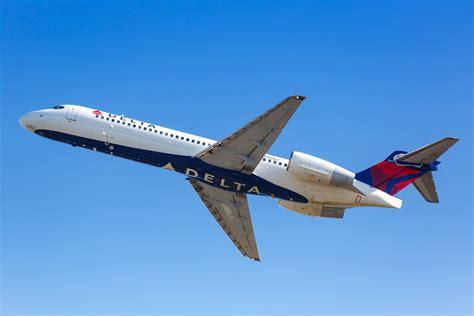
Delta Air Lines is reintroducing this ultra-long domestic service in December 2026, strategically timed for peak holiday demand. The airline previously operated the route from November 2024 to April 2025 using the Airbus A330-300, occasionally substituting the Boeing 767-300ER. Hawaiian Airlines had served the market consistently from 2019 through late 2025 with the A330-200.
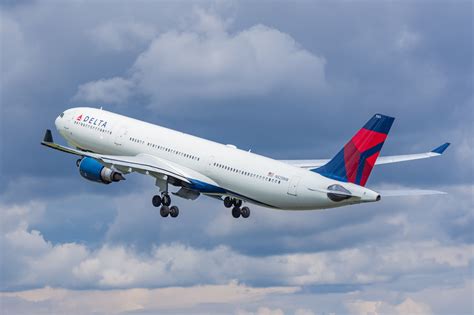
Performance during Delta’s first attempt was modest. Over six months, the airline carried 43,436 round-trip passengers, filling just 62.8% of seats. Load factor—the percentage of occupied seats—matters deeply on flights this long, where fuel burn and crew costs accumulate relentlessly. Hawaiian’s performance also softened during that period, with traffic declining and seat occupancy slipping.
This time, Delta returns as the sole nonstop operator. That detail is pivotal. In long-haul markets, exclusivity can transform economics. Removing direct competition typically strengthens pricing power and improves load factors, especially in high-demand leisure corridors.
Newark to Honolulu: The Former Champion
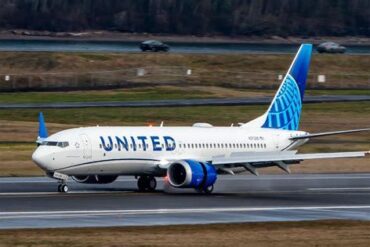
United Airlines’ Newark to Honolulu service, clocking in at up to 11 hours and 28 minutes, now sits in second place. Operated seasonally with the Boeing 767-400ER, this route still represents a monumental domestic journey. Newark’s proximity to New York’s massive population base ensures sustained demand, particularly during winter escape season.
While slightly shorter than Boston’s new leader, Newark–Honolulu remains a logistical marathon. Crew duty limits, fuel planning, and headwind contingencies all mirror intercontinental operations. The distinction between “domestic” and “international” becomes administrative rather than operational.
New York JFK to Honolulu: Dual Competition at Extreme Range
At 11 hours and 26 minutes, the JFK–Honolulu corridor is served by both Alaska Airlines and Delta. Alaska deploys the Airbus A330-200, while Delta relies on the Boeing 767-300ER. The competition underscores how strategically vital Hawaii remains for carriers seeking premium leisure revenue.
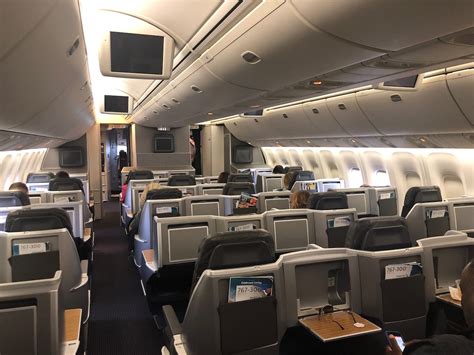
Flights from New York to Honolulu traverse nearly the entire continental United States before crossing vast Pacific waters. Time zones shift by six hours. Passengers depart winter evenings and arrive in tropical daylight. The psychological effect of such journeys reinforces Hawaii’s allure as an almost mythic domestic destination.
Washington Dulles to Honolulu: Capital to Pacific
United also connects Washington Dulles to Honolulu, with a maximum block time of 10 hours and 58 minutes. Operating primarily with the 767-400ER, this route channels political, military, and leisure traffic alike. Honolulu’s strategic importance as a military hub blends seamlessly with its tourism magnetism.
The capital-to-island connection highlights Hawaii’s dual identity: vacation paradise and strategic Pacific outpost.
Atlanta and Detroit: Delta’s Midwest and Southeast Gateways to Hawaii
Delta’s dominance in long domestic Hawaii flying becomes even clearer when examining routes from Atlanta and Detroit. Atlanta–Honolulu reaches 10 hours and 21 minutes, while Detroit–Honolulu peaks at 10 hours and 15 minutes. Both rely heavily on the Airbus A330-300, occasionally supplemented by the 767-300ER.
Atlanta also links to Kahului (Maui) at up to 10 hours and 13 minutes, another seasonal endurance test. These routes transform Delta’s inland hubs into intercontinental-style departure points, expanding Hawaii access far beyond coastal gateways.
Chicago’s Triple Threat: Honolulu, Kahului, and Kona
Chicago O’Hare contributes three entries to the top ten. Flights to Kahului reach 9 hours and 45 minutes, operated seasonally by American Airlines with the Boeing 787-8 and by United using both 787-8 and 787-10 variants. Chicago–Honolulu extends to 9 hours and 28 minutes, while Chicago–Kona runs 9 hours and 17 minutes.
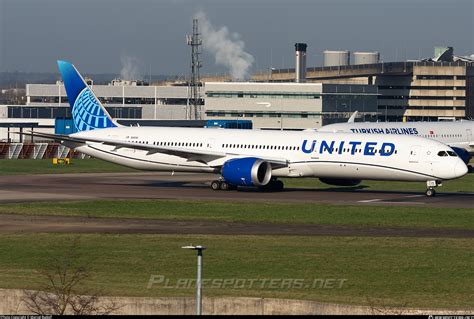
The presence of the Boeing 787 Dreamliner on domestic routes illustrates how aircraft technology reshapes network strategy. Designed for ultra-long international missions, the 787’s fuel efficiency and passenger comfort make it ideal for high-demand transoceanic domestic sectors.
The Boston–Honolulu Market: A $105 Million Corridor
Data from the US Department of Transportation reveals the scale beneath the surface. In the twelve months ending June 2025, the Boston–Honolulu market generated more than 155,000 round-trip local passengers and approximately $105 million in fares. Nearly 70% of travelers began or ended their journey in Boston itself, confirming strong local demand.
Almost seven in ten passengers flew nonstop when available. Others connected through major hubs such as Los Angeles, San Francisco, Seattle, Chicago O’Hare, and JFK. Booking patterns suggest that the overwhelming majority of Delta’s passengers used the flight strictly between Boston and Honolulu rather than connecting onward.
This matters strategically. A high percentage of true origin-and-destination travelers typically indicates resilient demand. When airlines capture that traffic exclusively, profitability improves—assuming load factors rise accordingly.
Domestic in Name, Intercontinental in Reality
These nearly 12-hour journeys blur categorical lines. Aircraft scheduling, crew planning, fuel reserves, and operational contingencies mirror international long-haul practice. The only absent element is passport control.
The broader significance lies in how airlines deploy widebody fleets. As global networks fluctuate, carriers increasingly use large aircraft on high-demand domestic routes to optimize utilization. Hawaii remains uniquely positioned: distant enough to require long-haul equipment, yet politically and legally domestic.
The result is a fascinating aviation paradox. Travelers can board in Boston, Newark, Chicago, Atlanta, Detroit, or Washington, fly nearly half a day across oceans and time zones, and still land on American soil. No customs line. No visa stamp. Just volcanic peaks rising from the Pacific.
In 2026, the longest US domestic flights are no longer curiosities—they are strategic pillars of airline networks. Nearly 12 hours in the air, entirely within one nation, proves that distance is not merely a number on a map. It is a test of endurance, economics, and engineering—played out daily above the vast blue expanse between the mainland and Hawaii.