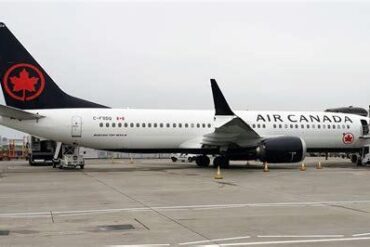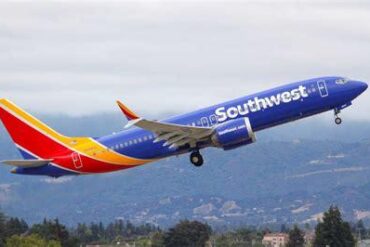
The Boeing 737, a narrowbody workhorse originally delivered in 1968, continues to be the backbone of domestic air travel across the United States. As the summer of 2025 unfolds, data from OAG reveals that this venerable jet will operate an astonishing 35% of all scheduled domestic flights. When regional aircraft are removed from the equation, the figure jumps to 50%, reflecting the 737’s dominance in medium and even long-haul routes within the continental U.S. and to Alaska and Hawaii.
Leading this charge is Southwest Airlines, flying 47% of all Boeing 737-operated domestic routes. United Airlines follows at 18%, with American Airlines accounting for 14%. Even ultra-low-cost carrier Allegiant plays a minor role, fielding a fleet of 13 Boeing 737 MAX 8s. Yet the most eye-catching detail this season isn’t just the number of 737 flights — it’s their extraordinary length.

Stretching the Limits: Boeing 737 Flights Reaching Nearly 8 Hours
According to summer 2025 scheduling data, 11 domestic routes push the 737 to impressive operational extremes, with block times — measured from chocks-on to chocks-off — of at least 6 hours and 40 minutes. These are not typical short hops or mid-haul runs; these are epic cross-country or transoceanic journeys, with several services exceeding 7 hours, a duration traditionally reserved for widebody aircraft.
The longest of these is United Airlines’ Newark (EWR) to Anchorage (ANC) route, which clocks in at a staggering 7 hours and 53 minutes. Not far behind are other Alaska-bound flights from Washington Dulles, New York JFK, and Houston Intercontinental. These routes underscore how the 737 MAX family, particularly the 737 MAX 8 and MAX 9, has redefined the range expectations of narrowbody jets.
Breaking Down the Longest Boeing 737 Domestic Flights
These ultra-long domestic sectors are highly seasonal and tied closely to summer demand, with most operating from May through September. Half of them involve Alaska, whose remoteness makes long block times inevitable. Here are some of the standout performers:
- Newark (EWR) to Anchorage (ANC) – 7h 53m, United Airlines, daily 737 MAX 8 service through September 24.
- Washington Dulles (IAD) to Anchorage (ANC) – 7h 43m, United Airlines, seasonal.
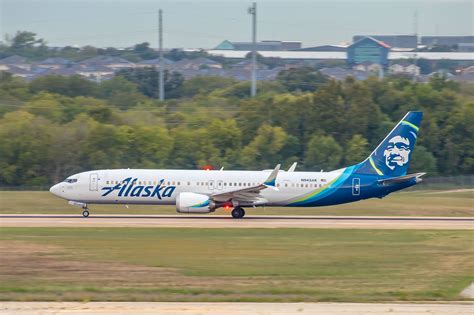
- New York JFK (JFK) to Anchorage (ANC) – 7h 41m, Alaska Airlines, 737 MAX 8, ends August 19.
- Houston Intercontinental (IAH) to Anchorage (ANC) – 7h 26m, United Airlines, daily service.
The Newark–Anchorage service, launched in 2013, saw a shift from the Boeing 757 to the 737 MAX 8 in 2022. It covers 2,928 nautical miles (5,423 km), placing it at the uppermost boundary of what’s possible with a single-aisle aircraft. During Q3, this market saw 37,000 round-trip passengers, with a dominant 66% of them flying United, thanks to the airline’s nonstop advantage and strong hub connections.
Departure schedules are optimized for maximum network connectivity:
- UA450 departs Newark at 15:20, arriving Anchorage at 19:13.
- UA363 returns at 20:16, landing in Newark at 07:11 the following morning.
Hawaii on a 737: The Southwest Challenge
While Alaska dominates the upper tier of 737-operated long hauls, two Hawaii-bound routes stand out for their unique challenges. These are the only Hawaiian routes making the cut this summer:
- Las Vegas (LAS) to Honolulu (HNL) – 6h 40m, Southwest Airlines, up to 3x daily MAX 8 service.
- Phoenix (PHX) to Honolulu (HNL) – 6h 40m, also Southwest, daily MAX 8 service.
These legs are particularly notable due to the timezone transitions, Pacific Ocean crossing, and early morning departures tailored to match East Coast connectivity. Southwest entered the Las Vegas–Honolulu market in 2021 and has since gained a loyal following, despite fierce competition. In 2024 alone, Southwest moved 156,000 round-trip passengers on this route, while legacy carrier Hawaiian Airlines moved 521,000.
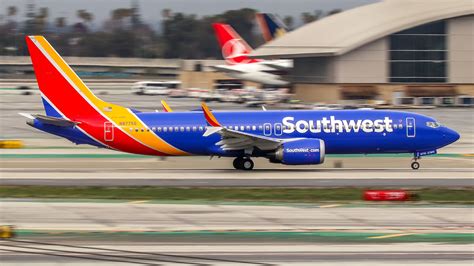
Despite fewer passengers, Southwest maintained a 94% seat fill rate, narrowly beating Hawaiian’s 90%, illustrating the power of pricing and scheduling efficiency.
Coast-to-Coast: The Lower 48 Contenders
Beyond Alaska and Hawaii, several continental U.S. links also push the 737’s limits. Most are operated by Alaska Airlines and feature connections between the Northeast and West Coast — corridors typically dominated by widebodies or Airbus A321neos. Yet Alaska Airlines proves that with clever scheduling and modern MAX aircraft, the 737 remains highly competitive.
Standout routes include:
- Boston (BOS) to San Diego (SAN) – 6h 40m, Alaska Airlines, up to 2x daily using MAX 9s and 737-900ERs.
- Boston (BOS) to San Francisco (SFO) – 6h 40m, Alaska and United, multiple daily MAX 9s.
- Miami (MIA) to Seattle (SEA) – 6h 40m, Alaska Airlines, daily MAX 9 service.
- Detroit (DTW) to Anchorage (ANC) – 6h 42m, Alaska Airlines, weekly MAX 9 flight until early September.
- Chicago O’Hare (ORD) to Anchorage (ANC) – 6h 52m, joint operations by Alaska and United using a mix of MAX 8, MAX 9, and 737-900ER.
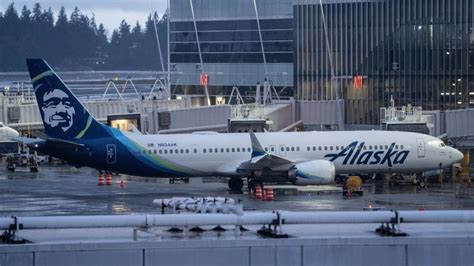
These lower 48 routes demonstrate the versatility of the 737 platform. In particular, Alaska Airlines’ dual deployment of both the MAX 9 and the older but still reliable 737-900ER shows a strategic balance between range and operational cost. These flights push not just endurance, but crew and maintenance scheduling, demanding utmost reliability and performance.
The Aircraft Behind the Mission: 737 MAX Performance
These long-haul domestic missions are made possible by the evolution of the 737, particularly the MAX series. The 737 MAX 8 has a range of 3,550 nautical miles, while the MAX 9 trails slightly but offers greater passenger capacity. This gives airlines the flexibility to deploy them on flights historically reserved for twin-aisle aircraft.
With fuel-efficient LEAP-1B engines, aerodynamic winglets, and modern avionics, the MAX series allows carriers to expand point-to-point connectivity without relying on traditional hub-and-spoke models. This is especially valuable in summer, when leisure travel surges, and travelers seek direct, nonstop flights over hub layovers.
The Seasonal Nature of Long-Distance 737 Flights
Most of these lengthy 737 routes are seasonal, reflecting not only demand but also payload-range trade-offs driven by weather, passenger loads, and airport performance. Summer allows for longer missions due to favorable tailwinds and less operational strain compared to winter months, where snowstorms, stronger headwinds, and deicing add complexity.
Come September, several services wind down:
- Newark–Anchorage ends September 24.
- Washington Dulles–Anchorage concludes September 7.
- New York JFK–Anchorage wraps by August 19.
- Chicago O’Hare–Anchorage and others reduce from multiple to single daily frequencies post-summer.
These changes are also closely tied to tourism cycles in Alaska and Hawaii, aligning with peak travel months and optimizing aircraft utilization during the most lucrative quarter for airlines — Q3 (July to September).
Final Approach: What It Means for Passengers and Airlines
For travelers, the emergence of nearly eight-hour domestic 737 flights means more direct options, less time in hubs, and often lower fares. For airlines, it reflects the ongoing push toward fleet simplification and operational efficiency. Rather than operating legacy widebodies on long domestic hops, newer narrowbody aircraft like the 737 MAX provide similar range with lower fuel burn and maintenance costs.
The summer 2025 schedule demonstrates that the Boeing 737 is no longer confined to short or medium-haul roles. It has grown into a truly capable transcontinental — and even transoceanic — domestic workhorse, connecting Alaska, Hawaii, and the farthest edges of the mainland U.S. on missions once thought impractical for a single-aisle aircraft.
As aircraft continue to evolve and fuel efficiency improves, we can expect the boundaries of narrowbody service to be pushed even further. For now, though, the 7h 53m United Airlines flight from Newark to Anchorage stands as a landmark of endurance for the 737 — and a testament to what modern engineering and airline strategy can achieve.