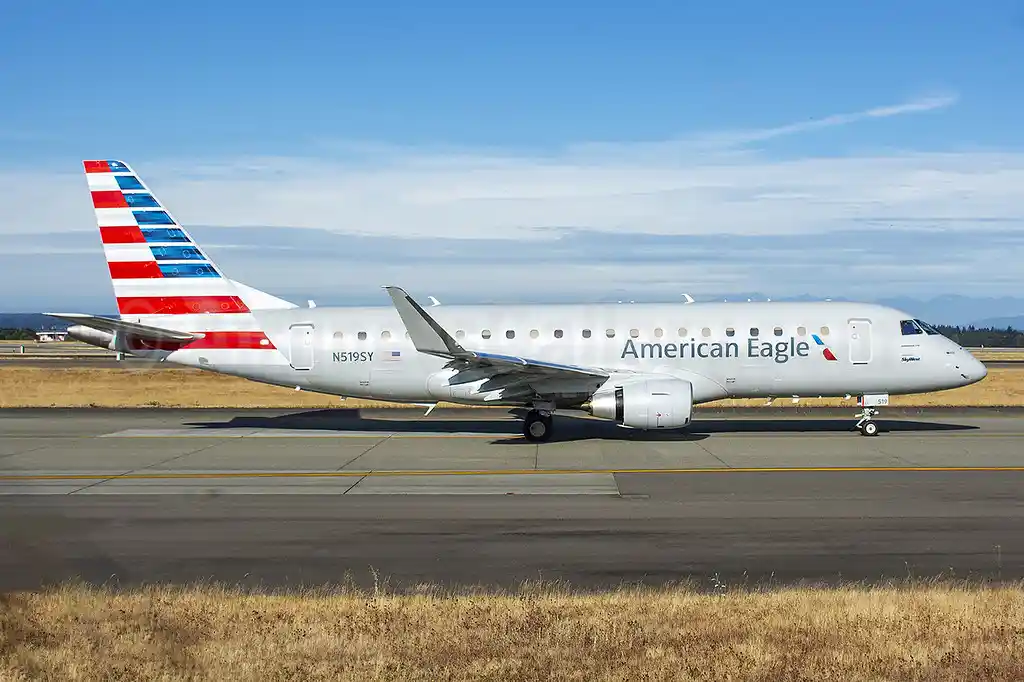
While regional airline routes typically serve short-haul connections between smaller airports and major hubs, American Airlines’ American Eagle brand defies this trend with a select group of ultra-long regional flights that span well over 1,400 miles. Operated by partner airlines such as SkyWest and Envoy Air, these routes leverage the range and comfort of the Embraer E175 and Bombardier CRJ700 jets to cover impressive distances, bringing regional travel closer to mainline performance without sacrificing frequency or reliability.
Breaking the Boundaries of Regional Aviation
The traditional role of regional carriers in the United States has been to bridge smaller communities to larger cities, often covering routes of just a few hundred miles. However, current scheduling data from aviation analytics firm Cirium reveals a growing number of high-mileage American Eagle services that challenge this norm. These flights showcase not only the technical capabilities of modern regional aircraft but also American Airlines’ strategic approach to optimizing its national connectivity.
LAX to St Louis: The Longest Regular American Eagle Route
The longest regularly scheduled American Eagle route this November connects Los Angeles International Airport (LAX) with St. Louis Lambert International Airport (STL). Spanning a formidable 1,592 miles (2,562 km), this daily service is operated by SkyWest Airlines using Embraer E175 jets, which offer a surprisingly upscale experience for a regional flight with 12 first class and 64 economy seats.
Westbound flight AA4885 departs STL at 07:00, reaching LAX at 09:25, with a block time of 4 hours and 25 minutes. The return, AA6502, leaves LAX at 18:17, touching down in STL at 23:42 after 3 hours and 25 minutes of flight time. The route exemplifies American Airlines’ push for consistency across its network, as echoed in their recent fleet update statement about offering a “clean, modern cabin design” that mimics the mainline experience.
Dallas/Fort Worth to Santa Rosa: The Californian Reach
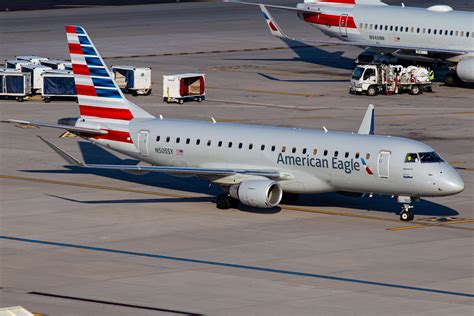
Ranking second in length is the Dallas/Fort Worth (DFW) to Charles M. Schulz Sonoma County Airport (STS) service in Santa Rosa, California, clocking in at 1,494 miles (2,404 km). Operated by Envoy Air, also with the Embraer E175, this corridor sees 27 scheduled operations this month.
Flight AA3977 heads west from DFW at 09:59, arriving at STS by 12:07, taking 4 hours and 8 minutes. After a swift turnaround, the eastbound leg, AA3393, leaves at 13:18, arriving back in Dallas at 18:54, requiring 3 hours and 36 minutes. This route exemplifies American’s dedication to connecting growing regions like Sonoma County directly to major hubs without relying on mainline services.
LAX to Des Moines: Midwest to the Coast
The third longest route in this elite group connects Des Moines International Airport (DSM) in Iowa with Los Angeles International Airport (LAX). This 1,447-mile (2,329 km) flight is another SkyWest Airlines operation using E175 aircraft, averaging more than daily service with 32 westbound and 31 eastbound flights in November. Westbound, the journey takes 4 hours and 1 minute, while eastbound flights complete the route in 3 hours and 41 minutes.
Honorable Mention: CRJ700s from Phoenix to Cedar Rapids
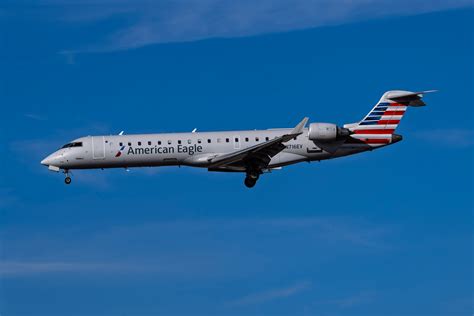
Though slightly shorter than the 1,400-mile threshold, it’s worth noting the Phoenix (PHX) to Cedar Rapids (CID) route, which still pushes the upper limits of what is considered regional flying. Measuring 1,252 miles (2,015 km), this corridor is regularly flown twice a day by SkyWest’s Bombardier CRJ700 aircraft. These jets, with their 9 first class and 56 economy seats, provide a solid three-hour-plus journey that underscores the endurance of the CRJ family.
Flights from PHX to CID take just over 3 hours, with the return leg clocking in around 3.5 hours, offering passengers a viable alternative to mainline travel without compromising on scheduling flexibility. Though the CRJ700 lacks the modern amenities of the E175, it continues to play a crucial role in American’s regional network.
A Shift in Regional Flight Perception
What these ultra-long regional routes represent is a fundamental shift in the perception and capability of regional aviation. No longer confined to short hops, aircraft like the E175 and CRJ700 are redefining boundaries, servicing cross-country connections that once belonged solely to larger jets. For American Airlines, this operational flexibility enhances hub connectivity, expands market reach, and provides passengers in secondary markets access to long-distance, point-to-point service—all under the American Eagle banner.
In an era where route efficiency, passenger comfort, and aircraft utilization are more crucial than ever, American Airlines’ approach to long regional flying illustrates how innovative scheduling and modern aircraft can work in tandem to create new value in a competitive domestic market.