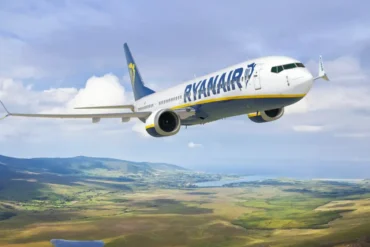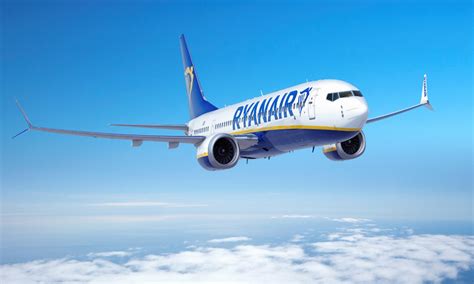
Ryanair’s network has always been built on velocity: fast turnarounds, dense seating, relentless aircraft utilization, and fares that make weekend travel feel almost impulsive. In 2026, that velocity is powered decisively by the Boeing 737 MAX, particularly the high-density 737-8200 “Gamechanger” variant. While the airline is synonymous with short hops between European cities, its longest nonstop sectors reveal something more nuanced. These routes stretch the practical envelope of a single-aisle jet while preserving the ruthless cost discipline that defines Europe’s largest ultra-low-cost carrier.
The longest Ryanair flights are not transcontinental epics. They are precision instruments—carefully selected leisure and secondary business markets that sit at the far edge of the narrowbody comfort zone. Routes linking Central European bases such as Kraków (KRK), Budapest (BUD), and Berlin (BER) to the Canary Islands, alongside services from Dublin (DUB) and northern UK cities to Cyprus (PFO), showcase how the MAX enables stage lengths exceeding 2,400 miles without diluting the airline’s operating formula.
These sectors are strategic rather than symbolic. They connect colder, densely populated regions of mainland Europe with high-yield winter sun destinations, sustaining demand well beyond the traditional summer peak. By deploying a uniform fleet built around the 737 MAX family, Ryanair keeps training, maintenance, and scheduling complexity to a minimum—even as flight times approach five hours.
The Boeing 737 MAX 8-200: Engineered for High-Density Efficiency
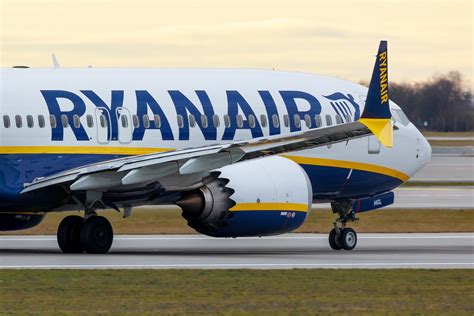
The Boeing 737 MAX family represents the latest evolution of the world’s best-selling narrowbody series. Its defining upgrades include CFM LEAP-1B engines, advanced split-tip winglets, and aerodynamic refinements that reduce fuel burn by roughly 14% per seat compared to earlier 737 Next Generation aircraft. For a carrier obsessed with cost per available seat mile, that percentage is transformative rather than incremental.
Ryanair’s preferred configuration, the 737 MAX 8-200, pushes efficiency further. Designed specifically for low-cost carriers, it accommodates up to 200 passengers in a single-class layout while preserving the fuel performance and range characteristics of the standard MAX 8. The aircraft is capable of operating routes of up to approximately 3,500 nautical miles under optimal conditions, placing even the Canary Islands comfortably within its reach from most of Europe.
The MAX’s path to dominance was not linear. Following the two tragic accidents in 2018 and 2019, the aircraft underwent extensive redesign and recertification, including flight control system modifications and enhanced pilot training requirements. Today, it operates thousands of daily flights worldwide, its reliability and economics re-established across both low-cost and full-service fleets. For Ryanair, confidence in the type is not theoretical; it is embedded in fleet expansion orders worth tens of billions of dollars.
Ryanair’s Longest Nonstop Routes in 2026
Ryanair’s longest Boeing 737 MAX routes in 2026 cluster around leisure corridors linking Central and Western Europe with Atlantic island destinations and the Eastern Mediterranean. The standout city pairs include:
- Kraków (KRK) – Tenerife South (TFS): 2,437 miles
- Budapest (BUD) – Tenerife South (TFS): 2,343 miles
- Berlin (BER) – Tenerife South (TFS): 2,281 miles
- Dublin (DUB) – Paphos (PFO): 2,278 miles
- Berlin (BER) – Gran Canaria (LPA): 2,247 miles
- Vienna (VIE) – Tenerife South (TFS): 2,247 miles
- Berlin (BER) – Fuerteventura (FUE): 2,166 miles
- Newcastle (NCL) – Paphos (PFO): 2,150 miles
- Liverpool (LPL) – Paphos (PFO): 2,145 miles
- Berlin (BER) – Lanzarote (ACE): 2,129 miles
Although most operate seasonally rather than daily, they represent some of the longest sectors flown by any European ultra-low-cost carrier using a single-aisle aircraft. Distances exceeding 2,400 miles translate into block times approaching five hours depending on winds and routing—well beyond the archetypal two-hour Ryanair hop.
Canary Islands: The Atlantic Anchor of Long-Haul Narrowbody Strategy
The Canary Islands—Tenerife (TFS), Gran Canaria (LPA), Fuerteventura (FUE), and Lanzarote (ACE)—form the backbone of Ryanair’s longest nonstop operations. Located off the northwest coast of Africa, these Spanish islands provide year-round sunshine and robust winter demand from Central and Northern Europe.
Flights from Kraków or Budapest to Tenerife South are not marginal experiments; they are deliberate network plays. Central European travelers increasingly seek winter sun escapes without the price premium associated with traditional leisure carriers. By deploying the 737 MAX 8-200 on these routes, Ryanair combines high seat density with lower fuel burn, ensuring that even long sectors remain compatible with its ultra-low-cost model.
Wind patterns across the Atlantic can influence westbound block times, occasionally extending flight duration. Yet the MAX’s performance margins allow the airline to operate these routes reliably without sacrificing payload. The result is a consistent seasonal bridge between colder continental climates and subtropical Atlantic beaches.
Cyprus and the Eastern Mediterranean Extension
While the Canary Islands dominate the mileage charts, Paphos (PFO) in Cyprus represents another significant long-sector market. Connections from Dublin, Newcastle, and Liverpool exceed 2,100 miles, stretching from the North Atlantic fringe to the Eastern Mediterranean.
These routes demonstrate geographic symmetry in Ryanair’s strategy. Instead of focusing exclusively on westward Atlantic leisure traffic, the airline also links northern UK and Irish cities with sun destinations deep in the Mediterranean basin. The MAX’s range flexibility allows such services without fleet fragmentation or operational compromise.
Cabin Reality on a Five-Hour Ultra-Low-Cost Flight
Ryanair’s onboard experience remains intentionally standardized, even on its longest sectors. The 737 MAX 8-200 cabin features a single-class layout with approximately 29 inches of seat pitch and a minimum seat width of 15.5 inches between armrests. There are no differentiated cabins; every passenger shares the same fundamental seat.
On flights approaching five hours, simplicity becomes part of the value proposition. Food and beverages are available through buy-on-board service, allowing travelers to tailor spending rather than subsidize bundled inclusions. Optional add-ons such as Priority Boarding or Extra Legroom seats offer incremental comfort without disrupting the core low-fare structure.
The MAX introduces subtle enhancements compared to older 737 variants. The LEAP-1B engines produce lower cabin noise levels, and the interior lighting and updated overhead bins provide a more contemporary feel. These refinements do not transform the aircraft into a premium product; they reinforce predictability and operational consistency across longer stages.
Fleet Standardization as a Competitive Weapon
As of early 2026, Ryanair operates hundreds of Boeing 737 aircraft, with over 200 737-8200 “Gamechanger” jets already in service and hundreds more on order. The airline has committed roughly $22 billion to acquiring 210 additional 737-8200 aircraft, targeting fuel burn reductions of about 16% per flight compared to previous-generation jets and noise reductions approaching 40%.
Fleet uniformity underpins every long-sector decision. Training pilots on a single aircraft family reduces transition costs. Maintenance crews work within a consistent technical ecosystem. Spare parts inventories remain streamlined. These structural efficiencies compound across thousands of daily flights.
Looking ahead, Ryanair’s order for 300 Boeing 737 MAX 10 aircraft signals an ambition to expand seat capacity even further later in the decade. While the MAX 10’s entry into service remains forthcoming, its additional capacity and efficiency could reshape how the airline evaluates longer stage lengths within Europe and its periphery.
Production Expansion and Global MAX Momentum
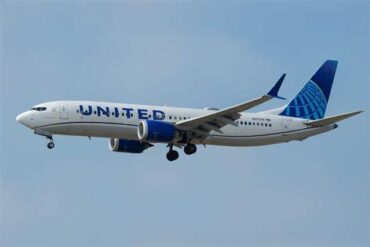
The 737 MAX is not merely central to Ryanair; it is foundational to global narrowbody economics. Major carriers including Southwest Airlines, American Airlines, United Airlines, and Turkish Airlines rely on the type for high-frequency networks and medium-range missions.
Boeing’s plan to open a fourth 737 MAX assembly line in Everett, Washington in 2026 reflects sustained global demand. Increasing production capacity is essential for airlines with aggressive fleet renewal programs. For Ryanair, delivery schedules are intertwined with growth projections, seasonal capacity planning, and long-term cost control.
The Economics of Stretching a Narrowbody
Operating a 2,400-mile route with a single-aisle jet requires careful cost modeling. Fuel remains the dominant variable expense, and longer sectors amplify exposure to price volatility. However, the MAX’s efficiency mitigates this risk, particularly when combined with 200-seat density.
High load factors on leisure routes strengthen the equation. Vacation markets typically exhibit strong seasonal peaks, enabling airlines to concentrate capacity during high-demand windows. Ryanair’s scheduling discipline—deploying aircraft intensively during peak months—ensures that long sectors complement rather than disrupt overall network productivity.
These routes also reinforce brand perception. They demonstrate that an ultra-low-cost carrier can connect distant European city pairs nonstop without sacrificing its pricing identity. The narrative shifts from “cheap and short” to “efficient and expansive.”
Strategic Significance Beyond Distance
Measured against intercontinental aviation, 2,400 miles may seem modest. Within the context of Europe’s single-aisle low-cost ecosystem, however, these are frontier routes. They push the operational envelope while remaining firmly inside the economic logic of high-density narrowbody flying.
Ryanair’s longest Boeing 737 MAX routes in 2026 are not anomalies; they are calculated extensions of a disciplined model. By pairing the MAX 8-200’s range and fuel efficiency with standardized operations, the airline transforms distant leisure destinations into viable ultra-low-cost markets. The result is a network that stretches from Ireland to Cyprus and from Central Europe to the Atlantic islands—proof that narrowbody aircraft, when optimized correctly, can redraw the practical map of affordable air travel across the continent.