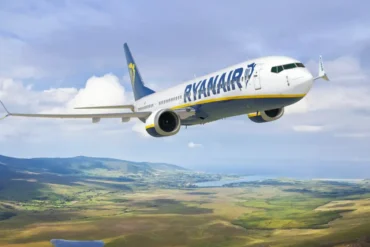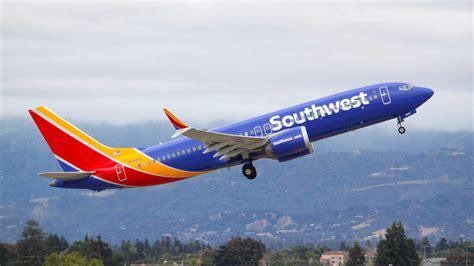
Southwest Airlines has quietly redefined what a single-aisle aircraft can accomplish in the modern aviation landscape. In 2026, the airline’s network showcases a bold expansion into ultra-long narrowbody operations, with multiple routes stretching beyond 2,600 miles. These are not marginal experiments—they are high-frequency, high-capacity services connecting the U.S. mainland directly to Hawaii, powered by the Boeing 737 MAX 8.
This transformation is not just about distance; it is about strategy. Southwest’s decision to deploy a single aircraft family across increasingly complex missions demonstrates a calculated evolution in its business model. The airline has leveraged the fuel efficiency, extended range, and operational flexibility of the 737 MAX to unlock routes that were once the domain of widebody jets.
For passengers, the shift is equally significant. Travelers from inland cities like Phoenix and Las Vegas now enjoy nonstop access to Hawaiian destinations, bypassing traditional coastal hubs. This eliminates layovers, reduces travel fatigue, and simplifies itineraries—an appealing proposition in a competitive leisure market.
How the Boeing 737 MAX Enables Southwest’s Longest Routes
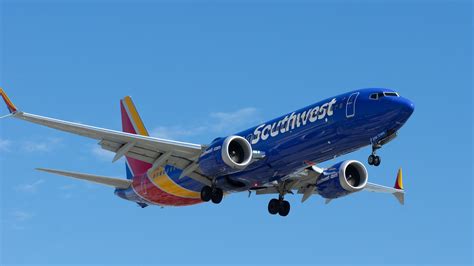
The backbone of these long-haul operations is the Boeing 737 MAX 8, configured with 175 seats in Southwest’s all-economy layout. While narrowbody aircraft were once limited to shorter domestic routes, the MAX has rewritten those boundaries through advanced aerodynamics, improved engines, and increased fuel efficiency.
The aircraft’s range allows Southwest to operate flights approaching—and in some cases exceeding—seven hours in duration. This capability is critical for transoceanic routes between the mainland United States and Hawaii, where efficiency and payload management become decisive factors.
Equally important is Southwest’s adherence to a single-fleet strategy. By avoiding multiple aircraft types, the airline reduces maintenance complexity, simplifies pilot training, and improves scheduling flexibility. The 737 MAX becomes not just a tool, but a strategic enabler, allowing Southwest to scale long-haul routes without sacrificing operational consistency.
Phoenix to Honolulu: The Longest 737 MAX Route in Southwest’s Network
At the top of Southwest’s long-distance portfolio is the Phoenix Sky Harbor International Airport (PHX) to Daniel K. Inouye International Airport (HNL) route. Covering approximately 2,918 miles (4,696 km), it stands as the airline’s longest regularly scheduled Boeing 737 MAX service in 2026.
This route is more than a technical achievement—it is a reflection of Phoenix’s growing importance as a central inland gateway. With 273 annual flights in each direction, the route generates around 139.4 million available seat miles (ASMs) per direction, signaling strong and consistent demand.
Phoenix’s geographic position allows Southwest to funnel passengers from across the western and southwestern United States into a single departure point. This creates a powerful combination of origin-and-destination traffic and connecting flows, maximizing aircraft utilization on one of the most demanding routes in the network.
Phoenix to Kahului: Strengthening the Maui Connection
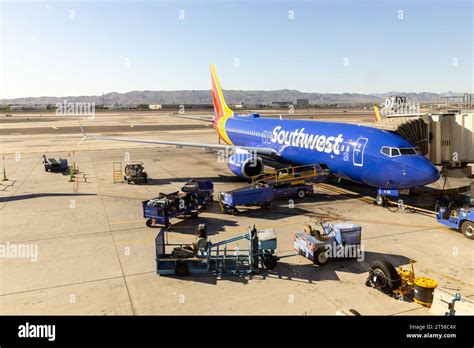
Closely following in distance is the Phoenix to Kahului (OGG) route, spanning approximately 2,845 miles (4,578 km). This service plays a crucial role in linking the mainland to Maui, one of Hawaii’s most sought-after destinations.
Southwest operates 273 flights annually in each direction, offering roughly 47,775 seats per year each way. The route generates about 135.9 million ASMs, highlighting its importance within the airline’s Hawaii network.
Maui’s appeal lies in its balance of natural beauty and tourism infrastructure. By offering direct service from Phoenix, Southwest allows travelers to avoid congested West Coast airports such as Los Angeles and San Francisco. The result is a more streamlined travel experience, particularly valuable during peak vacation seasons when delays and congestion are common.
From a network perspective, this route reinforces Phoenix’s role as a high-efficiency inland hub, extending Southwest’s reach far beyond its traditional short-haul roots.
Las Vegas to Lihue: Direct Access to Kauai’s Remote Beauty
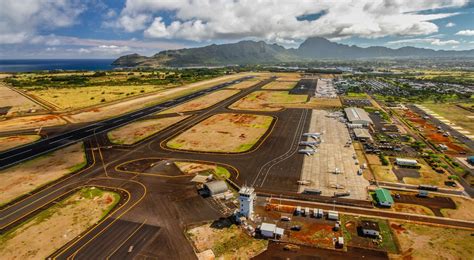
The Las Vegas (LAS) to Lihue (LIH) route represents a strategic expansion into one of Hawaii’s more niche markets. Covering approximately 2,818 miles, this service connects a major mainland hub with the island of Kauai, often referred to as the “Garden Isle.”
With 546 total annual flights and approximately 134.6 million ASMs per direction, the route demonstrates that even smaller Hawaiian markets can sustain long-haul narrowbody service when supported by a strong connecting hub.
Las Vegas plays a critical role here. As one of Southwest’s busiest operational bases, it channels passengers from dozens of cities into long-haul flights. This connectivity transforms routes like LAS–LIH from niche offerings into highly viable, revenue-generating services.
Las Vegas to Honolulu: The Highest-Capacity Long-Haul Route
Among all of Southwest’s long-distance routes, Las Vegas to Honolulu stands out for its sheer scale. Spanning approximately 2,762 miles (4,445 km), this route operates 701 flights annually in each direction, totaling over 1,400 flights per year.
This high frequency translates into roughly 338.8 million ASMs per direction, making it the largest long-haul market in Southwest’s Hawaii network by a significant margin.
The success of this route is rooted in Las Vegas’s dual identity as both a global tourism destination and a major connecting hub. Travelers from across the United States converge on Las Vegas before continuing to Hawaii, creating a steady stream of demand that supports such an intensive schedule.
This route exemplifies how Southwest combines high aircraft utilization, strong passenger demand, and efficient operations to dominate a competitive long-haul segment—all without deploying widebody aircraft.
Las Vegas to Kona: Expanding Reach to Hawaii Island
Another key route in Southwest’s network connects Las Vegas to Kona (KOA), covering approximately 2,717 miles (4,373 km). While slightly shorter than other routes, it remains firmly within the category of ultra-long narrowbody operations.
With 546 annual flights and about 129.8 million ASMs per direction, the route plays a vital role in connecting mainland travelers to Hawaii Island. Kona’s appeal lies in its unique combination of resort destinations, volcanic landscapes, and cultural attractions.
By offering direct access from Las Vegas, Southwest reduces reliance on Honolulu as a transfer point. This not only improves the passenger experience but also helps distribute tourism more evenly across the Hawaiian Islands.
Las Vegas to Kahului: Sustaining High Demand for Maui
Rounding out the list is the Las Vegas to Kahului route, which spans approximately 2,695 miles (4,336 km). Though slightly shorter than its counterparts, it remains one of Southwest’s longest and most strategically important services.
The airline schedules 278 flights annually in each direction, providing around 131.1 million ASMs per direction. This reflects strong and consistent demand for travel between Las Vegas and Maui.
Together with the Phoenix–Kahului route, this service underscores Southwest’s commitment to Maui as a core destination within its Hawaii network. The ability to sustain multiple long-haul routes to the same island highlights both the strength of demand and the efficiency of the 737 MAX in meeting it.
The Strategic Impact of Southwest’s Longest Routes
These routes are not isolated achievements—they are part of a broader strategy that positions Southwest as a dominant player in mainland–Hawaii travel. By leveraging the Boeing 737 MAX, the airline has expanded its reach while maintaining its hallmark simplicity.
Several strategic advantages emerge from this approach:
- Direct connectivity from inland cities, reducing dependence on coastal hubs
- High-frequency operations that maximize aircraft utilization
- Cost efficiency through a single aircraft type
- Expanded market access to multiple Hawaiian islands
This model allows Southwest to compete effectively against legacy carriers, many of which rely on larger, more complex fleets.
Redefining Long-Haul Narrowbody Travel in 2026
Southwest Airlines’ longest Boeing 737 MAX routes represent a turning point in commercial aviation. What was once considered impractical—operating nearly 3,000-mile flights with a single-aisle aircraft—is now a routine part of the airline’s network.
The implications extend beyond Southwest. These routes signal a broader industry trend toward longer narrowbody operations, driven by advancements in aircraft technology and evolving passenger preferences.
For travelers, the benefits are immediate: fewer connections, shorter travel times, and more direct access to popular destinations. For the airline, the payoff is equally compelling: greater efficiency, expanded market reach, and sustained profitability.
As 2026 unfolds, Southwest’s long-haul network stands as a powerful example of how innovation, strategy, and execution can converge to reshape an entire segment of the aviation industry.