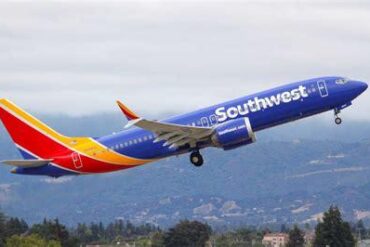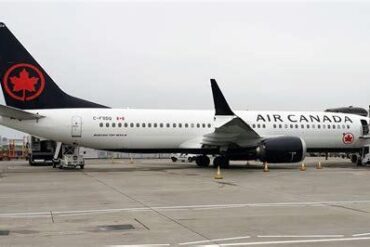
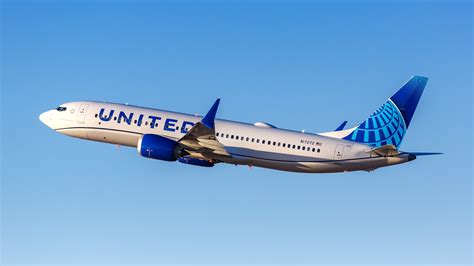
The Boeing 737 MAX 8 has emerged as one of the most influential narrowbody aircraft in modern aviation, balancing efficiency, capacity, and impressive range. For United Airlines, the aircraft has become a versatile tool capable of serving both high-frequency domestic corridors and increasingly ambitious long-distance routes. In 2026, the carrier’s deployment of the MAX 8 reveals a notable strategic shift: a gradual expansion from traditional short-haul missions into ultra-long narrowbody operations stretching across North America and the Atlantic Ocean.
With a maximum range of approximately 4,028 miles (6,480 km), the aircraft occupies a sweet spot between short-haul workhorse and long-haul specialist. This capability allows United to operate routes where passenger demand may not justify a widebody aircraft but where distance would traditionally exceed the comfort zone of older single-aisle jets.
The result is a network where routes exceeding 3,000 miles are becoming increasingly common for the 737 MAX 8, linking Alaska with the East Coast, California with Central America, and the northeastern United States with destinations in Europe.
The Range Capabilities That Enable Ultra-Long Narrowbody Routes
The 737 MAX 8 represents a significant technological leap compared with earlier generations of the 737 family. Its CFM LEAP-1B engines, aerodynamic improvements such as advanced winglets, and enhanced fuel efficiency enable the aircraft to fly farther while maintaining competitive operating costs.
These characteristics make the aircraft particularly valuable on “long thin” routes—city pairs where distance is significant but passenger demand is moderate. Operating a widebody aircraft on such routes could lead to excessive capacity and higher operating costs, whereas the MAX 8 provides an efficient alternative.
For United Airlines, this capability opens the door to destinations that previously might have required connections through hub airports. In 2026, the airline’s schedule shows a growing number of routes approaching the aircraft’s practical range limits, particularly across North America and the North Atlantic.
Notably, the longest missions in United’s MAX 8 network are not transatlantic flights but domestic journeys linking Alaska with the eastern United States. These routes highlight the aircraft’s endurance and demonstrate how narrowbody jets are redefining the boundaries of domestic air travel.
Anchorage To Newark: United’s Longest 737 MAX 8 Route
The longest Boeing 737 MAX 8 route operated by United Airlines in 2026 connects Ted Stevens Anchorage International Airport (ANC) with Newark Liberty International Airport (EWR). Covering an average distance of 3,369 miles, this flight pushes the aircraft close to the upper limits of its operational range.
Scheduled 112 times during 2026, the route represents a major logistical achievement for a narrowbody aircraft. The journey links Alaska’s largest city with one of the busiest aviation gateways on the U.S. East Coast, offering travelers a direct connection that eliminates the need for intermediate stops.
Passengers flying this route experience a journey comparable in length to some transatlantic flights. The MAX 8’s cabin configuration typically includes:
- 16 First Class seats
- 54 Economy Plus seats
- 96 standard Economy seats
This layout reflects United’s attempt to balance passenger comfort with capacity while maintaining operational efficiency on extremely long narrowbody flights.
Washington Dulles To Anchorage: A Seven-Hour Narrowbody Marathon
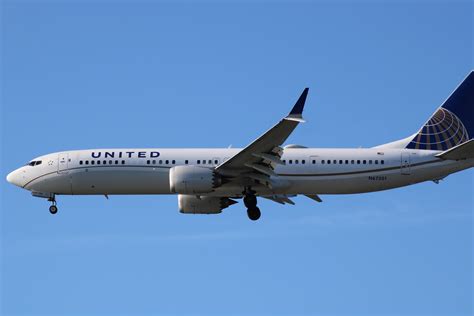
The second-longest MAX 8 route in United’s network connects Washington Dulles International Airport (IAD) with Anchorage, stretching approximately 3,356 miles. This flight is particularly notable because of its 7-hour-and-44-minute duration, an exceptionally long travel time for a single-aisle aircraft.
United launched this route on May 23, 2024, initially operating it as a seasonal summer service. However, strong passenger demand quickly justified continued operations and increased frequency. By 2026, the airline plans to operate the route 119 times, confirming its viability.
Before this nonstop flight was introduced, travelers between Washington, D.C., and Anchorage typically needed to connect through hubs such as Seattle or Chicago. Market analysis suggested a consistent base of 30 passengers per day each way, rising to more than 50 passengers during the peak summer months. This demand proved sufficient for United to deploy the MAX 8 successfully.
The route’s endurance test illustrates how modern narrowbody aircraft can replace multi-segment journeys with direct connections, significantly reducing travel time for passengers.
Central and South American Missions Approaching 3,000 Miles
United’s 737 MAX 8 network is not limited to domestic operations. Several of the airline’s longest flights extend deep into Central and South America, demonstrating the aircraft’s ability to connect the United States with distant leisure and business destinations.
One of the most striking examples is the Panama City (PTY) to San Francisco (SFO) route. Averaging 3,320 miles, the journey spans much of the Western Hemisphere. Although the schedule includes only five flights in 2026, the route represents a strategic experiment in long-distance narrowbody operations.
Other long Latin American routes include:
- San Francisco – San José, Costa Rica (3,039 miles)
- Liberia, Costa Rica – San Francisco (2,946 miles)
- Houston – Georgetown, Guyana (2,901 miles)
These services connect major U.S. hubs with destinations that attract both tourism and business travel. The MAX 8’s range and efficiency allow United to operate these flights profitably even when passenger volumes remain relatively modest.
Transatlantic Expansion With A Narrowbody Strategy
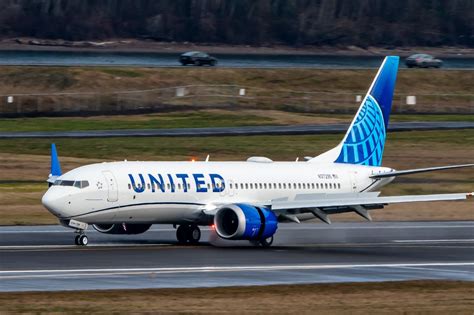
Perhaps the most intriguing development in United’s 2026 network is the expansion of transatlantic routes operated by the 737 MAX 8. Historically, flights between North America and Europe have relied on widebody aircraft equipped with premium cabins and long-haul amenities. However, advances in aircraft efficiency are gradually reshaping this paradigm.
From Newark Liberty International Airport, United plans several long European routes using the MAX 8, including:
- Newark – Glasgow, Scotland (3,229 miles)
- Newark – Santiago de Compostela, Spain (3,310 miles)
- Newark – Madeira (3,178 miles)
The Glasgow service is particularly significant because it marks United’s return to Scotland’s largest city after a multi-year absence. The airline previously served the route before suspending it in 2019. Its revival using the MAX 8 demonstrates how smaller, more efficient aircraft can sustain routes that might not support daily widebody operations.
These transatlantic flights typically feature economy and Economy Plus seating, rather than lie-flat business class. The strategy prioritizes capacity and affordability, targeting leisure travelers rather than premium business passengers.
Fleet Composition And The Role Of The MAX 8
United Airlines operates one of the largest Boeing 737 fleets in the world, consisting of several variants that serve different operational roles within the airline’s network.
As of 2026, the fleet includes:
- 135 Boeing 737-900ER aircraft
- 139 Boeing 737-800 aircraft
- 137 Boeing 737 MAX 9 aircraft
- 123 Boeing 737 MAX 8 aircraft
- 40 Boeing 737-700 aircraft
In addition, United has 167 Boeing 737 MAX 10 aircraft on order, though certification delays have postponed their entry into service.
Within this lineup, the MAX 8 occupies a unique niche. While the MAX 9 offers slightly greater capacity, the MAX 8 provides a marginally longer range. This characteristic makes it the preferred aircraft for routes where distance is the primary constraint rather than passenger demand.
Consequently, many of United’s longest narrowbody routes rely on the MAX 8 rather than the larger MAX 9.
Contrasting The MAX 8 And MAX 9 Route Networks
While the MAX 8 is increasingly used for long-distance flights, the 737 MAX 9 remains heavily concentrated on high-frequency domestic routes. In 2025 alone, United scheduled 110,000 flights using the MAX 9, demonstrating the aircraft’s importance as a domestic workhorse.
Some of the busiest MAX 9 routes include:
- Los Angeles – Houston
- Houston – San Francisco
- Chicago – Washington Dulles
- Newark – Orlando
- Raleigh/Durham – Houston
International operations for the MAX 9 are relatively limited and focus primarily on nearby leisure destinations. Examples include Houston to Cancun and Newark to Santo Domingo, both of which are extremely popular vacation routes.
This contrast highlights the distinct operational roles of the two aircraft types. The MAX 9 excels on short-to-medium-haul routes with high passenger demand, while the MAX 8 increasingly serves longer, lower-density markets.

Why Narrowbody Aircraft Are Transforming Long-Distance Travel
The growing use of aircraft like the 737 MAX 8 on long routes reflects a broader transformation within the aviation industry. Airlines are increasingly prioritizing fuel efficiency, operational flexibility, and route experimentation.
Long-range narrowbody aircraft offer several advantages:
- Lower operating costs compared with widebody aircraft
- Ability to open niche international routes
- Improved profitability on lower-demand city pairs
- Reduced environmental impact due to improved fuel efficiency
For passengers, this shift means more direct flights between cities that previously required connections. Instead of routing through major hubs, travelers can increasingly fly nonstop between secondary destinations across continents.
The strategy also allows airlines to test new markets with minimal risk, expanding service if demand grows or withdrawing aircraft if routes underperform.
A Strategic Shift In United’s Network Planning
United Airlines’ 2026 schedule illustrates a gradual but significant evolution in how the airline deploys its 737 MAX 8 fleet. When the aircraft first entered service with the carrier, it was primarily used for domestic flights such as Newark–Boston, Denver–San Diego, and LaGuardia–Denver.
International missions were initially limited to relatively short distances, including flights to Mexico City, Bogotá, Calgary, and Vancouver. Transatlantic routes were rare, with only a handful of niche services such as Newark to Funchal in Madeira.
Today, the network looks very different. The MAX 8 is increasingly performing missions once reserved for larger aircraft, stretching across North America and the Atlantic.
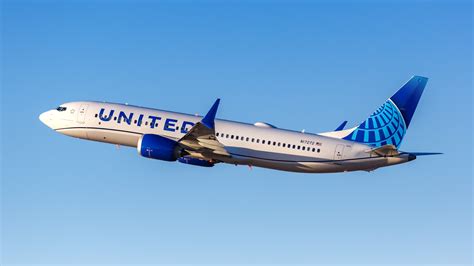
This evolution suggests that United views the aircraft not merely as a replacement for older 737 models but as a strategic tool for expanding its global network. As fuel prices fluctuate and passenger demand continues to shift toward point-to-point travel, long-range narrowbody aircraft may become even more central to airline route planning.
For the 737 MAX 8, 2026 represents a turning point—one where the aircraft transitions from a domestic workhorse into a key player in long-distance international aviation.