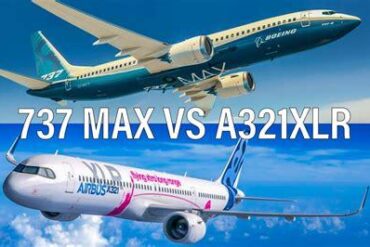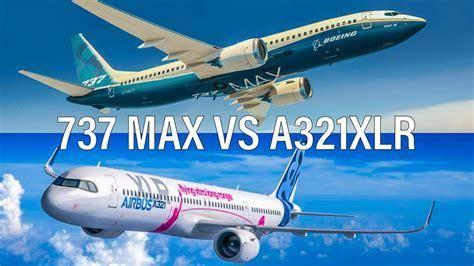
The battle between Airbus A321XLR and Boeing 737 MAX 10 is not just another chapter in the long-standing Airbus–Boeing rivalry. It represents a fundamental shift in how airlines think about networks, profitability, and passenger demand in a post-pandemic aviation landscape.
For decades, narrowbody aircraft were confined to short- and medium-haul routes, feeding passengers into long-haul hubs dominated by widebodies. That paradigm is rapidly evolving. Airlines are now prioritizing flexibility, efficiency, and the ability to open new routes with lower risk. And in that equation, the A321XLR has emerged as a transformative tool.
While Boeing’s MAX 10 focuses on capacity and density, Airbus has taken a different path—one that aligns more closely with how airlines are reshaping their strategies. The result is a clear divergence in market momentum, with the A321XLR attracting strong demand across continents.
Unmatched Range Redefines What Narrowbodies Can Do
The single most decisive advantage of the A321XLR is its extraordinary range. With a reach of up to 4,700 nautical miles, it operates in a category that simply did not exist for single-aisle aircraft until recently. This capability is not incremental—it is disruptive.
Airbus achieved this by redesigning the aircraft’s fuel architecture, integrating a permanent Rear Center Tank and optimizing the center wing tank without sacrificing valuable cargo space. The result is a narrowbody capable of flying up to 11 hours, bridging distances that previously required widebody aircraft.
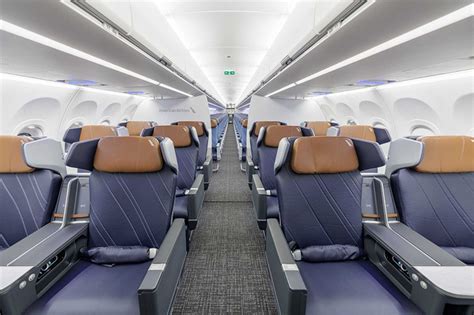
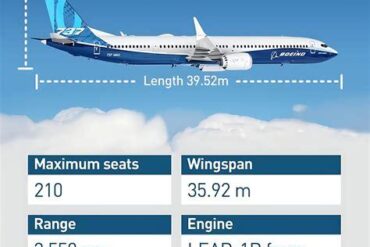
By contrast, the MAX 10, despite being the largest member of its family, offers a range of around 3,100 nautical miles. Its design philosophy prioritizes passenger capacity over endurance, making it well-suited for dense, short-to-medium routes—but limiting its strategic flexibility.
This gap of roughly 1,600 nautical miles is not just a number. It represents entire continents unlocked.
Airlines can now connect city pairs such as New York to Rome or Kuala Lumpur to Sydney with a narrowbody aircraft. These routes were either unviable or inefficient with traditional fleet structures. The A321XLR turns them into profitable opportunities.
Opening New Point-to-Point Markets Without Widebody Risk
The implications of that range advantage are profound. Airlines are no longer forced to funnel passengers through mega-hubs to justify widebody deployments. Instead, they can operate direct, point-to-point routes between secondary cities—markets that were historically underserved.
This shift aligns perfectly with modern passenger preferences. Travelers increasingly value direct connections over layovers, even on long-haul journeys. The A321XLR allows airlines to meet that demand without the financial burden of filling 250–300 seats on a widebody aircraft.
Across the Atlantic, this transformation is already visible. Carriers are launching routes between smaller North American and European cities—markets that would never sustain daily widebody service. The economics are compelling: lower trip costs, reduced risk, and higher load factor stability.
Airlines such as American Airlines and Aer Lingus are deploying the aircraft on routes that blend leisure and business demand, capturing traffic that previously leaked through larger hubs. Meanwhile, low-cost carriers are leveraging the aircraft to push into long-haul territory without abandoning their cost structures.
The MAX 10, with its shorter range, cannot participate in this network evolution. It remains tied to traditional high-density corridors, where competition is already intense and margins are often thinner.
A True Boeing 757 Successor—Filling a Strategic Void
For years, the aviation industry has faced a glaring gap: the absence of a modern replacement for the Boeing 757. Introduced in the early 1980s, the 757 became a workhorse for “long and thin” routes—offering the perfect balance of range and capacity.
But as those aircraft aged, Boeing chose not to develop a direct successor. Instead, it shifted focus toward the 737 MAX family and larger widebody programs, leaving airlines with no modern equivalent.
Airbus saw the opportunity—and moved decisively.
The A321XLR is not just a new aircraft; it is the spiritual and operational successor to the 757. It matches or exceeds the 757’s range while delivering significantly better fuel efficiency and lower operating costs. For airlines that built entire network strategies around the 757, this matters immensely.

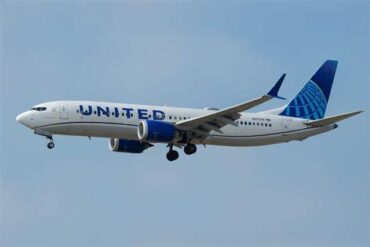
Carriers like United Airlines are already planning to phase out aging 757 fleets in favor of the A321XLR. Icelandair, long synonymous with 757 operations, is also transitioning to the A321neo family to maintain its transatlantic niche strategy.
The MAX 10, despite its size, cannot fill this role. Its limited range prevents it from replicating the 757’s unique mission profile. As a result, Boeing currently lacks a direct competitor in this crucial segment—a reality that is reshaping fleet decisions worldwide.
Fleet Commonality Drives Lower Costs and Faster Integration
Airlines do not make fleet decisions based solely on performance metrics. Operational efficiency—particularly fleet commonality—is a decisive factor.
The A321XLR benefits from being part of the highly successful A320neo family. For airlines already operating Airbus narrowbodies, integrating the XLR is remarkably straightforward. Pilots require minimal additional training due to shared type ratings, while maintenance and spare parts ecosystems remain largely consistent.
This translates into real savings—not just in training costs, but in scheduling flexibility, crew utilization, and operational resilience. Airlines can seamlessly deploy the A321XLR across different routes without introducing complexity into their operations.

This advantage is particularly attractive to large Airbus operators. Carriers like IndiGo, Wizz Air, and Qantas are expanding their fleets with the XLR precisely because it fits into their existing infrastructure with minimal friction.
While Boeing also offers commonality within the 737 MAX family, the MAX 10 does not provide a compelling enough differentiation to justify switching strategies—especially for airlines already embedded in the Airbus ecosystem.
In essence, the A321XLR is not just a new aircraft; it is an extension of an already dominant platform.
Certification Delays Undermine Boeing’s Competitive Position
Timing matters in aviation—and right now, Airbus has the advantage.
The A321XLR has already entered commercial service and is accumulating operational experience across multiple airlines. This real-world validation builds confidence among carriers making long-term fleet decisions.
The MAX 10, on the other hand, remains uncertified. Despite being launched in 2017, the aircraft continues to face regulatory hurdles, including additional testing requirements and safety assessments.
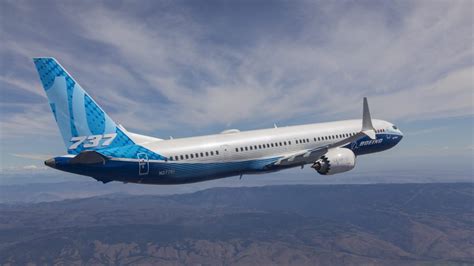
For airlines, uncertainty is costly. Fleet planning is a long-term exercise, often spanning decades. Delays in certification disrupt delivery timelines, complicate capacity planning, and introduce financial risk.
Even if the MAX 10 secures approval soon, the perception of uncertainty has already influenced buying behavior. Airlines prefer aircraft that are available, proven, and ready to deploy—not those still navigating regulatory processes.
This dynamic has allowed Airbus to capture orders at a critical moment, strengthening its position in the narrowbody market.
A Strategic Shift Toward Efficiency Over Capacity
At a deeper level, the preference for the A321XLR reflects a broader industry shift. Airlines are moving away from the “bigger is better” philosophy that once dominated fleet planning. Instead, they are optimizing for efficiency, flexibility, and risk management.
The MAX 10 embodies the traditional approach: more seats, higher density, and a focus on maximizing revenue per flight. This works well in high-demand markets but offers limited adaptability when demand fluctuates.
The A321XLR represents a different philosophy. It enables airlines to right-size capacity while extending reach—serving more markets with fewer constraints. This is particularly valuable in an era where demand patterns are less predictable and competition is more fragmented.
Passengers benefit as well. More direct routes mean shorter travel times and fewer connections, enhancing the overall travel experience. For airlines, it means capturing demand that would otherwise be lost to competitors or alternative hubs.
Why the Momentum Clearly Favors the A321XLR
The growing preference for the A321XLR is not driven by a single factor—it is the result of a powerful combination of advantages that align with modern aviation realities.
- Superior range unlocks new markets and route possibilities
- Point-to-point flexibility reduces reliance on hubs
- A clear 757 replacement role fills a long-standing industry gap
- Fleet commonality lowers costs and simplifies operations
- Immediate availability removes uncertainty from planning
Each of these factors reinforces the others, creating a compelling value proposition that the MAX 10 currently struggles to match.
The Future of Narrowbody Aviation Is Being Rewritten
The success of the A321XLR signals a turning point. Narrowbody aircraft are no longer confined by geography or traditional roles. They are becoming the backbone of a more flexible, decentralized global network.
Airbus has effectively redefined the upper boundary of what a single-aisle aircraft can achieve. In doing so, it has captured a segment of the market that Boeing has yet to fully address.
For Boeing, the challenge is not just about certifying the MAX 10. It is about responding to a structural shift in airline strategy—one that prioritizes range, efficiency, and adaptability over sheer capacity.
For airlines, the decision is increasingly clear. The A321XLR is not just another aircraft option; it is a strategic asset that enables growth, resilience, and innovation in an evolving industry.
And in a business where margins are tight and competition is relentless, that kind of advantage is hard to ignore.