For decades, narrowbody aircraft were associated primarily with short-haul routes—quick domestic flights lasting two or three hours or regional journeys across continents. In recent years, however, advances in aerodynamics, propulsion systems, and aircraft design have dramatically expanded the capabilities of single-aisle jets. One of the most striking examples of this evolution is the Boeing 737 MAX 8, an aircraft that has quietly redefined how far and how long narrowbody aircraft can travel.
Airlines today increasingly deploy this aircraft on routes that once seemed far beyond the reach of single-aisle jets. Flights stretching past seven hours are no longer rare, and in some cases the 737 MAX 8 can remain airborne for more than eight hours without refueling. This endurance reflects not only the aircraft’s technical capabilities but also the broader transformation of airline route networks.
Understanding exactly how long a Boeing 737 MAX 8 can fly without refueling requires looking beyond a simple number. Range, fuel consumption, cruise speed, aircraft weight, and environmental conditions all influence how long the aircraft can stay in the air. Yet when these factors align, the MAX 8 becomes one of the most versatile narrowbody aircraft ever produced.
The Evolution of the Boeing 737 MAX Family
The Boeing 737 MAX program represents the most advanced generation of Boeing’s legendary 737 series, an aircraft lineage that dates back more than six decades. First launched in August 2011, the MAX family was Boeing’s answer to the Airbus A320neo program, which had introduced a new era of fuel-efficient single-aisle aircraft.
Rather than designing a completely new aircraft, Boeing opted to modernize the proven 737 platform with significant technological upgrades. These improvements focused primarily on efficiency, operational flexibility, and range—areas that airlines increasingly demanded as fuel costs and route competition intensified.
At the heart of the MAX family are CFM International LEAP-1B engines, which deliver approximately 14% greater fuel efficiency compared with the CFM56 engines used on the previous 737 Next Generation (737NG) series. These engines feature advanced composite materials and improved combustion technology that allow them to burn less fuel while producing higher thrust.
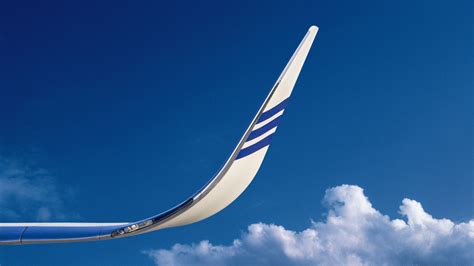
Aerodynamics also received a major upgrade. Boeing introduced distinctive advanced technology winglets, recognizable by their split-tip design that extends both upward and downward from the wingtip. These winglets reduce induced drag and improve lift efficiency, allowing the aircraft to travel farther using less fuel.
The MAX family currently consists of four variants:
- 737 MAX 7 – the smallest variant, optimized for lower-capacity routes
- 737 MAX 8 – the most widely used and best-selling model
- 737 MAX 9 – a stretched version with additional seating
- 737 MAX 10 – the largest variant, designed for maximum passenger capacity
Among these models, the 737 MAX 8 has become the backbone of many airline fleets worldwide, striking a balance between passenger capacity, operating cost, and flight range.
Key Specifications of the Boeing 737 MAX 8
To understand how long the aircraft can fly without refueling, it helps to examine the technical specifications that define the MAX 8’s performance capabilities.
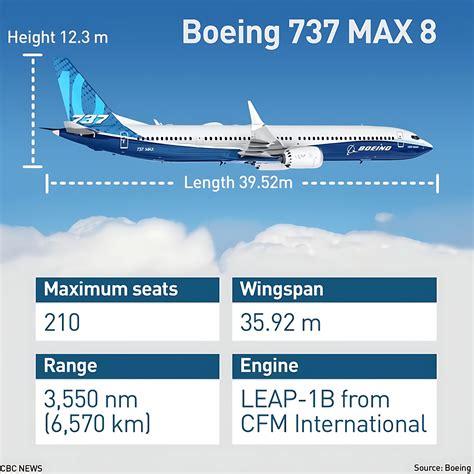
The aircraft measures 129 feet 8 inches (39.52 meters) in length, with a wingspan of 117 feet 10 inches (35.92 meters) when equipped with its advanced winglets. It is designed to carry up to 181,000 pounds (82,100 kilograms) at maximum takeoff weight, allowing it to lift significant amounts of fuel, passengers, and cargo.
In terms of passenger capacity, most airlines configure the MAX 8 to carry 162 to 178 passengers in a two-class layout, although high-density configurations can push the number above 200 seats. This seating flexibility makes the aircraft suitable for both high-demand routes and thinner long-distance services.
The aircraft’s most important statistic for long flights, however, is its maximum range of approximately 3,500 nautical miles (6,480 kilometers). For a narrowbody aircraft of its size, this is a remarkably long distance.
To put that into perspective, the previous generation Boeing 737-800 had a range of about 2,935 nautical miles, meaning Boeing increased the operational reach of the aircraft by roughly 20 percent with the MAX 8 redesign.
This extra range allows airlines to connect cities that once required larger widebody aircraft—or even multiple flight segments.
Fuel Capacity and Consumption of the MAX 8
The fuel system of the Boeing 737 MAX 8 plays a central role in determining how long the aircraft can stay airborne. The aircraft carries approximately 6,875 gallons of aviation fuel, equivalent to around 26,000 liters.
In weight terms, that represents about 45,800 pounds (20,800 kilograms) of usable fuel.
Fuel is stored primarily in two wing tanks and a center tank located within the fuselage structure. This design enables the aircraft to maintain optimal balance and weight distribution throughout the flight while maximizing fuel capacity.
Fuel consumption varies significantly during different phases of flight:
- Takeoff and climb: highest fuel burn due to maximum engine thrust
- Cruise: significantly lower fuel consumption once altitude stabilizes
- Descent and landing: minimal fuel burn compared to earlier phases
During cruise, the MAX 8 typically burns between 5,300 and 5,700 pounds of fuel per hour, depending on factors such as aircraft weight, cruising altitude, and atmospheric conditions.
As the aircraft burns fuel and becomes lighter, pilots often request higher cruising altitudes. Flying at higher altitudes reduces aerodynamic drag because the air is thinner, which improves overall fuel efficiency and extends the aircraft’s range.
Cruise Speed and Flight Time Calculations
Range alone does not determine how long the aircraft can remain airborne. Cruise speed also plays an essential role in translating distance into flight time.
The Boeing 737 MAX 8 typically cruises at Mach 0.79, which corresponds to roughly 450 to 460 knots, or about 515 to 530 miles per hour depending on atmospheric conditions.
If the aircraft were to travel its full advertised range of 3,500 nautical miles at an average cruise speed of 455 knots, the time spent cruising alone would be approximately 7.7 hours.
However, this figure represents only the cruise phase. When taxi time, climb, and descent are included, the total block time—the full duration from gate departure to arrival—can approach or slightly exceed eight hours.
Weather conditions can alter this calculation dramatically. Strong headwinds, especially on westbound flights, can increase flight time, while tailwinds may reduce it.
Therefore, while the theoretical figure might suggest roughly 7.5 to 8 hours, real-world flights may vary depending on environmental conditions and airline operational planning.
Real-World Longest Boeing 737 MAX 8 Routes
Modern airline operations demonstrate just how capable the 737 MAX 8 has become when deployed on long routes.
In March 2026, some of the world’s longest MAX 8 flights stretch well beyond seven hours, with several approaching or surpassing eight hours of flight time.
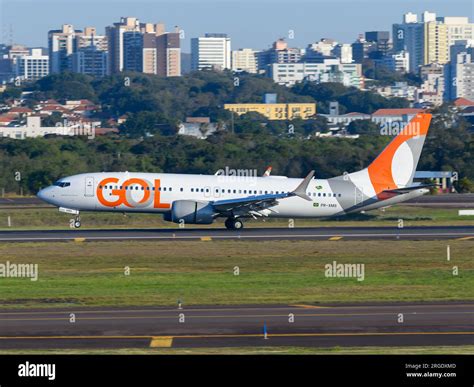
One of the most remarkable routes is operated by GOL Linhas Aéreas Inteligentes, the Brazilian airline known for its extensive MAX fleet. The carrier flies a route between Brasília (BSB) and Orlando (MCO) covering roughly 3,283 nautical miles.
The outbound flight is scheduled for 8 hours and 15 minutes, making it one of the longest regularly scheduled Boeing 737 flights anywhere in the world.
Another impressive example comes from Arajet, the Dominican Republic’s rapidly expanding airline. Arajet operates MAX 8 flights between Santo Domingo and Buenos Aires, a route covering more than 3,200 nautical miles with a scheduled duration of around eight hours.
Several additional long routes highlight the aircraft’s endurance:
- Punta Cana – Buenos Aires
- Brasília – Cancun
- Reykjavík – Seattle
These routes demonstrate that single-aisle aircraft are increasingly capable of operating flights once reserved for widebody jets.
Transatlantic and Long-Distance Operations
One airline that has particularly embraced the long-range potential of the MAX 8 is Icelandair.
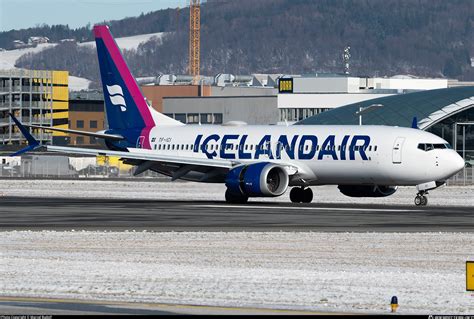
The carrier uses the aircraft to connect Reykjavík’s Keflavík International Airport with multiple cities in North America. Routes such as Reykjavík to Seattle, Denver, and Orlando regularly push the MAX 8 toward the upper limits of its range.
The Reykjavík–Seattle route, for instance, spans roughly 3,147 nautical miles, and flights often exceed eight hours depending on wind conditions.
These routes illustrate a broader shift in airline strategy. Instead of relying solely on large widebody aircraft, airlines can now deploy smaller, more fuel-efficient narrowbody jets on long routes with lower passenger demand.
This approach reduces operational costs while allowing airlines to open new city pairs that previously lacked enough traffic to justify larger aircraft.
Comparing the MAX 8 With Other MAX Variants
Within the 737 MAX family, each variant is optimized for slightly different operational roles.
The 737 MAX 9 features a longer fuselage and can carry more passengers—typically 15 to 25 additional seats compared with the MAX 8. However, the added weight slightly reduces its maximum range to about 3,300 nautical miles.
This makes the MAX 9 better suited to high-demand medium-haul routes rather than ultra-long narrowbody missions.
At the smaller end of the spectrum, the 737 MAX 7 is designed for markets with lower passenger demand. Because it is lighter, it is expected to achieve an impressive range of about 3,800 nautical miles once fully certified.
In theory, that range could allow the MAX 7 to remain airborne for nine to ten hours under ideal conditions.
Meanwhile, the 737 MAX 10, the largest variant, sacrifices range for seating capacity. With a maximum range of roughly 3,100 nautical miles, it will generally operate flights of six to seven hours or less.
The MAX 8 sits comfortably in the middle of this lineup, offering the best balance between range, efficiency, and passenger capacity.
So How Many Hours Can the Boeing 737 MAX 8 Fly Without Refueling?
When all performance data and operational variables are considered, the answer becomes clear.
Based on its maximum range of about 3,500 nautical miles and an average cruise speed of roughly 450 knots, the Boeing 737 MAX 8 can remain airborne for around eight hours without refueling under favorable conditions.
In real airline operations, flights approaching or slightly exceeding this duration are already common. However, airlines must also factor in several operational requirements, including:
- Mandatory fuel reserves for diversion airports
- Weather deviations and turbulence avoidance
- Air traffic control routing restrictions
- Wind patterns along the flight path
These factors often reduce the practical maximum flight time slightly, but they rarely prevent the MAX 8 from completing missions close to the eight-hour mark.
Ultimately, the aircraft represents a major step forward in the evolution of narrowbody aviation. A design rooted in an aircraft family dating back more than 60 years has been transformed into a platform capable of performing near-long-haul missions with remarkable efficiency.
For airlines seeking flexibility and fuel savings, the **Boeing 737 MAX 8 has become one of the most capable single-aisle aircraft ever built—able to cross continents, connect distant cities, and stay in the air for nearly eight hours without needing a single drop of additional fuel.