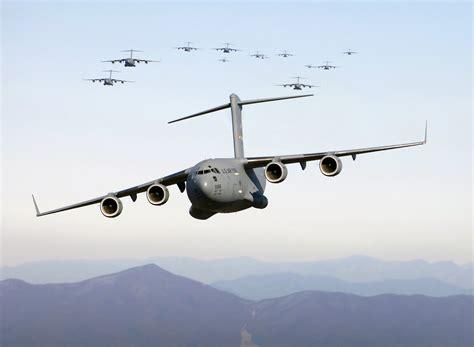
The Boeing C-17 Globemaster III occupies a rare space in modern military aviation, sitting squarely between strategic reach and tactical brutality. It is big, fast, and astonishingly adaptable, capable of hauling outsized cargo across oceans and then diving steeply into short, hostile runways that would terrify most large jets. When people ask how many hours a C-17 can fly without refueling, they are really asking a deeper question about endurance, efficiency, and how modern airlift power is projected across the planet.
The answer is not a single clean number, because the C-17’s unrefueled endurance depends on payload weight, cruise profile, altitude, and mission design. In its most common operational configuration, the aircraft can remain airborne anywhere from five hours to roughly fourteen hours on internal fuel alone. That wide spread is not marketing fluff; it reflects how dramatically the aircraft can be tuned to different missions.
At the core of this endurance is range. The C-17’s unrefueled range is typically quoted between 2,400 and 2,800 nautical miles, a figure that already places it far ahead of older tactical transports. Translating that distance into time requires understanding speed, altitude, and load. At a standard cruise of around 450 knots (Mach 0.74) with a moderate payload, the aircraft usually achieves five to six hours of continuous flight before fuel becomes the limiting factor.
What makes the C-17 remarkable is not just that it can fly for hours, but that it can do so while carrying cargo that would overwhelm almost any other airlifter. Tanks, helicopters, engineering vehicles, medical units, and paratroopers all impose different aerodynamic and fuel penalties. The Globemaster absorbs those penalties with a kind of stubborn competence that has made it indispensable to air forces worldwide.
Understanding the C-17’s Unrefueled Flight Endurance
The C-17 Globemaster III was designed from the beginning to operate without relying on perfect infrastructure. Its designers assumed that fuel, runways, and airspace access would often be limited or hostile. That philosophy directly shapes how long the aircraft can stay airborne without refueling.
At lighter weights, with minimal cargo and a high-altitude cruise profile, the aircraft can stretch its endurance close to the upper end of the fourteen-hour window. These conditions are typical of ferry flights, humanitarian deployments, or repositioning missions where speed is less critical than fuel efficiency. At the other extreme, a heavily loaded C-17 flying low to avoid threats will burn fuel at a much faster rate, pulling endurance down toward the five-hour range.
The real genius lies in how predictable these tradeoffs are. Aircrews can plan missions with extreme precision, choosing cruise altitudes, step climbs, and power settings that maximize fuel efficiency without sacrificing mission success. This is why the C-17’s unrefueled endurance remains operationally valuable even in an era dominated by aerial refueling.
Engines, Efficiency, and the Physics of Staying Aloft
Powering the C-17 are four Pratt & Whitney F117-PW-100 turbofan engines, closely related to those found on the Boeing 757 but heavily modified for military abuse. These are high-bypass engines, meaning they move a large volume of air around the core, improving fuel efficiency compared to older low-bypass designs.
Unlike fighter aircraft, which trade endurance for raw thrust, the C-17’s engines are optimized for sustained cruise and heavy lifting. Advanced thrust reversers allow the aircraft to decelerate aggressively and descend steeply without wasting fuel in prolonged level segments. That matters because fuel burn is not just about how fast you fly, but how cleanly you transition between phases of flight.
The result is an aircraft that sips fuel gently at cruise while still retaining the ability to perform violent tactical maneuvers when required. This dual personality is a major reason the C-17 can cover so many hours on internal fuel alone.
Why Payload Changes Everything
Payload is the single biggest variable in determining how long a C-17 can fly without refueling. Carrying 170,900 pounds of cargo is not a theoretical maximum; it is an operational reality. That kind of weight increases drag, demands higher thrust settings, and shortens endurance dramatically.
A fully loaded C-17 transporting an M1 Abrams main battle tank will often rely on aerial refueling even for moderate distances. Without tanker support, endurance shrinks because the aircraft must burn more fuel just to stay airborne. In contrast, a lightly loaded aircraft configured for personnel transport or medical evacuation can cruise efficiently for many hours longer.
This flexibility is not a compromise; it is the point. The C-17 does not chase maximum endurance in isolation. It trades endurance for mission relevance, delivering exactly what is needed, where it is needed, when it is needed.
Airlift Without Tankers: Tactical Freedom
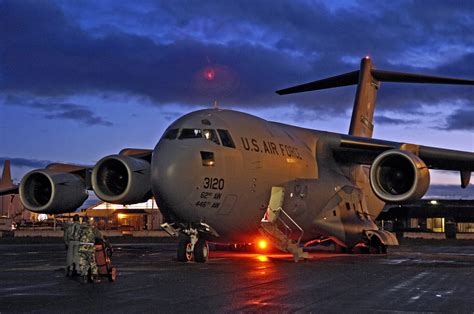
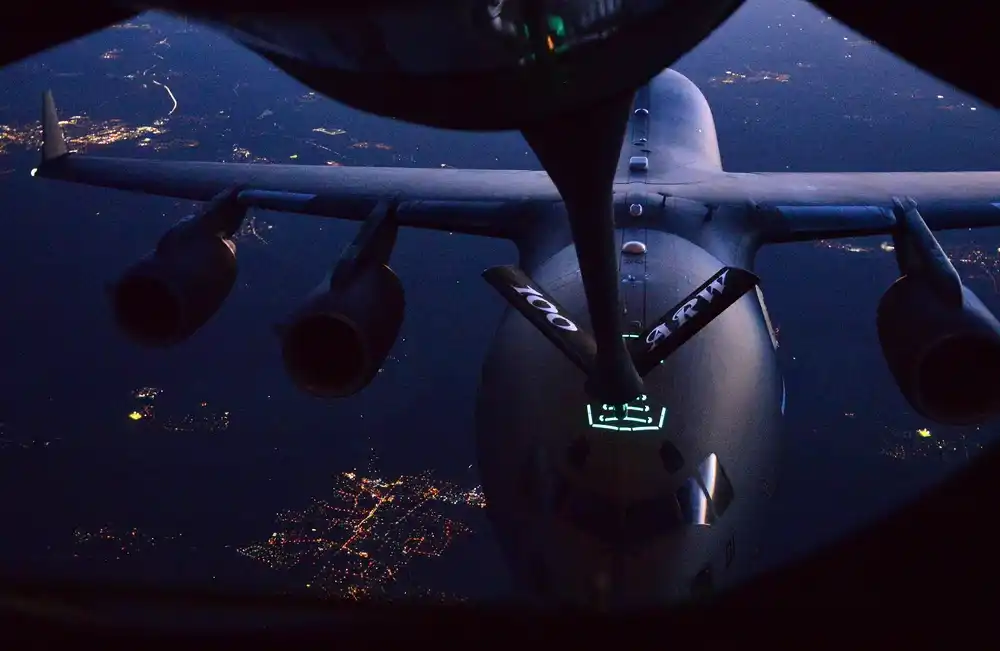
Although the C-17 is fully compatible with aerial refueling, its unrefueled endurance provides a powerful layer of independence. In contested environments, tanker availability cannot be assumed. Tankers are large, vulnerable, and politically sensitive assets. Being able to operate without them simplifies planning and reduces exposure.
A five- to six-hour unrefueled flight is often enough to reach forward operating bases, island chains, or disaster zones without external support. In practice, this means fewer moving parts in already complex operations. The aircraft’s “long legs” reduce the frequency of refueling stops, allowing faster response times and more flexible routing.
This is especially valuable in humanitarian missions, where diplomatic clearances, airspace restrictions, and damaged infrastructure can make refueling unpredictable. The C-17’s endurance becomes a form of logistical resilience.
Steep Descents, Short Runways, and Fuel Reality
One of the most misunderstood aspects of the C-17’s endurance is how its tactical flight profile affects fuel burn. The aircraft is capable of steep tactical descents, deploying thrust reversers in flight to drop altitude rapidly. These maneuvers reduce exposure to ground threats but come at the cost of higher fuel consumption.
Similarly, operating into short, unprepared runways requires higher power settings during approach and landing. Assault landings, where the aircraft deliberately plants itself onto the runway, are fuel-expensive but operationally priceless. Each of these factors chips away at endurance, turning theoretical maximum hours into practical mission-specific numbers.
What matters is that the aircraft can absorb these penalties and still complete the mission without refueling. That capability is rare, even among large military transports.
Historic Long-Duration C-17 Missions
The C-17’s unrefueled endurance tells only part of the story. When combined with aerial refueling, the aircraft’s true reach becomes extraordinary. In 1998, a formation of eight C-17s completed a 19-hour mission covering 8,000 nautical miles, executing multiple refuelings before conducting an airdrop in Central Asia. The feat was repeated in 2000, cementing the Globemaster’s reputation for extreme endurance.
These missions demonstrate how a solid unrefueled baseline enables truly global operations. Each hour the aircraft can fly without refueling reduces dependency on tankers and increases overall mission reliability.
International Operators and Real-World Endurance
Outside the United States, C-17 operators have repeatedly tested the aircraft’s endurance in demanding conditions. The Indian Air Force conducted an 11-hour nonstop flight from Chennai to Townsville, Australia, marking the longest continuous C-17 mission in its history. Other Indian missions have involved long detours to avoid restricted airspace, proving that endurance is not just about fuel, but about adaptability.
The Royal Air Force has used its C-17s to maintain long-distance air bridges into conflict zones, as well as for high-profile ceremonial missions. In 2022, an RAF C-17 transported the coffin of Queen Elizabeth II, becoming one of the most closely tracked flights in history.
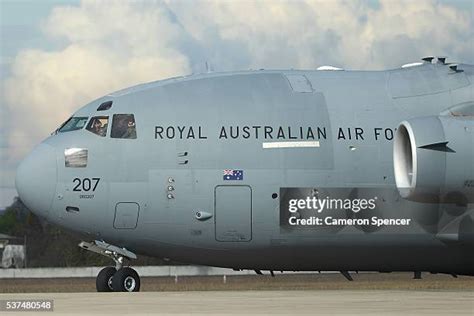
The Royal Australian Air Force routinely flies long-range missions to Antarctica, operating from ice and gravel runways that push both endurance and performance limits. Meanwhile, the Royal Canadian Air Force’s CC-177 fleet conducts annual Arctic resupply missions to CFS Alert, one of the most remote locations on Earth.
Each of these missions underscores a simple truth: unrefueled endurance is not an abstract statistic. It is a lived capability, proven repeatedly under real operational stress.
Endurance as a Strategic Multiplier
From a strategic perspective, the C-17’s ability to fly for hours without refueling reshapes how air power is applied. It allows rapid reinforcement of forward bases that larger aircraft like the C-5 Galaxy cannot access. It supports Agile Combat Employment concepts by enabling aircraft to hop between austere locations without complex fuel logistics.
On the ground, features like self-powered reverse taxiing and tight turning radii mean the aircraft does not waste fuel repositioning or waiting for ground support. In the air, externally blown flaps and high-lift systems reduce takeoff distances, conserving fuel during departure from short runways.
These details may seem minor individually, but together they compound into meaningful endurance gains across a mission profile.
How Many Hours Can a C-17 Really Fly Without Refueling?
Stripped of nuance, the answer remains clear. A C-17 Globemaster III can fly between five and fourteen hours without refueling, depending on how it is configured and what it is asked to do. At typical cruise speeds with an average payload, five to six hours is the most common operational figure. Under optimized conditions, endurance stretches much further.
What sets the C-17 apart is not chasing maximum hours for their own sake. It is the aircraft’s ability to deliver useful endurance while carrying real cargo into real danger. In that sense, the Globemaster’s flight time is not just measured in hours, but in missions completed, lives supported, and distances erased.
In a world where speed and flexibility often matter more than raw range, the C-17’s unrefueled endurance remains one of the quiet pillars of modern military power.