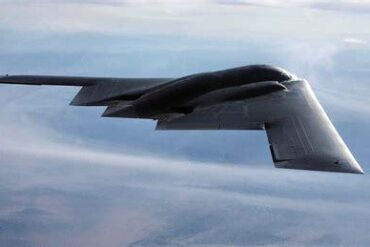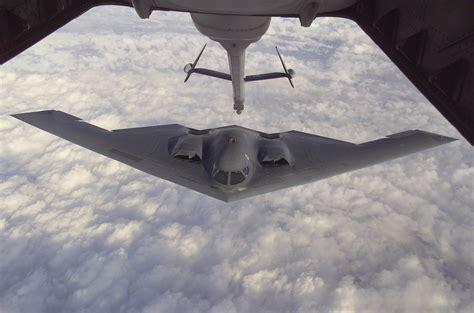
The B-2 Spirit stealth bomber occupies a strange, almost mythic place in modern military aviation. It is rarely seen, deliberately misunderstood, and still partly hidden behind layers of classification more than three decades after its first flight. Yet one question keeps resurfacing among analysts, aviation enthusiasts, and defense planners alike: how many hours can the B-2 Spirit fly without refueling?
This question is not just trivia. Endurance defines strategic relevance. It determines whether a bomber can strike globally without relying on vulnerable overseas bases, whether it can remain airborne long enough to adapt to changing intelligence, and whether it can project power in politically sensitive regions where forward access is uncertain or outright denied. The B-2 was designed in an era when planners assumed the worst: denied airspace, contested skies, and no guarantee of tanker support. Its unrefueled endurance reflects that worldview.
Understanding the B-2’s flight time without refueling means unpacking more than a single number. It requires examining fuel capacity, aerodynamics, mission design, crew limits, and strategic trade-offs. The real story lives in how all these elements converge into one of the most capable long-range combat aircraft ever built.
The Short Answer, and Why It’s Only the Beginning
Publicly available data from the United States Air Force and long-standing defense publications converge on a consistent figure: the B-2 Spirit has an unrefueled range of over 6,000 nautical miles, equivalent to roughly 11,100 kilometers. Translating distance into time, this generally equals about 12 to 15 hours of continuous flight without aerial refueling, depending on how the aircraft is flown and what it is carrying.
That estimate already places the B-2 among the longest-endurance combat aircraft ever operated. Even at the lower end of the range, the bomber can depart from the continental United States, cross an ocean, penetrate defended airspace, deliver weapons, and return without landing. Very few military aircraft can claim that level of autonomy.
Yet the number itself is only a surface metric. The B-2 was never designed to chase endurance records for their own sake. Its designers pursued something more subtle: intercontinental reach with survivability. The aircraft’s range is inseparable from its stealth, its payload philosophy, and its role as a first-day-of-war platform intended to operate when other options may be unavailable.
Why Range Was the B-2’s Prime Design Driver
The B-2 Spirit emerged during the late Cold War, a period shaped by worst-case assumptions. US planners believed that in a high-end conflict, forward airbases might be destroyed or politically inaccessible, tanker aircraft could be targeted, and early warning systems would be dense and unforgiving. The solution was a bomber that could launch from home soil and reach any target on Earth.
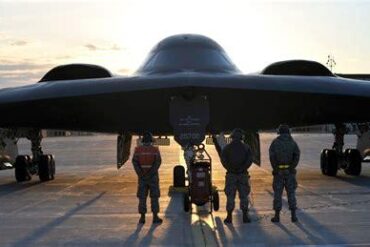
To achieve this, Northrop Grumman prioritized internal fuel volume and aerodynamic efficiency over raw speed. The result was the now-iconic flying-wing design, which minimizes drag and radar reflections simultaneously. Unlike conventional bombers with fuselages, tails, and pylons, the B-2’s entire structure contributes to lift. Less drag means less fuel burned per mile, and that translates directly into longer unrefueled endurance.
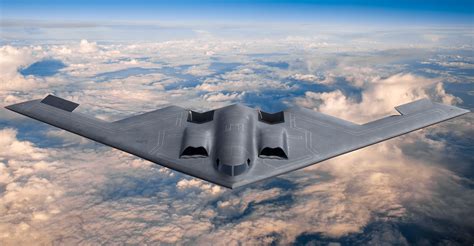
This approach came with trade-offs. The B-2 is not fast by bomber standards, cruising at high subsonic speeds rather than relying on supersonic dash. But speed was never the goal. Persistence and invisibility were. In strategic terms, a bomber that arrives unseen after a long transit is often more valuable than one that arrives quickly but predictably.
Fuel Capacity and Aerodynamic Efficiency
At the heart of the B-2’s endurance is its immense internal fuel load. Open sources estimate that the aircraft carries around 167,000 pounds of fuel, roughly 76 metric tons, all stored internally to preserve stealth. There are no external fuel tanks, no drag-inducing pods, and no radar-reflective attachments.
This fuel feeds four General Electric F118-GE-100 engines, optimized for efficiency rather than brute thrust. Paired with the flying-wing shape, the engines allow the bomber to cruise efficiently at high altitude, where thinner air reduces drag and fuel consumption. Over the course of a mission lasting more than half a day, those marginal efficiency gains compound into thousands of additional miles.
The design philosophy is clear: every pound of fuel is converted into quiet, steady reach, not dramatic performance. The B-2’s endurance is therefore not a single feature but the outcome of dozens of small aerodynamic and structural decisions aligned toward one objective.
Payload, Weight, and the Cost of Capability
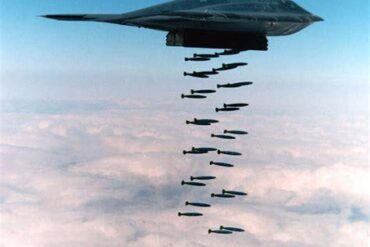
Endurance never exists in isolation. What the aircraft carries matters just as much as how it flies. The B-2 can haul up to 40,000 pounds of weapons internally, ranging from conventional precision-guided bombs to nuclear payloads. Every additional pound of ordnance increases fuel burn, particularly during climb and initial cruise.
Mission planners constantly balance payload versus range. A lightly loaded B-2 transiting through permissive airspace will achieve closer to the upper end of its unrefueled endurance window. A fully loaded aircraft tasked with penetrating heavily defended regions will sacrifice some range in exchange for strike capability. This is not a flaw but a deliberate flexibility built into the platform.
In real-world operations, this balance is recalculated for every mission. The endurance figure of 12–15 hours without refueling reflects a realistic operational configuration, not an empty aircraft flying under ideal laboratory conditions.
Altitude, Speed, and Mission Profile
How the B-2 is flown can significantly alter its unrefueled flight time. The aircraft is most efficient at high altitude and steady high-subsonic speed, where engine performance and aerodynamics align in its favor. Deviations from that envelope cost fuel.
Low-altitude penetration, extensive maneuvering, or prolonged loiter near a target all increase consumption. Even small changes in routing to avoid weather or threat systems can shave meaningful time off endurance during a double-digit-hour sortie. Over such long missions, minor inefficiencies accumulate into major range penalties.
This sensitivity is why endurance figures are always expressed as ranges rather than absolutes. The B-2’s unrefueled capability is impressive, but it is not magical. It obeys the same physical laws as any aircraft, just closer to their theoretical limits.
Operational History and Real-World Proof
The B-2’s endurance is not theoretical. It has been demonstrated repeatedly in combat operations. During early strikes over Kosovo and later missions in Afghanistan, B-2 bombers launched from Whiteman Air Force Base in Missouri, flew intercontinental distances, delivered weapons, and returned home. These sorties often exceeded 30 hours total flight time with aerial refueling, underscoring how much of the journey the aircraft could complete on internal fuel alone.
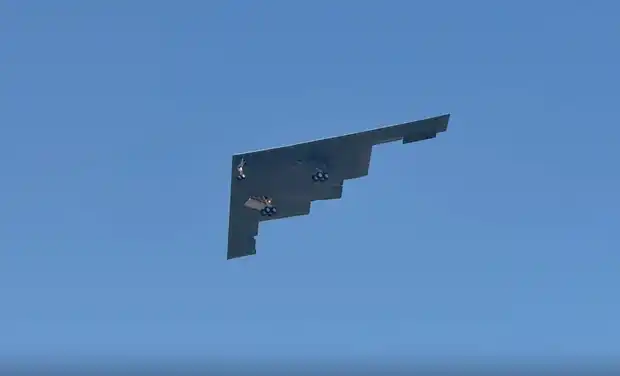
While those missions relied on tankers, they illustrated the strategic advantage of starting with a bomber that already possesses extreme baseline endurance. Even if refueling becomes unavailable, the B-2 retains meaningful reach, rather than becoming operationally irrelevant.
Aerial Refueling and the Illusion of Infinite Range
Once aerial refueling enters the picture, the B-2’s endurance becomes functionally open-ended. With a single refueling, its effective range expands to roughly 10,000 nautical miles. With multiple refuelings, missions exceeding 40 hours become feasible, limited less by fuel than by human endurance and aircraft maintenance considerations.
This is where the unrefueled endurance still matters. A bomber that starts with long baseline range requires fewer tanker contacts, reducing exposure and logistical complexity. In contested environments, every avoided refueling is a reduction in risk.
The Human Element Inside a 15-Hour Flight
Aircraft endurance is meaningless without considering the crew. The B-2 is flown by two pilots, who must manage automation, navigation, threat avoidance, and mission execution for extraordinarily long periods. To make this possible, the cockpit includes modest but essential accommodations: a folding sleeping cot, basic food preparation equipment, hydration systems, and a compact toilet.
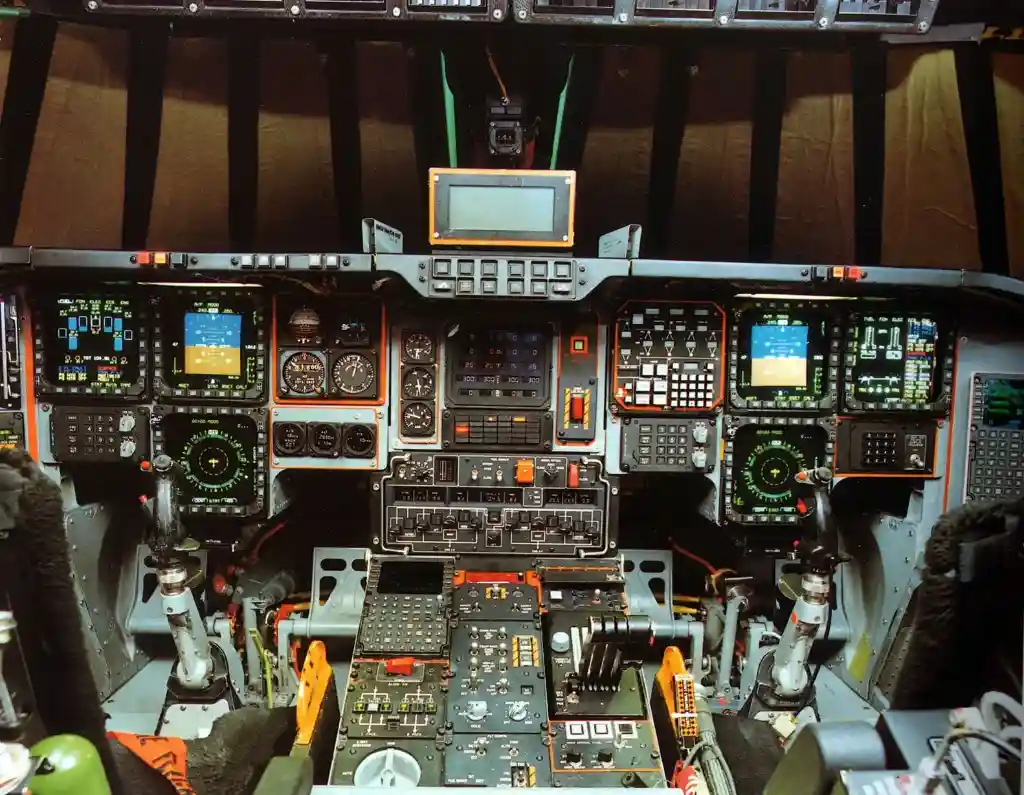
Even with these provisions, a 12–15 hour unrefueled flight is physically and mentally demanding. Fatigue becomes a limiting factor long before fuel does. This human constraint is one reason why aerial refueling, crew rotation strategies, and mission pacing remain central to B-2 operations.
Comparing the B-2 to Other US Bombers
In unrefueled endurance, the B-2 occupies a distinctive niche. The B-52 Stratofortress boasts an even longer unrefueled range on paper, but lacks stealth and depends on standoff tactics. The B-1B Lancer prioritizes speed and payload, sacrificing endurance. The upcoming B-21 Raider is expected to meet or exceed the B-2’s range, though exact figures remain classified.
What sets the B-2 apart is not just how long it can fly without refueling, but what it can do during that time. Stealth turns endurance into access, allowing the aircraft to convert hours in the air into strategic effect rather than mere transit.
Environmental Risks and Practical Limits
Long unrefueled flights expose the B-2 to environmental challenges. Headwinds, turbulence, and weather deviations all erode range. The aircraft’s sensitive stealth coatings and sensors also require careful handling, especially in humid or corrosive environments. The 2008 B-2 crash in Guam, linked to moisture-affected sensors, remains a stark reminder that endurance pushes systems to their margins.
From a planning standpoint, relying solely on unrefueled endurance reduces flexibility. Tankers provide options, allowing missions to adapt dynamically. Endurance without refueling is powerful, but endurance with refueling is transformative.
So, How Many Hours Can the B-2 Fly Without Refueling?
In clear, practical terms, the B-2 Spirit can fly approximately 12 to 15 hours without refueling, covering more than 6,000 nautical miles on its internal fuel alone. That capability underpins its role as a global strike platform, able to operate independently when support is limited or denied.
More importantly, that endurance represents a philosophy of airpower built around reach, persistence, and unpredictability. As newer platforms like the B-21 emerge, the B-2 remains the benchmark for how endurance, stealth, and strategy intersect. In modern warfare, sometimes the most decisive weapon is not speed or firepower, but the quiet certainty that distance no longer offers safety.