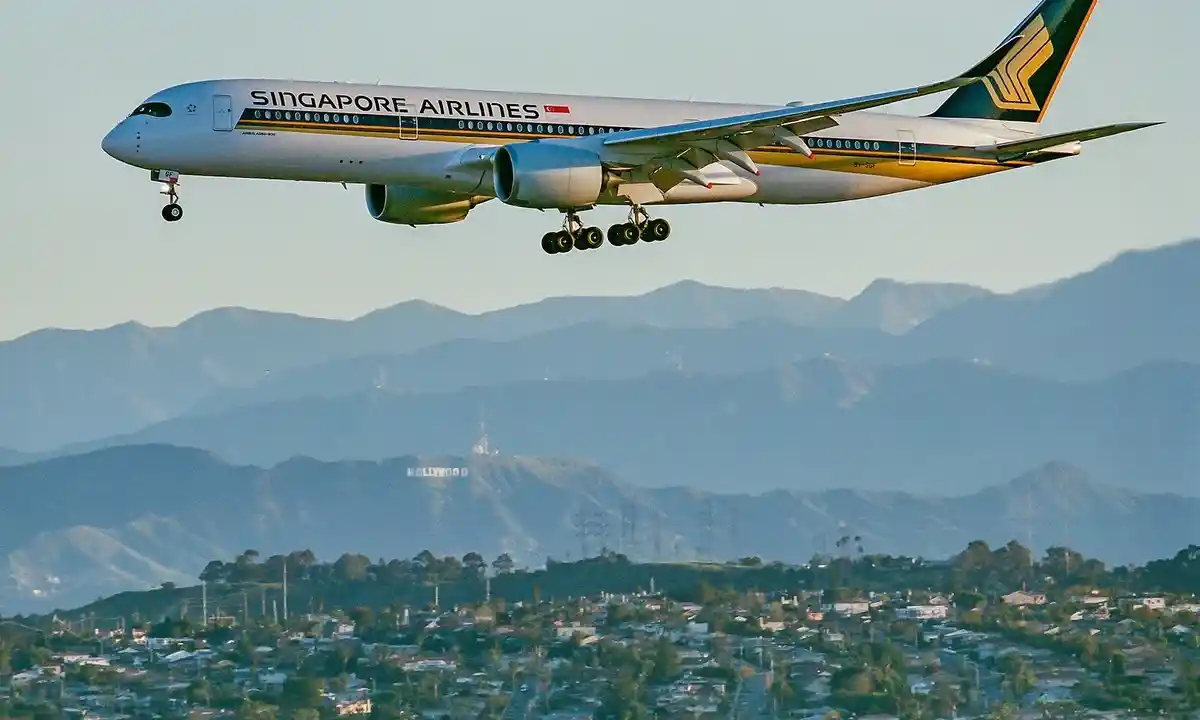
The Airbus A350-900 sits at the frontier of modern commercial aviation, where physics, materials science, and human endurance collide. It is not just a long-range aircraft; it is a flying laboratory that demonstrates how far efficiency, aerodynamics, and propulsion technology have evolved. Airlines deploy it on routes that stretch across oceans and hemispheres, sometimes linking cities that once required multiple stopovers into a single uninterrupted journey.
Understanding how many hours the A350-900 can fly without refueling requires more than a single number. Flight duration is a moving target shaped by wind patterns, payload, route planning, and the subtle physics of drag and thrust. But at its core, the aircraft’s endurance reveals how close modern engineering has come to the practical limits of jet-powered passenger flight.
The Maximum Flight Endurance of the Airbus A350-900
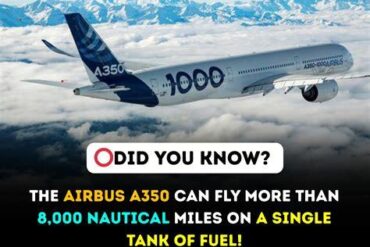
The standard Airbus A350-900 has a published range of roughly 8,100 nautical miles, translating to about 15,000 kilometers or 9,300 miles under typical operating conditions. In time terms, that usually equates to 15 to 17 hours of nonstop flight, depending on cruise speed and atmospheric conditions.
The aircraft cruises at around Mach 0.85, roughly 560–580 mph (900–930 km/h) at altitude. Multiply that by endurance, and you get a realistic upper bound for standard missions: around 16 hours of continuous flight without refueling when carrying a normal passenger and cargo load.
Yet aviation never stops at “standard.” Engineers and airlines have pushed the A350 platform beyond its original envelope, creating a specialized ultra-long-range variant that rewrites endurance expectations.
The A350-900ULR: Stretching the Boundaries of Human and Machine Endurance
The Airbus A350-900ULR (Ultra Long Range) is a modified variant engineered to push flight endurance to extremes. Airbus added additional fuel tanks, optimized weight distribution, and removed some passenger seats and cargo capacity to maximize fuel carriage.
The result is an aircraft capable of flying over 9,700 nautical miles, a range that turns the Earth into a smaller place in very literal terms. In practical airline service, this translates to 18 to 19 hours of nonstop flight, sometimes edging past that threshold under ideal conditions.
These marathon missions represent the longest scheduled commercial flights in the world. Singapore Airlines famously uses the A350-900ULR to connect Singapore with New York, linking Southeast Asia directly to the northeastern United States without a fuel stop.
The aircraft is essentially operating at the edge of what commercial aviation can sustain while keeping passengers functional and crews compliant with duty time regulations.
Why the A350-900 Can Fly So Far
The A350-900’s endurance comes from a convergence of materials science, aerodynamics, and engine efficiency that would have seemed futuristic two decades ago.
More than 70% of the airframe is built from advanced materials, including carbon-fiber-reinforced polymer composites and titanium alloys. These materials reduce structural weight while maintaining strength, allowing the aircraft to carry more fuel for the same takeoff weight.
The wings are masterpieces of computational fluid dynamics and structural engineering. They flex during flight, subtly reshaping themselves to minimize drag and maximize lift. This adaptive behavior reduces fuel burn across different phases of flight, from climb to cruise to descent.
Under the wings, Rolls-Royce Trent XWB engines deliver some of the highest bypass ratios and thermal efficiencies in commercial aviation. These engines sip fuel compared to previous-generation widebody engines, translating directly into extended range.
Real-World Ultra-Long-Haul Flights: How Airlines Use the A350-900
Airlines exploit the A350-900’s endurance to operate routes that redefine global connectivity. Singapore Airlines’ Singapore–New York service is the poster child, with flights lasting 18 to 19 hours and covering nearly half the planet’s circumference.
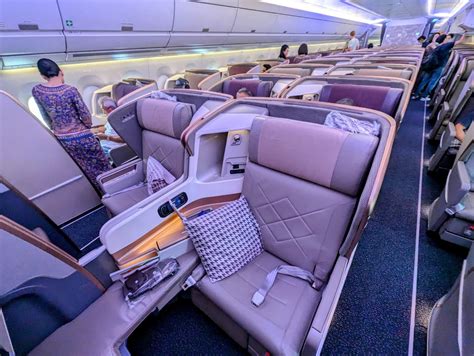
These flights require four pilots rotating through rest periods in dedicated crew bunks. The cabin is configured with fewer seats and more premium products, ensuring passengers can sleep, eat, and move comfortably during the journey.
China Southern Airlines uses the A350-900 on routes such as Shenzhen to Mexico City, covering roughly 8,778 miles. That route pushes the aircraft close to its performance envelope, particularly on the return leg, where high-altitude airport conditions in Mexico City reduce engine thrust and takeoff performance.
Delta Air Lines flies A350-900 aircraft from Atlanta to Johannesburg and Cape Town, spanning 8,100 to 8,400 miles. These missions highlight how the A350 replaces older Boeing 777 aircraft on long-haul routes while delivering superior fuel economics.
Cathay Pacific leverages the A350-900 to maintain year-round service between Hong Kong and North American cities like New York and Toronto. The aircraft’s efficiency allows airlines to profitably operate routes with lower passenger volumes, a key advantage during off-peak seasons.
How Long Can It Fly in Theory Versus Practice
In theory, the A350-900 could remain airborne longer than typical scheduled flights if configured for maximum fuel and minimal payload. Military or test-flight scenarios could push endurance beyond 20 hours under controlled conditions.
In practice, commercial airlines balance fuel load with passengers, cargo, and regulatory constraints. Crew duty limits, passenger comfort, and airport scheduling all impose real-world caps. As a result, 19 hours remains a practical ceiling for passenger operations, even if the aircraft’s physics could allow a bit more.
The difference between theoretical maximum and operational reality is where aviation planning becomes a blend of science and logistics.
Passenger Experience on 18-Hour Flights
Flying nearly a full day without landing is a psychological and physiological experiment as much as a technical one. The A350-900’s cabin is designed to mitigate fatigue through higher humidity levels, lower cabin altitude, and advanced air filtration.
The cabin pressure is equivalent to about 6,000 feet, compared to 8,000 feet on older aircraft. This reduces dehydration, headaches, and fatigue, making ultra-long-haul flights more tolerable.
Airlines schedule meals strategically to align with passengers’ circadian rhythms. Lighting systems simulate sunrise and sunset to help reset biological clocks, reducing jet lag.
Premium cabins feature lie-flat beds, privacy doors, and large entertainment screens, while economy passengers benefit from quieter engines and improved cabin acoustics.
The Physics of Flying Nonstop for 19 Hours
At cruising altitude, the A350-900 balances four forces: lift, weight, thrust, and drag. As fuel burns, weight decreases, allowing the aircraft to climb gradually and improve efficiency. This phenomenon, called step climb, is crucial for long-range missions.
Headwinds and tailwinds dramatically affect endurance. A strong tailwind over the Pacific or Atlantic can shave hours off flight time, while winter headwinds can push flights to the edge of their fuel margins.
Airlines use advanced flight planning software to optimize altitude, speed, and routing, squeezing every ounce of efficiency from the aircraft.
The Trade-Offs of Ultra-Long-Range Design
The A350-900ULR sacrifices payload for endurance. Additional fuel tanks replace cargo space and passenger seats, reducing revenue potential from freight and economy travelers. Airlines compensate by focusing on premium passengers willing to pay for nonstop convenience.
This “premium-heavy” strategy reflects a shift in long-haul economics. Instead of maximizing seat count, airlines maximize yield per passenger, using ultra-long-range aircraft to serve business travelers who value time savings.
How the A350-900 Compares to Other Long-Range Jets
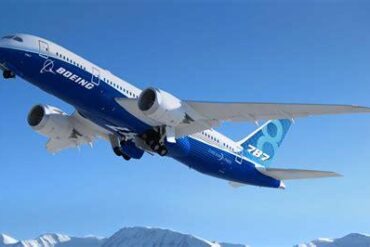
The Boeing 787 Dreamliner and Airbus A350 are often compared, as both use composite structures and advanced engines. The 787-9 has a range of around 7,635 nautical miles, while the A350-900 slightly surpasses it.
The Boeing 777-200LR still holds an impressive range, but its older design results in higher fuel burn per seat. The A350’s advantage lies in efficiency, not just raw distance.
In the future, the A350-1000 and other next-generation aircraft may push endurance even further, but diminishing returns loom. Each additional hour of flight requires exponentially more fuel, weight optimization, and engineering complexity.
Crew Operations on Marathon Flights
Ultra-long-haul flights require augmented crews. Four pilots rotate through shifts, sleeping in bunks during rest periods. Cabin crew numbers increase to ensure service quality over extended durations.
Regulations dictate strict rest requirements, and airlines design crew schedules around flight time, not just distance. These flights are logistical puzzles, requiring precise planning to avoid fatigue-related risks.
Economic Implications of Flying 19 Hours Nonstop
Nonstop ultra-long-haul flights reduce travel time, eliminate layovers, and attract premium travelers. However, they also carry high operating costs due to fuel, crew, and specialized aircraft configurations.
Airlines analyze route profitability using complex models that consider fuel prices, demand, and competition. When fuel prices rise, ultra-long-haul routes become harder to justify, as seen when Singapore Airlines temporarily canceled its Singapore–Newark route in 2013 before the A350 made it viable again.
Environmental Considerations of Ultra-Long-Haul Flights
Longer flights burn more fuel, but nonstop flights can reduce total emissions compared to multi-leg journeys with additional takeoffs and landings. The A350-900’s efficiency makes it one of the most environmentally advanced widebody jets in service.
Airlines increasingly use sustainable aviation fuel (SAF) on A350 flights, further reducing carbon footprints. The aircraft’s composite structure also lowers maintenance requirements, indirectly reducing lifecycle emissions.
The Future of Ultra-Long-Haul Aviation
The A350-900 represents a transitional phase toward even more ambitious aircraft designs. Future jets may use hybrid propulsion, hydrogen fuel, or ultra-efficient turbofan architectures to extend range without massive fuel penalties.
For now, the A350-900ULR sits at the edge of what is commercially feasible. Flights approaching 20 hours are as much a human endurance test as a technical one, and airlines carefully monitor passenger feedback to refine the experience.
Final Answer: How Many Hours Can the Airbus A350-900 Fly Without Refueling?
In real-world airline operations, the Airbus A350-900 can fly around 15 to 17 hours nonstop in its standard configuration. The specialized A350-900ULR variant can extend that to 18 to 19 hours, representing the longest scheduled commercial passenger flights in the world today.
Beyond those numbers lies the frontier of engineering, where every additional minute in the air requires disproportionate advances in efficiency, materials, and design. The A350-900 is not just a long-range aircraft; it is a symbol of how close aviation has come to turning the entire globe into a single, continuous flight path.