The question of how many hours the Airbus A380 can fly without refueling goes far beyond casual curiosity. It touches the core of what made this aircraft legendary: endurance, scale, and the ability to sustain flight across entire hemispheres while carrying an unprecedented number of passengers in comfort. Even years after production ended, the A380 remains a benchmark for what ultra-long-haul, high-capacity aviation looks like in practice, not theory.
At its heart, endurance is not merely about distance or fuel volume. It is about how long an aircraft can remain airborne under realistic airline conditions while complying with safety regulations, maintaining efficiency, and preserving operational margins. The Airbus A380 was engineered precisely for this purpose. It was designed to connect the world’s busiest hubs nonstop, absorbing congestion by moving more people farther in a single flight.
Understanding the A380’s maximum nonstop flight time requires unpacking its range, cruise speed, fuel system, payload flexibility, and real-world airline operations. When all of these factors are considered together, a clear and remarkably consistent answer emerges.
In typical commercial service, the Airbus A380 can fly approximately 14.5 to 16 hours without refueling, depending on winds, payload, routing, and cruise strategy. Under special conditions, such as lightly loaded ferry flights, its endurance can stretch even further. What makes this figure exceptional is not just the number of hours, but what the aircraft is carrying during that time: hundreds of passengers, their baggage, cargo, crew, and full long-haul amenities.
The Engineering Vision Behind the Airbus A380’s Endurance
The Airbus A380 was conceived during a period when aviation planners expected global air traffic to concentrate even more heavily around major hubs. The solution, in Airbus’ view, was not smaller aircraft flying longer, but larger aircraft flying efficiently for very long durations. Endurance became a design priority from the earliest concept phase.
To achieve this, Airbus developed a massive, highly efficient wing optimized for long-range cruise. With a wingspan of nearly 80 meters, the A380’s wing generates exceptional lift at altitude while minimizing drag across long distances. This design allows the aircraft to cruise efficiently for extended periods at high subsonic speeds, typically around Mach 0.85, without excessive fuel burn.
The airframe itself was built to manage long-duration stresses. Structural materials, load distribution, and redundancy systems were all specified with ultra-long-haul operations in mind. The result is an aircraft that does not merely tolerate 15-hour flights, but is fundamentally comfortable performing them repeatedly.
From Range to Hours: Translating Distance Into Endurance
The Airbus A380’s published maximum range sits at approximately 8,200 nautical miles (15,200 kilometers) in standard passenger configuration. Range, however, is an abstract number until it is converted into time.
At long-haul cruise speeds, the A380 typically covers 480 to 510 knots true airspeed, depending on altitude, temperature, and atmospheric conditions. When this cruise speed is applied to its usable range, the resulting flight time aligns neatly with observed airline operations: roughly 14.5 to 16 hours of continuous flight.
In exceptional circumstances, such as ferry flights with minimal payload and maximum fuel, the A380 has demonstrated ranges exceeding 8,800 nautical miles, pushing total airborne time beyond the upper end of that bracket. These missions are not representative of everyday airline service, but they illustrate the aircraft’s latent endurance capability.
What matters most is that the commonly cited endurance figure is not theoretical. It is grounded in thousands of real commercial flights that have repeatedly validated Airbus’ original performance targets.
Fuel Capacity: The Foundation of Long-Haul Flight
Fuel capacity is the single most visible contributor to the Airbus A380’s endurance. The aircraft can carry approximately 320,000 liters (around 85,500 gallons) of fuel, making it one of the largest fuel loads ever carried by a passenger aircraft.
This fuel is distributed across an intricate system of wing tanks and trim tanks designed to maintain aerodynamic balance throughout the flight. As fuel burns off, the aircraft’s center of gravity is actively managed to reduce drag and improve efficiency, particularly during the latter stages of long-haul sectors.
The sheer volume of fuel available allows airlines to plan flights conservatively. Even on missions approaching 15 hours, the A380 lands with legally mandated reserves intact, including contingency fuel, alternate airport fuel, and holding fuel. This margin is a critical part of why the aircraft’s endurance is trusted rather than feared by operators.
Payload, Passengers, and Their Impact on Flight Time
Endurance is never independent of payload. A fully loaded Airbus A380 carrying over 500 passengers, their baggage, cargo containers, and onboard service equipment will consume more fuel than a lightly loaded aircraft. This reality is baked into every flight plan.
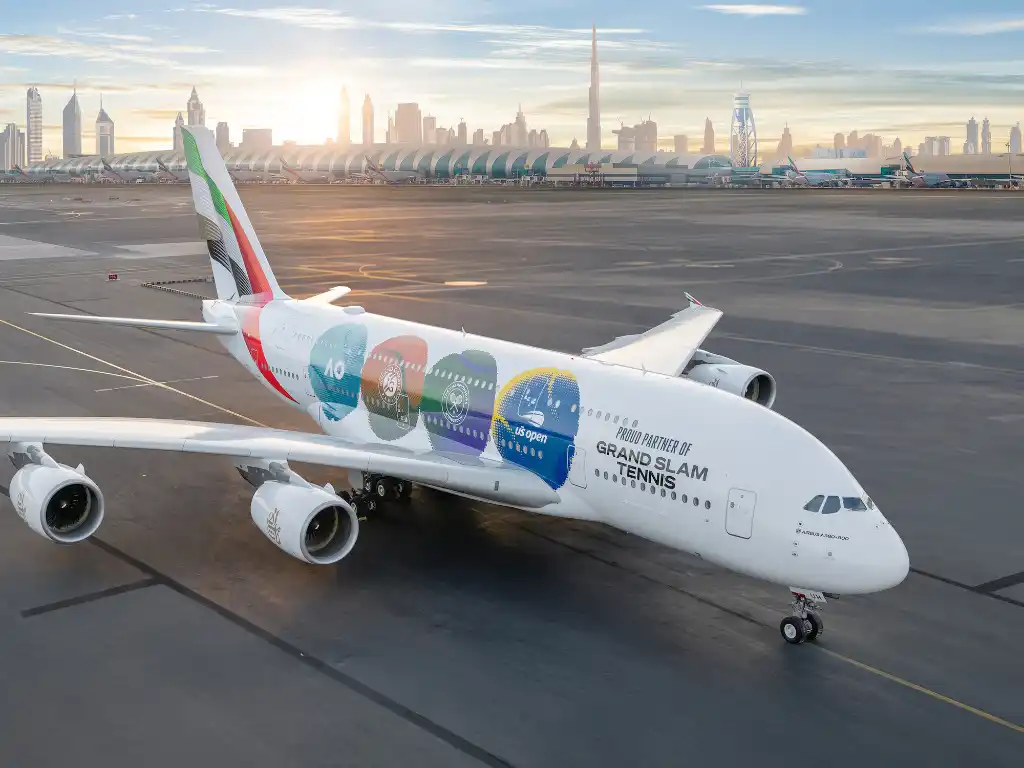
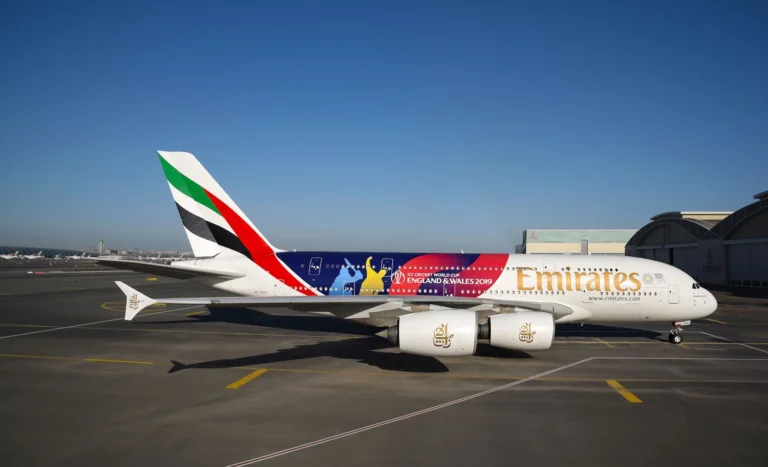
Airlines continuously balance passenger demand, cargo revenue, and route economics when determining how far and how long an A380 will fly. High-density configurations, such as those operated by Emirates, slightly reduce maximum theoretical range but still allow the aircraft to comfortably operate flights exceeding 14 hours.
What is remarkable is that even with heavy payloads, the A380’s endurance remains robust. Few aircraft in aviation history have been able to sustain such long flight times while carrying so many people simultaneously, without compromising comfort or safety margins.
Cruise Strategy and Altitude Optimization
The A380’s long-haul endurance is also shaped by how it flies, not just what it carries. The aircraft typically begins a long-haul flight at a lower cruise altitude, gradually climbing higher as fuel is burned and weight decreases. These step climbs allow the aircraft to operate in thinner air later in the flight, improving fuel efficiency and extending endurance.
Cruise speed is another lever. While Mach 0.85 is standard, airlines can choose slightly slower speeds to stretch endurance when needed, particularly in adverse wind conditions. Flying faster shortens flight time but increases fuel burn, while flying slower extends time aloft at the cost of schedule efficiency. The A380 offers flexibility across this spectrum.
Real-World Airline Operations: Proof in Daily Service
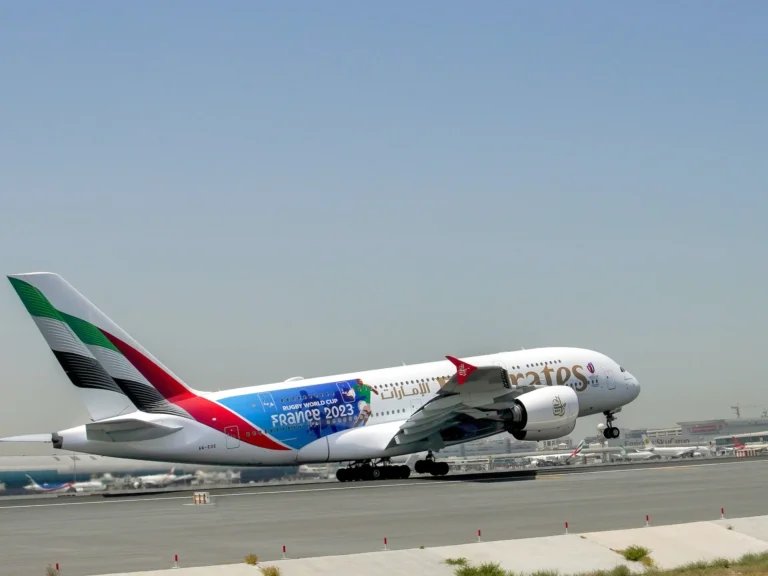
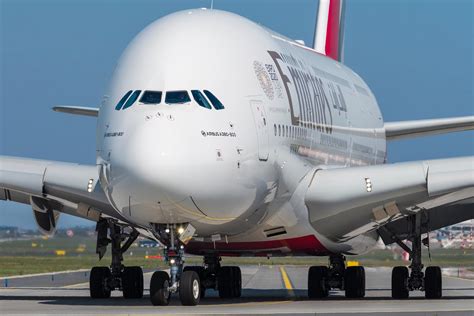
No airline demonstrates the Airbus A380’s endurance better than Emirates, the world’s largest operator of the type. Over more than a decade, Emirates has routinely deployed A380s on routes lasting 13 to 15.5 hours, including sectors such as Dubai–Los Angeles, Dubai–San Francisco, and Dubai–Sydney.
These flights are not rare showcases; they are everyday operations supported by detailed flight-tracking data. They consistently fall within the aircraft’s optimal performance envelope, even when accounting for weather deviations, air traffic delays, and regulatory fuel requirements.
Singapore Airlines, the A380’s launch customer, also validated its endurance early in the program with long-haul services connecting Southeast Asia to Europe. These flights reinforced confidence that the aircraft’s published endurance was not an optimistic projection but a conservative, achievable standard.
Safety Regulations and Why Maximum Endurance Is Rarely Used
While the Airbus A380 can technically fly near the upper edge of its endurance envelope, airlines almost never plan flights to that absolute limit. International aviation regulations require aircraft to carry fuel for multiple contingencies, including diversion to alternate airports and extended holding.
These requirements intentionally reduce usable endurance in planning, ensuring that aircraft are never operating on minimal margins. The A380’s large fuel capacity makes compliance with these rules easier, not harder, reinforcing its reputation as a stable long-haul platform rather than an endurance experiment.
This conservative approach explains why most commercial A380 flights cluster around 14 to 15.5 hours, even though the aircraft is capable of more under controlled conditions.
Comparing the Airbus A380 to Other Long-Haul Aircraft
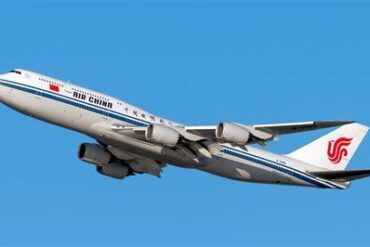
When comparing endurance in hours, the Airbus A380 remains competitive but no longer unrivaled. The Boeing 747-8 Intercontinental offers a similar range profile, typically supporting flights of 14 to 15.5 hours, though with fewer passengers onboard.
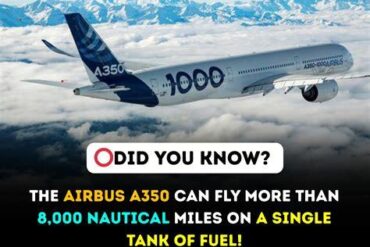
Newer twin-engine aircraft, such as the Airbus A350-900ULR or Boeing 777-200LR, can exceed 18 hours in the air. However, they achieve this endurance with far smaller cabins and payloads. The comparison highlights a crucial distinction: endurance per passenger.
The A380’s defining achievement is not that it flies the longest in absolute hours, but that it flies very long hours while carrying more people than any other commercial aircraft. That combination remains unmatched.
Weather, Winds, and the Reality of Global Operations
Endurance figures always exist in tension with the atmosphere. Strong headwinds, particularly on westbound flights, can significantly increase flight time while reducing ground speed. Airlines account for this by adjusting fuel loads, cruise strategies, and sometimes routing.
The A380’s endurance cushion allows it to absorb these variables more gracefully than many smaller aircraft. Even when flight times stretch due to winds, the aircraft rarely approaches fuel-critical conditions, underscoring the robustness of its long-haul design.
Economic Limits Versus Technical Limits
Just because the Airbus A380 can fly for 16 hours does not mean it always should. Ultra-long-haul flights are crew-intensive, operationally complex, and sensitive to demand fluctuations. These economic realities, rather than technical limitations, have driven airlines toward smaller, more flexible long-range aircraft in recent years.
Yet this shift does not diminish what the A380 achieved. Its endurance represents a peak moment in aviation history when scale, range, and passenger experience were pursued simultaneously at the highest level.
So, How Long Can the Airbus A380 Really Fly Without Refueling?
After years of continuous commercial service, the answer is both precise and well proven. The Airbus A380 can reliably fly between 14.5 and 16 hours nonstop without refueling in normal airline operations, with the potential to exceed that range under special conditions.
This endurance has been demonstrated repeatedly on some of the world’s longest and busiest routes, carrying hundreds of passengers across continents and oceans in a single flight. It is not a marketing claim or an engineering footnote; it is a lived operational reality.
The Airbus A380’s ability to remain airborne for such extended periods, while maintaining comfort, safety, and predictability, cements its place as one of the most capable long-haul aircraft ever built. Even as aviation evolves toward different priorities, the A380’s endurance remains a powerful reminder of what is possible when engineering ambition meets operational discipline.