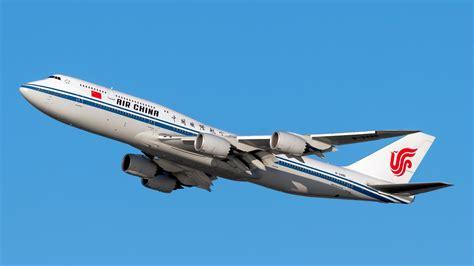
The Boeing 747 has always inspired a certain awe. Its unmistakable hump, colossal wingspan, and four roaring engines turned long-distance flight from a luxury into a routine part of modern life. Even decades after its first flight, one question keeps resurfacing among aviation fans and professionals alike: how many hours can a Boeing 747 fly without refueling? The answer lives at the intersection of engineering, physics, airline economics, and safety regulation, and it reveals far more than a single number on a spec sheet.
Understanding the endurance of the Boeing 747 means stepping beyond marketing figures and into the practical realities of flight planning. Range charts, fuel loads, wind patterns, and regulatory reserves all shape how long this aircraft can truly remain airborne. The 747 is not a single airplane but a family of designs spanning more than half a century, and each generation tells a slightly different endurance story.
What makes the topic especially compelling is that the Boeing 747 arrived at a time when long-haul flight was being reinvented. Airlines needed aircraft that could cross oceans reliably, economically, and safely, carrying hundreds of passengers or vast amounts of cargo. The 747 answered that call, and its endurance became one of its defining strengths, even as newer aircraft later pushed the limits further.
The Practical Short Answer on Boeing 747 Flight Hours
For most commercial operations, a Boeing 747 can fly between 13 and 16 hours without refueling, depending on the specific variant, payload, route, and atmospheric conditions. Earlier models sit closer to the lower end of that range, while later versions, particularly the 747-8 Intercontinental, can sustain flights approaching the upper limit under favorable conditions.
This estimate reflects real-world airline operations rather than theoretical maximums. Airlines never plan to exhaust fuel tanks; instead, they build in layers of safety margins that reduce usable endurance. Still, even with those constraints, the Boeing 747 remains one of the most capable long-range aircraft ever to enter commercial service.
The distinction between range in distance and endurance in hours is critical. Range is typically expressed in nautical miles, while endurance is the result of cruise speed, winds aloft, and fuel burn. A flight aided by strong tailwinds can stretch endurance noticeably, while headwinds can shave hours off the maximum achievable time.
Why the Boeing 747 Was Built for Long Endurance
The Boeing 747 was designed from the outset as a long-haul workhorse. Its massive wing area allows it to carry enormous fuel loads while maintaining efficient lift at cruising altitude. Early engineers understood that endurance was not just about tank size but about balancing aerodynamics, structural weight, and engine performance.
The aircraft’s four-engine configuration, while less fuel-efficient than modern twinjets, provided redundancy and power for heavy takeoffs and sustained cruise at high altitudes. This design choice reflected the technological realities of the late 1960s, when engine reliability standards favored multiple engines over fewer, larger ones.
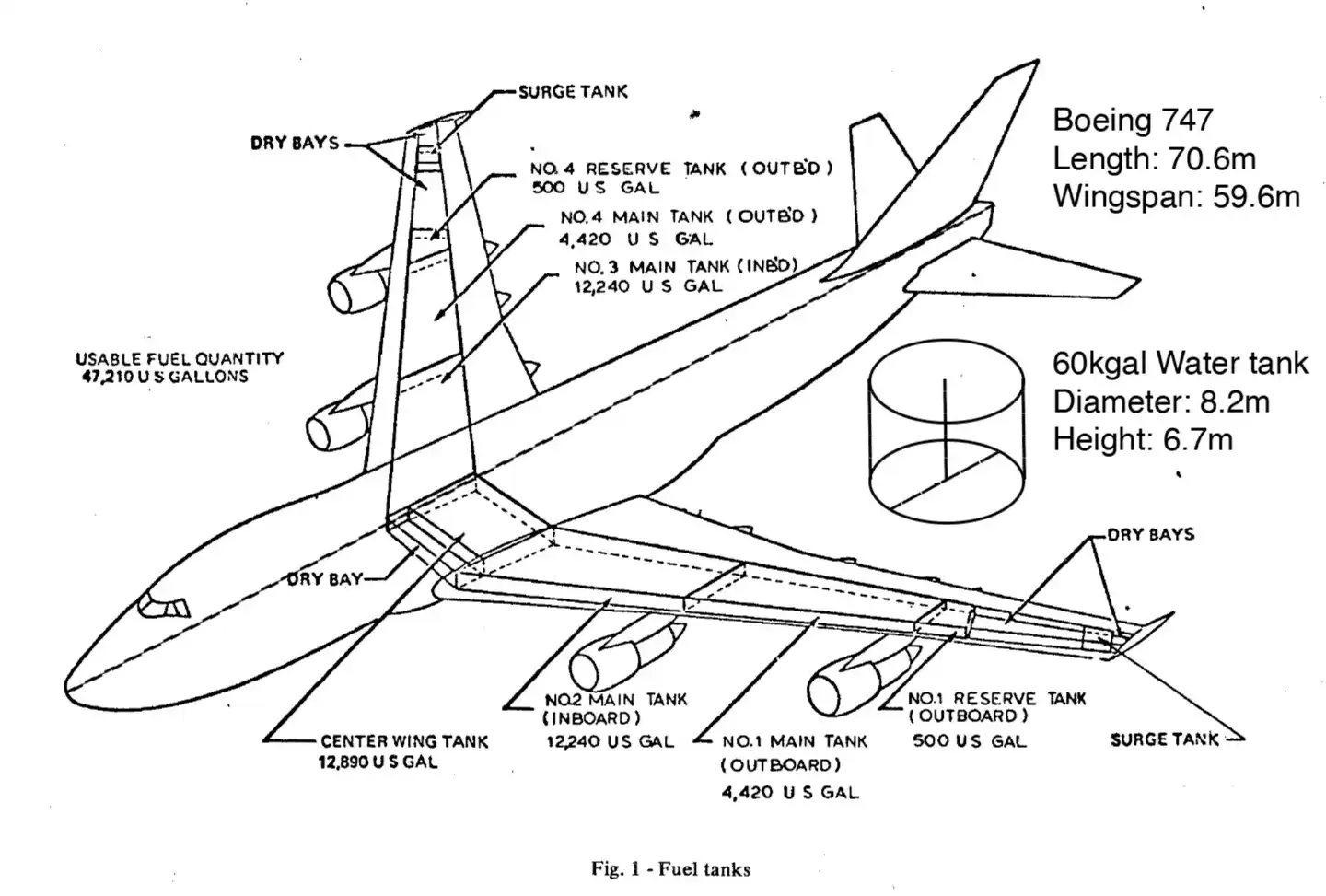
Fuel is stored across multiple tanks integrated into the wings and center body, turning the wing itself into a long-range asset. Over successive variants, Boeing refined winglets, materials, and engine integration to squeeze more hours out of every gallon burned.
Fuel Capacity and What It Means in the Air
Fuel capacity is the foundation of endurance. Early Boeing 747-100 models carried roughly 183,000 liters of jet fuel, enough to support flights of around 11 to 12 hours under optimal conditions. As the aircraft evolved, capacity increased steadily, culminating in the 747-8 with more than 238,000 liters of fuel onboard.
However, fuel capacity alone does not dictate flight time. Fuel burn rate matters just as much. Heavier aircraft burn more fuel, especially during climb, and a fully loaded 747 departing at maximum takeoff weight may sacrifice endurance to carry passengers, cargo, or both. Airlines constantly juggle this trade-off, optimizing routes to balance payload revenue against fuel consumption.
Cruise speed also shapes endurance. The Boeing 747 typically cruises around 900 to 915 kilometers per hour, fast enough to reduce exposure to headwinds while maintaining efficient fuel burn at altitude. Over a 15-hour flight, even small differences in speed or burn rate accumulate into significant changes in total endurance.
How Different Boeing 747 Variants Compare
Each major Boeing 747 variant reflects a specific moment in aviation history and technology. The original 747-100 and 747-200 were groundbreaking but less efficient by modern standards, with endurance generally topping out near 12 to 14 hours. The 747-400 represented a major leap forward, introducing advanced avionics, winglets, and improved engines that pushed realistic endurance closer to 14 to 15 hours.
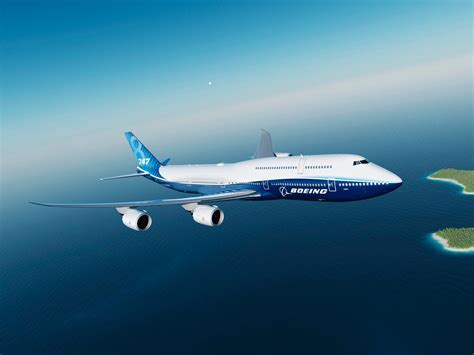
The final evolution, the Boeing 747-8 Intercontinental, stands as the most capable in terms of range and endurance. Its refined aerodynamics and GE GEnx engines allow it to sustain flights approaching 16 hours, translating to a maximum range of about 7,730 nautical miles under certification conditions.
These figures assume ideal conditions and minimal reserves. In everyday airline service, planned flight times are usually shorter, reflecting conservative fuel policies and the need for alternate airports and holding patterns.
Real-World Flight Planning and Safety Margins
No commercial Boeing 747 flight is planned to the edge of fuel exhaustion. Aviation regulations require multiple layers of reserve fuel, including contingency fuel, alternate fuel, and final reserve fuel. These requirements ensure that even in the event of unexpected weather, air traffic delays, or diversions, the aircraft can land safely without compromising margins.
This reality means that while a 747-8 may be capable of flying 16 hours, airlines often schedule routes several hours shorter. The goal is reliability, not record-setting endurance. Fuel planning is as much about economics as safety; carrying excess fuel increases weight, which in turn increases fuel burn, creating a self-defeating cycle.
Pilots and dispatchers continuously monitor fuel status in flight, adjusting speed and altitude to optimize consumption. Modern flight management systems allow for precise predictions, but conservative planning remains the norm across the industry.
Weather, Winds, and Their Outsized Impact on Endurance
Atmospheric conditions can dramatically alter how long a Boeing 747 can stay airborne. Tailwinds from jet streams can extend effective endurance by hours, while strong headwinds can erode even the most generous fuel plans. Flights from Asia to North America often benefit from powerful westerly winds, while eastbound journeys face stiffer resistance.
Temperature also plays a role. Colder air is denser, improving engine efficiency and lift, which can subtly reduce fuel burn. Hot conditions, especially during takeoff, increase fuel consumption and may limit payload or range.
These variables explain why published endurance figures are best seen as benchmarks, not guarantees. Every long-haul flight is a dynamic calculation shaped by conditions that can change hour by hour.

How the Boeing 747 Compares to Modern Long-Haul Aircraft
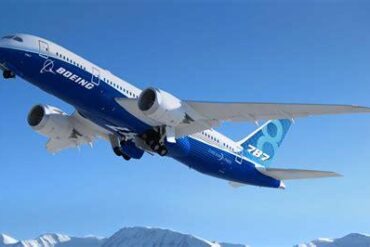
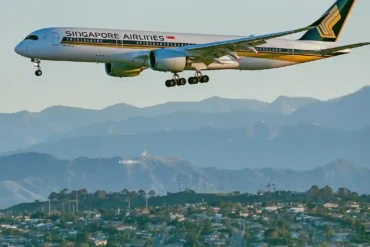
Modern twin-engine aircraft such as the Boeing 787 and Airbus A350 have redefined ultra-long-haul travel, with some routes exceeding 18 hours nonstop. These aircraft achieve longer endurance not by carrying more fuel, but by burning far less of it per hour, thanks to composite materials, advanced aerodynamics, and highly efficient engines.
The Boeing 747, by contrast, relies on sheer capacity and power. Its four engines consume more fuel, but they also offer flexibility for heavy payloads and specialized missions, particularly in cargo operations. While newer aircraft have surpassed the 747 in efficiency, few match its combination of range, volume, and adaptability.
This shift explains why many airlines retired their 747 fleets in the 2020s. The aircraft remained capable, but economics favored smaller, more efficient designs for most routes.
Exceptional Cases: Tankers and Air Force One
The endurance discussion changes dramatically when aerial refueling enters the picture. Boeing once explored the idea of converting the 747 into a tanker aircraft, capable of refueling other planes while extending its own time aloft indefinitely. While the concept proved impractical for most air forces, it demonstrated the platform’s latent potential.
The most famous exception is Air Force One, the heavily modified Boeing 747 used by the President of the United States. Equipped for aerial refueling, this aircraft is not limited by onboard fuel capacity. In theory, it can remain airborne for days, constrained primarily by crew endurance, maintenance requirements, and engine oil limits rather than fuel.
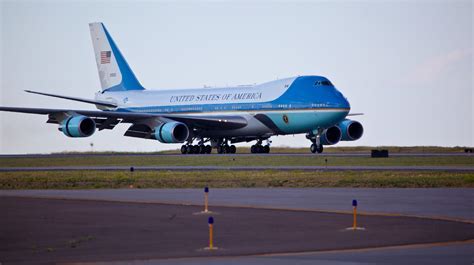
Exact endurance figures remain classified, but the capability underscores how dramatically refueling changes the equation. Without refueling, even Air Force One aligns broadly with other 747 variants in terms of fuel-based endurance.
Cargo Operations and Endurance Trade-Offs
In cargo service, the Boeing 747 often flies shorter segments than its maximum capability, prioritizing payload over endurance. Freight operators may choose to refuel more frequently to carry heavier loads, particularly on high-demand routes. Conversely, lightly loaded cargo flights can exploit the aircraft’s full range, approaching its maximum endurance envelope.
The flexibility to operate efficiently across such a wide range of missions is one reason the 747 remains a staple of global cargo fleets long after its passenger days ended.
The Enduring Legacy of the Boeing 747
So, how many hours can a Boeing 747 fly without refueling? In commercial service, 13 to 16 hours represents a realistic and defensible answer. Earlier models cluster near the lower end, while the 747-8 pushes the upper boundary under favorable conditions.
What makes this endurance remarkable is not just the number itself, but what it represents. The Boeing 747 was conceived in an era before digital flight controls, composite airframes, and ultra-efficient engines. Yet it delivered a level of long-haul capability that still commands respect today.
From its early days shrinking the globe to its final role as a cargo and presidential platform, the Queen of the Skies proved that endurance is as much about intelligent design as it is about raw fuel capacity. Even as newer aircraft claim longer nonstop records, the Boeing 747’s ability to stay aloft for more than half a day on a single fuel load remains a testament to one of aviation’s most influential designs.