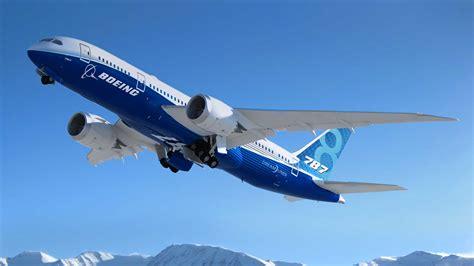
The Boeing 787 Dreamliner occupies a peculiar sweet spot in modern aviation, where physics, materials science, and airline economics meet in a surprisingly elegant compromise. Built to fly far without guzzling fuel, the aircraft has become the long-distance workhorse of the twin-engine era. When people ask how many hours a 787 can fly without refueling, they are really asking how far contemporary engineering can stretch time, efficiency, and human comfort in a pressurized aluminum-and-carbon tube hurtling through the upper atmosphere.
At its core, the Dreamliner is designed to remain airborne for roughly 18 hours under normal commercial operating conditions. That number is not a marketing flourish. It reflects fuel capacity, aerodynamic efficiency, engine performance, and regulatory margins that airlines must respect every day. Under unusually favorable circumstances, however, the theoretical endurance stretches much further, nudging toward the 22–24 hour range in highly optimized scenarios that strip away commercial realities like payload, reserves, and scheduling constraints.
Understanding why those numbers exist, and why airlines rarely push them to the extreme, requires a look beyond a simple stopwatch and into how the 787 was engineered to redefine long-haul flight.
The Engineering Logic Behind the Dreamliner’s Endurance
The 787 was conceived as a clean-sheet design at a time when fuel prices were volatile and long-range point-to-point flying was becoming economically attractive. Boeing abandoned incremental tweaks and instead rebuilt the widebody formula from the ground up. Roughly 80% of the aircraft by volume is composite material, with carbon fiber reinforced plastic replacing much of the traditional aluminum structure. That decision reduced weight, increased corrosion resistance, and allowed higher cabin pressurization without structural penalties.
Lower weight translates directly into longer endurance. Every kilogram not spent on structure can be allocated to fuel or payload, and the Dreamliner exploits this relentlessly. Combined with a highly efficient wing design and advanced engine options—the GE GEnx-1B or Rolls-Royce Trent 1000—the aircraft achieves fuel burn reductions of around 20–25% compared to previous-generation widebodies.
This efficiency is what allows the 787 to cruise for nearly three-quarters of a day without refueling, even while carrying hundreds of passengers, cargo, and regulatory fuel reserves.
Official Range Versus Time in the Air
Range figures are the cleanest way to express endurance, but they do not translate perfectly into hours because wind, routing, and altitude all influence ground speed. The smallest variant, the 787-8, carries an official range of 7,305 nautical miles (13,530 kilometers). At long-haul cruise speeds, that typically equates to about 17 to 18 hours of flight time under real-world conditions.
The 787-9, the most popular variant, extends that reach to 7,565 nautical miles (14,010 kilometers). Its strengthened airframe and higher maximum takeoff weight allow it to carry more fuel while still transporting a full commercial payload. In practice, this makes it the Dreamliner best suited for marathon routes that flirt with the upper limits of human endurance.
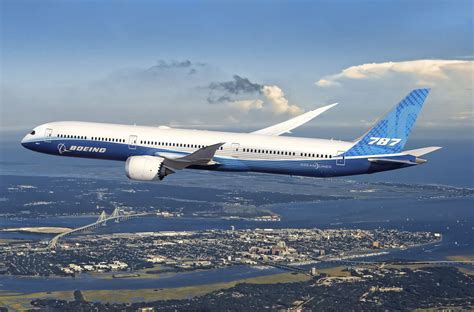
The largest member of the family, the 787-10, trades range for capacity. With a maximum range of 6,330 nautical miles (11,730 kilometers), it is optimized for high-density long-haul routes rather than ultra-long-haul missions. Its endurance is shorter, but still comfortably exceeds 14–15 hours in airline service.
How Conditions Can Stretch a Dreamliner’s Flight Time
Under ideal conditions, the 787 can exceed its published endurance by a surprising margin. A light payload, favorable tailwinds, optimal cruise altitude, and conservative speed selection can collectively extend time aloft well beyond standard expectations. Test flights and ferry operations have demonstrated that a Dreamliner can remain airborne for well over 20 hours, approaching the 24-hour mark in extreme cases.
These scenarios are academic rather than commercial. Airlines must plan fuel reserves for diversions, weather, and holding patterns, all of which eat into usable endurance. Crew duty time limitations also impose a hard ceiling long before fuel becomes the limiting factor. Even if the aircraft could keep flying, the humans in the cockpit legally cannot.
Still, the fact that such endurance is physically possible speaks volumes about how far widebody efficiency has progressed since the age of four-engine giants.
Real-World Marathon Routes That Test the Limits
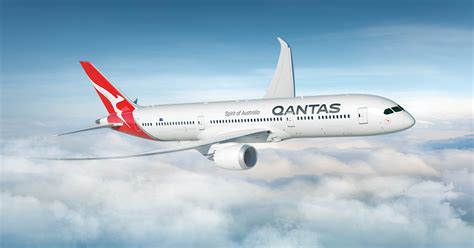
The Dreamliner’s endurance is not theoretical. Several scheduled routes regularly push the aircraft close to its maximum practical limits. Among the most famous is Qantas’ Perth–London service, which covers more than 9,000 miles (14,490 kilometers) and routinely clocks in just under 18 hours. This flight exists solely because the 787 can make it economically viable with a full payload and acceptable margins.
Another endurance showcase is the Melbourne–Dallas/Fort Worth route, also operated by Qantas. Nearly matching the Perth–London distance, this flight demonstrates how the 787-9 can bridge continents that were once connected only by multi-stop itineraries.
Other long-haul examples include Auckland–New York, Houston–Sydney, and San Francisco–Singapore. Each of these routes lives in the 16–17 hour range, where fuel efficiency, crew planning, and passenger comfort intersect delicately.
Why Twin Engines Changed the Long-Haul Equation
The Dreamliner’s endurance would have been meaningless without regulatory evolution. Extended Twin-Engine Operations, or ETOPS, allowed twin-engine aircraft to fly routes once reserved for quadjets. The 787 builds on decades of reliability improvements pioneered by the 777, enabling it to operate safely far from diversion airports.
This regulatory trust effectively ended the era of four-engine long-haul dominance. Aircraft like the Boeing 747 and Airbus A380 became economically obsolete not because they lacked capability, but because they could not match the 787’s efficiency per seat and per mile. Endurance, in this sense, is as much about economics as it is about fuel tanks.
Cabin Design and Human Endurance
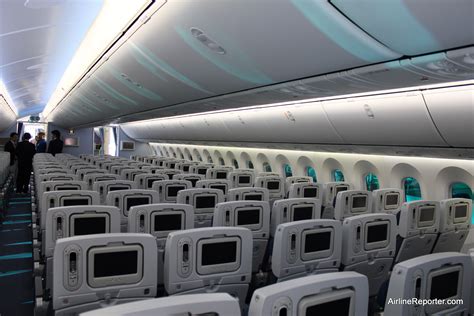
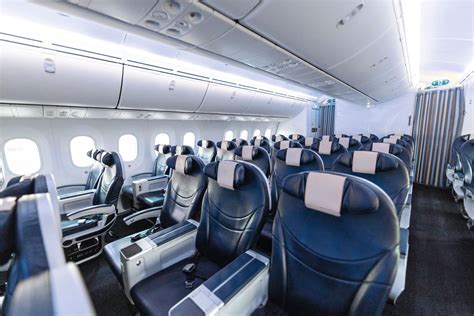
Flying for 18 hours challenges passengers as much as machinery. The 787 was engineered with this reality in mind. Its composite fuselage allows a lower equivalent cabin altitude of 6,000 feet, compared to the traditional 8,000 feet. Higher humidity levels, typically 15–25%, reduce dehydration and fatigue over ultra-long sectors.
Larger electronically dimmable windows, quieter engines with serrated chevrons, and adaptive LED lighting systems all serve a single purpose: making extreme endurance flights tolerable for humans. Without these features, airlines would struggle to sell seats on routes approaching the 787’s maximum endurance.
Variant Differences and Their Impact on Endurance
The endurance question cannot be answered without specifying the variant. The 787-9 is the endurance champion, balancing fuel capacity and payload better than its siblings. The 787-8 excels on thinner long-haul routes where demand does not justify a larger aircraft, while still delivering impressive flight times.
The 787-10, despite its shorter range, remains a long-haul aircraft by any reasonable definition. Its endurance is simply optimized differently, favoring seat count over extreme distance. Airlines exploit this modularity to tailor their networks with surgical precision.
Operational Limits Beyond Fuel
Even if fuel allowed indefinite flight, operations would not. Crew rest requirements, maintenance cycles, air traffic constraints, and passenger well-being all impose ceilings on usable endurance. For most airlines, 18 hours represents the practical upper bound, beyond which complexity and cost rise sharply.
This is why the 787’s advertised endurance aligns so closely with real-world usage. The aircraft was not designed to chase records, but to operate consistently at the edge of what makes sense commercially and operationally.
How the Dreamliner Redefined Global Connectivity
The true legacy of the 787’s endurance lies not in how long it can fly, but in what that endurance enables. Hundreds of new nonstop routes now exist because the aircraft can connect city pairs without relying on hub-and-spoke transfers. Flights that once required two stops can now be completed in a single, albeit long, segment.
This shift has reshaped airline strategy, passenger expectations, and even airport economics. Endurance became a strategic tool rather than a technical curiosity, and the Dreamliner wielded it with quiet efficiency.
The Bottom Line on 787 Flight Hours
So how many hours can the Boeing 787 Dreamliner fly without refueling? In everyday airline service, around 18 hours is the honest, repeatable answer. Under special conditions, the aircraft can push well beyond that, approaching 24 hours in extreme scenarios that strip away commercial constraints.
What matters more is that the Dreamliner can do this reliably, efficiently, and profitably, carrying hundreds of people across half the planet on two engines and a single tank of fuel. That endurance is not just a number. It is a statement about how far modern aviation has come, and a quiet hint at how much farther it can still go.