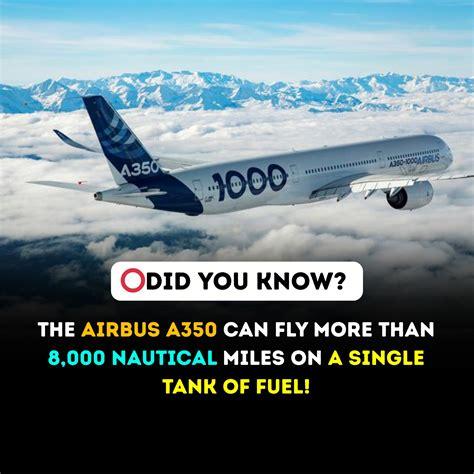
The question of how many hours the Airbus A350-1000 can fly without refueling sounds simple, yet the answer opens a window into the most advanced edge of modern commercial aviation. This aircraft was not designed merely to cross oceans; it was engineered to erase them. In an era where airlines increasingly chase nonstop connections between cities once separated by multiple layovers, endurance has become as valuable as speed.
The Airbus A350-1000 sits at the intersection of physics, economics, and human limits. Its flight time is not just about fuel volume but about how efficiently that fuel is converted into lift, thrust, and sustained cruise over nearly an entire day. Understanding its endurance requires looking at design philosophy, operational compromises, and the way airlines tailor the aircraft to specific missions.
At its core, the A350-1000 represents a philosophical shift away from brute-force aviation—four engines, massive structural weight, and high fuel burn—toward precision-engineered efficiency. It is this philosophy that allows a twin-engine aircraft to remain airborne for durations that once seemed impossible without midair refueling.
By examining real-world operations, technical constraints, and ultra-long-range adaptations, the true endurance of the Airbus A350-1000 becomes clear—not as a single number, but as a carefully balanced envelope of possibilities.
Typical Endurance of the Airbus A350-1000 in Commercial Service
In a standard commercial configuration, the Airbus A350-1000 can fly for approximately 17 to 18 hours without refueling. This endurance aligns with its advertised range of roughly 8,700 to 9,000 nautical miles, achieved while carrying a near-full passenger load and meaningful cargo volume. These figures are not theoretical marketing numbers; they are validated daily by airlines operating some of the world’s longest nonstop routes.
Qatar Airways provides one of the clearest demonstrations of this capability. Its A350-1000 flights between Doha and Auckland routinely exceed 17 hours, with eastbound legs often pushing closer to the aircraft’s upper endurance boundary due to prevailing winds. These operations showcase how the aircraft maintains efficiency deep into the flight, long after older designs would suffer steep increases in fuel burn.
What makes this endurance remarkable is not just the duration itself, but the consistency with which it can be achieved. The A350-1000 does not limp toward the end of its range on the edge of feasibility. Instead, it cruises at optimal altitudes with stable fuel flow, allowing dispatchers to plan routes with confidence rather than contingency-heavy conservatism.
This reliability marks a fundamental difference between modern composite widebodies and earlier long-haul aircraft, where the final hours of flight often came at a steep operational cost.
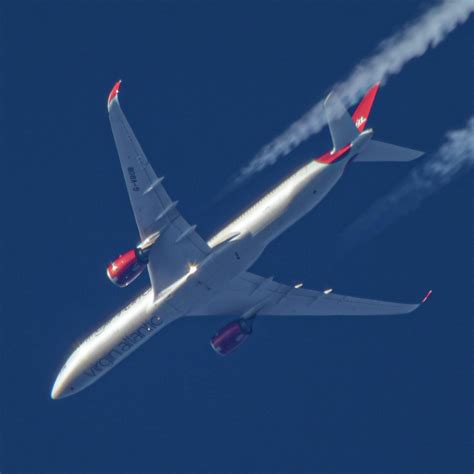
Why Twin Engines Can Now Fly Longer Than Old Four-Engine Giants
Historically, flight times approaching 18 hours were the domain of aircraft like the Airbus A340-500 and Boeing 747-400, both powered by four engines. These aircraft relied on redundancy rather than efficiency, carrying enormous fuel loads simply to transport the fuel required for the last segment of the journey.
The Airbus A350-1000 rewrites this equation through aerodynamic refinement and materials science. Its carbon-fiber-reinforced polymer fuselage and wings are significantly lighter than traditional aluminum structures, reducing the baseline weight that must be lifted for every mile flown. Less structural mass means more of the aircraft’s maximum takeoff weight can be allocated to fuel rather than metal.
Powering this efficiency is the Rolls-Royce Trent XWB-97, one of the most advanced turbofan engines ever certified for commercial service. Designed specifically for the A350-1000, it delivers high thrust with exceptionally low specific fuel consumption, maintaining efficiency even during ultra-long cruise segments where older engines would drift out of their optimal performance envelope.
Equally critical is ETOPS certification, which allows the A350-1000 to fly far from diversion airports while meeting stringent safety requirements. This capability enables direct polar and oceanic routings that shave hours off flight time and reduce fuel burn, further extending endurance without adding fuel.
Maximum Takeoff Weight and the Physics of Staying Airborne
The upper limit of the A350-1000’s endurance is tightly bound to its maximum takeoff weight (MTOW), certified at approximately 322 tonnes. This figure represents the absolute ceiling of what the aircraft can lift from the runway, including fuel, passengers, cargo, and the aircraft’s own structure.
To push flight time beyond the standard 18-hour range, airlines must engage in a delicate trade-off. Every additional kilogram of fuel added to extend range displaces payload, forcing decisions about passenger count and cargo revenue. On ultra-long-haul missions, cargo is almost always the first sacrifice, as its revenue rarely justifies the weight penalty compared to fuel.
The aircraft’s wings play a subtle but vital role here. Built almost entirely from composites, they are designed to flex under load, dynamically adjusting their shape to maintain an optimal lift-to-drag ratio throughout the flight. This adaptive behavior reduces induced drag, allowing the aircraft to cruise efficiently even when carrying extreme fuel loads at departure.
Environmental conditions also impose limits. High temperatures or high-altitude airports reduce air density, degrading takeoff performance and potentially forcing fuel restrictions. This is why ultra-long-haul flights are meticulously scheduled and dispatched, with each departure treated as a unique performance calculation rather than a routine operation.
Pushing Beyond 20 Hours: The A350-1000 Ultra-Long-Range Variant
While 17 to 18 hours defines the standard A350-1000, Airbus has engineered a specialized version capable of up to 22 hours of nonstop flight. This Ultra-Long-Range (ULR) variant has been developed primarily for Qantas’ Project Sunrise, which aims to connect Sydney directly with London and New York.
Achieving this endurance requires more than simply filling the tanks. The ULR configuration incorporates an additional 20,000-liter fuel tank, integrated into the aircraft’s structure without compromising safety or balance. This extra capacity allows the aircraft to exceed 10,000 nautical miles, but only under tightly controlled payload conditions.
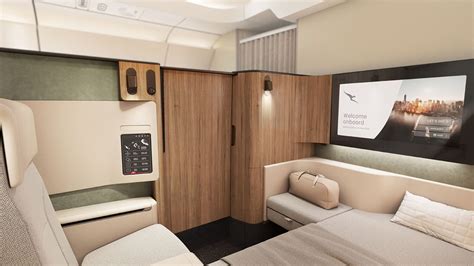
To make this feasible, Qantas has opted for a dramatically reduced seating layout—just 238 passengers compared to the 350–410 typically carried by a standard A350-1000. This reduction lowers the aircraft’s zero-fuel weight, freeing up mass for fuel while also aligning with a premium-heavy revenue strategy suited to extreme-duration flights.
The result is an aircraft capable of staying airborne for nearly an entire day, a milestone that fundamentally reshapes what nonstop commercial travel can mean.
Real-World Variables That Shape Actual Flight Time
Despite impressive specifications, the exact number of hours an A350-1000 can fly varies from flight to flight. Wind patterns are among the most influential factors. Strong tailwinds can effectively extend range, allowing the aircraft to cover more ground within the same fuel window, while persistent headwinds can add hours to flight time and force payload restrictions.
Seasonal jet streams explain why a route may be feasible year-round in one direction but constrained in the other. Dispatchers must account for these conditions well before departure, often adjusting routing, altitude profiles, and contingency fuel to ensure compliance with regulatory reserves.
Temperature also plays a role beyond takeoff performance. Colder air improves engine efficiency and aerodynamic lift, subtly enhancing endurance during cruise. Conversely, warmer atmospheric conditions increase drag and fuel burn, eroding the margins that make ultra-long-haul flights viable.
These variables mean that while the aircraft may be capable of 22 hours in ideal conditions, airlines plan conservatively, ensuring that every flight remains comfortably within certified limits.
How the A350-1000 Compares to Other Long-Range Aircraft
Within the Airbus family, the A350-1000 often draws comparison with the A350-900, particularly the -900ULR variant that currently operates the world’s longest commercial flights. The standard A350-900 typically flies 15 to 16 hours, while the ULR version stretches that to around 18 to 19 hours.
What distinguishes the A350-1000 is its ability to combine greater passenger capacity with longer endurance in standard form. Despite being larger and heavier, its higher fuel capacity and more powerful engines allow it to surpass the standard -900 in range, making it ideal for high-demand long-haul routes.
The Boeing 777-8, part of the upcoming 777X family, is positioned as the A350-1000’s primary rival. Boeing claims comparable range, but as of now, the A350-1000 holds a critical advantage: proven performance in active service. Airlines value this maturity, especially when committing to routes that leave little margin for technical uncertainty.
Another often-overlooked advantage is cabin environment. The A350’s composite fuselage supports higher humidity and a lower cabin altitude, reducing passenger fatigue during flights that stretch beyond 18 hours—an increasingly important factor as airlines push endurance boundaries.
Human Limits: Crew, Passengers, and the Cost of Extreme Endurance
Mechanical capability does not exist in isolation. Flights lasting 20 hours or more introduce profound human considerations. Regulations require four pilots for such missions, along with augmented cabin crews to manage rest cycles and maintain safety standards.
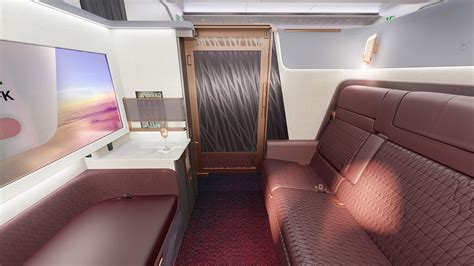
Passenger endurance is equally critical. Even with improved air quality, reduced cabin altitude, and advanced lighting systems, nearly a full day in the air tests physical and psychological limits. Airlines mitigate this through wellness-focused cabin features, including stretching zones, hydration areas, and carefully designed meal and lighting schedules aligned with circadian rhythms.
Economically, ultra-long-haul flights are sensitive to fuel prices. Carrying massive fuel loads means burning fuel simply to transport fuel, creating diminishing returns. A modest increase in oil prices can quickly erode profitability, making these routes viable only for airlines with strong premium demand and disciplined cost control.
The True Answer: How Long Can the Airbus A350-1000 Fly?
So, how many hours can the Airbus A350-1000 fly without refueling? In practical terms, 17 to 18 hours in standard airline service, with the capability to reach approximately 22 hours in specialized ultra-long-range configurations. These figures are not theoretical extremes but operational realities shaped by engineering, economics, and human endurance.
The A350-1000 does not merely extend flight time; it redefines what is reasonable for a twin-engine aircraft. It achieves this through efficiency rather than excess, leveraging materials, aerodynamics, and engine technology to extract maximum value from every kilogram of fuel.
A New Benchmark for Long-Distance Aviation
The Airbus A350-1000 stands as the current benchmark for ultra-long-haul commercial flight. Its endurance capabilities signal a future where geography imposes fewer constraints on global connectivity, allowing airlines to design networks around passengers rather than hubs.
As Project Sunrise approaches reality and more A350-1000s enter service worldwide, flights lasting close to a full day will shift from novelty to normalcy. The aircraft’s proven reliability, combined with its unmatched balance of range, efficiency, and comfort, ensures that it will dominate this niche for years to come.
In the evolving story of aviation, the A350-1000 represents not just a longer flight, but a smarter one—where endurance is achieved through precision, not excess, and where the limits of possibility are quietly pushed further with every sunrise crossed at cruising altitude.