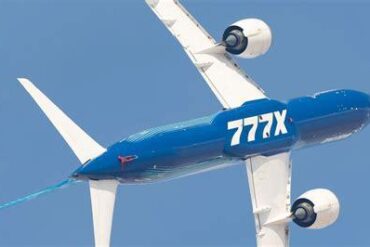
The Boeing 777X is more than just a stretched and updated version of its predecessors—it represents a generational leap in long-haul aviation. With range capabilities that can link nearly any two major cities on the planet, it’s engineered to redefine operational limits for global carriers. Combining next-generation aerodynamics, the GE9X engine—the most powerful ever fitted to a commercial jet—and a host of fuel-saving innovations, the 777X pushes the envelope of how far and efficiently a twin-engine aircraft can fly.
The aircraft’s extended wingspan, increased fuel efficiency, and immense passenger capacity aim squarely at replacing four-engine giants like the Airbus A380 and Boeing 747. The model promises to bridge ultra-long distances while driving down trip costs, a balance long sought in commercial aviation.
Unprecedented Range For Twin-Engine Travel
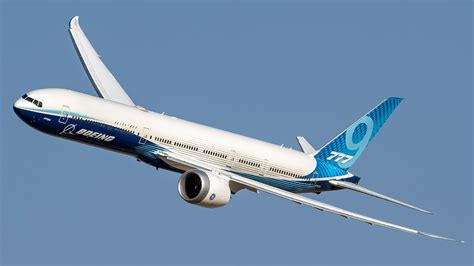
The 777X family includes two major passenger variants: the 777-9 and the 777-8, alongside the 777-8F freighter. The flagship 777-9, designed for high-density international trunk routes, boasts a maximum range of 7,285 nautical miles (13,492 kilometers). This already places it among the longest-reaching commercial aircraft. However, it is the 777-8 that truly stretches the boundaries—capable of flying 8,745 nautical miles (16,196 kilometers) nonstop, it outperforms every previous Boeing widebody in range.
This exceptional reach means routes such as Sydney to London, Singapore to New York, and Auckland to Chicago fall within its operating envelope—nonstop and with full payload. This unlocks point-to-point travel opportunities that previously required stopovers, simplifying scheduling and improving travel experience.
Why The 777-8 Is A Game-Changer In Range
With its ultra-long-range capabilities, the 777-8 has been positioned as Boeing’s answer to the Airbus A350-1000, which offers a similar range of around 8,700 NM. However, the 777-8 goes even further, offering greater range while carrying more passengers—around 384 in a standard configuration.
Boeing originally pitched the 777-8 for Qantas’ Project Sunrise, which aimed to link Australia directly with cities such as New York and London. While the project ultimately favored the A350-1000, the 777-8 remains a top contender for similar ultra-long-haul missions, thanks to its capacity-range balance.
How The 777X Stacks Up Against Previous 777s
The 777X improves upon the legacy of earlier 777 variants, particularly the 777-200LR and 777-300ER:
- 777-200LR: Introduced in 2006, max range of 8,555 NM (15,843 km)
- 777-300ER: Entered service in 2004, range of 7,370 NM (13,649 km)
While the 777-200LR held the long-haul crown within Boeing’s portfolio for years, the 777-8 surpasses it with higher passenger capacity and more favorable economics. The 777-9, meanwhile, modernizes the 777-300ER’s mission profile with better fuel burn and more seats—up to 426 passengers.
Outpacing Boeing’s Own Icons
The 777X doesn’t only outdistance earlier 777s—it goes beyond even Boeing’s most iconic long-haul aircraft:
- 747-400: Range of 7,260 NM (13,450 km)
- 747-8: Slightly better at 7,730 NM (14,320 km)
In both cases, the 777X matches or exceeds these ranges with fewer engines, lower fuel burn, and superior per-seat economics. For example, a route like Frankfurt to Singapore—historically dominated by quadjets—is now well within the 777-9’s reach, and cheaper to operate.
Even the technologically advanced 787 Dreamliner family trails the 777X in maximum range:
- 787-9: 7,565 NM (14,010 km)
- 787-10: 6,330 NM (11,720 km)
The 777X isn’t just another widebody; it’s a new flagship in Boeing’s lineup.
Inside The Engineering: Range By Design
The 777X’s range is no accident. It’s the result of deliberate engineering breakthroughs, led by the folding carbon-fiber composite wing. With a span 11 feet longer than its predecessors and the A350-1000, these wings reduce drag and maximize lift efficiency.
Powering the jet is the GE9X, a marvel of modern propulsion. Each engine delivers up to 134,000 pounds of thrust, with advanced materials like ceramic matrix composites and a 134-inch fan diameter. Together, these technologies provide 10% better fuel efficiency than the engines on the 777-300ER, enhancing both range and sustainability.

Global Demand: Who’s Flying The 777X?
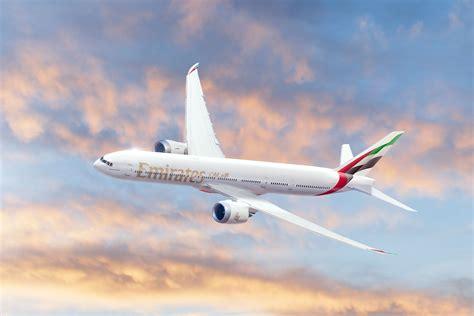
As of 2025, Boeing has received over 550 confirmed orders for the 777X, cementing strong industry confidence. Leading the charge is Emirates, with a monumental 262 aircraft on order, followed by Qatar Airways with 94. Other notable customers include:
- British Airways (18)
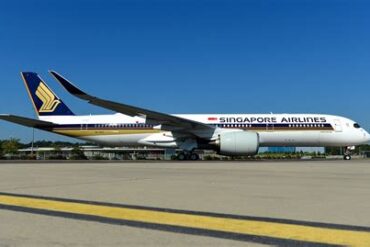
- Singapore Airlines (31)
- Lufthansa (27)
- Etihad Airways (25)
- Korean Air (20)
These carriers are preparing to deploy the 777X on flagship international routes, replacing aging 777-300ERs and 747s while introducing a new standard of comfort and efficiency.
Facing The Competition: The A350 And Beyond
The Airbus A350-1000 remains the 777X’s primary competition. With a range of 8,700 NM, it shares many missions with the 777-8. The A350-900ULR, exclusive to Singapore Airlines, goes further—up to 9,700 NM—but carries fewer passengers, limiting its applicability to niche routes.
The 777X will also step into a market still using Airbus A380s and Boeing 747s. These aircraft are high-capacity but inefficient. Airlines are seeking replacements that maintain volume without four engines, and the 777-9 fits perfectly into this role.
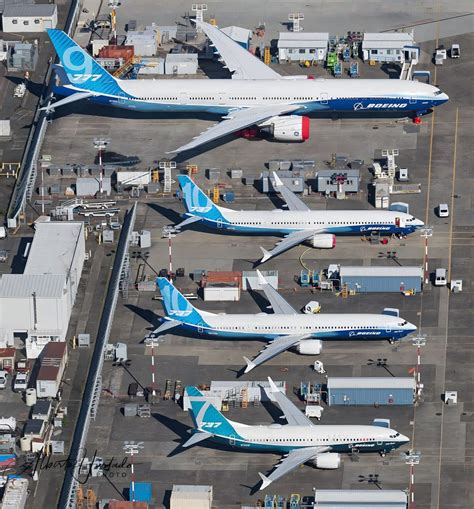
Delays, But No Doubt
The 777X first flew in January 2020, but it has been plagued by delays, driven by an intensive certification process and increased scrutiny post-737 MAX. Supply chain issues have also played a role. Boeing now expects certification by late 2025 and the first deliveries in 2026.
Despite this, the demand has held strong. Operators understand that the aircraft’s capabilities will shape fleet planning for the next 20 years. Its extended range, greater fuel efficiency, and environmental advantages are aligned with the future of long-haul travel.
What’s Next For Ultra-Long-Haul Travel
Passenger demand for long-haul air travel is recovering steadily, with IATA reporting nearly 5% growth in 2025. Airlines are responding by looking beyond traditional hubs, and aircraft like the 777X make these ambitions feasible.
Its operational flexibility will allow airlines to pursue nonstop city pairs previously deemed uneconomical. Furthermore, as sustainability pressures mount, the 777X’s fuel efficiency becomes not just a cost advantage—but a strategic imperative.
In short, the Boeing 777X doesn’t just represent how far we can fly—it defines the future of long-haul aviation itself.