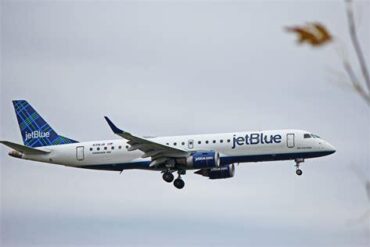
JetBlue Airways has reached a significant milestone in its plan to introduce a new domestic first-class product, with the airline’s BlueFirst seat reportedly receiving certification from the Federal Aviation Administration (FAA). The approval removes one of the most important regulatory obstacles facing the new premium cabin and moves JetBlue closer to putting the product into service.
According to aviation insider JonNYC, the first BlueFirst aircraft modification is scheduled for September 21, 2026. JetBlue has not publicly confirmed that specific date, so the timetable should still be treated as preliminary. Nevertheless, the carrier has consistently indicated that BlueFirst will begin rolling out before the end of 2026, with tickets expected to become available during the fall.
The development is particularly important because JetBlue has never offered a conventional domestic first-class cabin across most of its fleet. The airline has built its premium reputation around Mint, its lie-flat product on selected longer routes, and EvenMore, which provides additional legroom and other benefits. BlueFirst is designed to occupy the space between those products, giving passengers a substantially more spacious seat without the cost or complexity associated with a lie-flat premium cabin.
The certification also marks the latest stage in a project that has been evolving for nearly two years. JetBlue CEO Joanna Geraghty first confirmed plans for a domestic first-class product in December 2024, describing a cabin featuring wider seats with deeper recline arranged in a 2-2 configuration. The concept was unofficially dubbed “Mini Mint” by parts of the aviation industry before JetBlue eventually gave it an official identity: BlueFirst.
FAA Certification Clears a Major BlueFirst Hurdle
The FAA approval is important because installing a substantially different passenger seat configuration involves more than simply removing existing economy seats and replacing them with larger ones. The new seating arrangement must meet regulatory requirements covering structural integrity, emergency evacuation, restraint systems, installation and other aspects of cabin safety.
JonNYC’s report indicates that the certification process has now reached the point where JetBlue can proceed with the planned aircraft modifications. The airline has not yet announced when the first completed BlueFirst aircraft will enter commercial service, but the certification makes the September modification target considerably more credible.
The timeline has already shifted from earlier expectations. In December 2025, Gate Checked reported that certification work was still underway and that JetBlue hoped to install a prototype in June 2026. The carrier had previously expected A320 modifications to begin in August, with production work potentially reaching approximately 20 aircraft per month.
A September 21 modification start would still give JetBlue several months to accelerate the rollout before the end of the year. If the previously discussed installation pace were achieved, the airline could potentially have dozens of aircraft equipped with BlueFirst by December. The precise number will depend on installation capacity, aircraft scheduling and whether the final configuration differs from earlier plans.
What JetBlue BlueFirst Will Offer Passengers
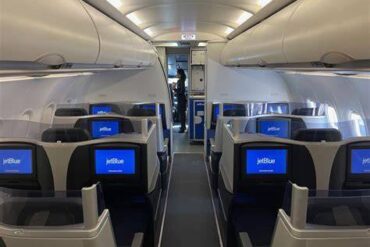
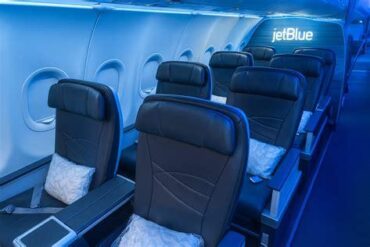
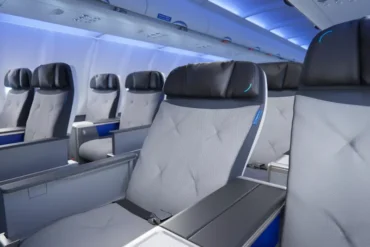
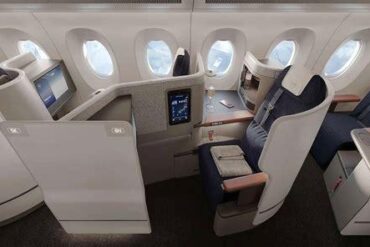
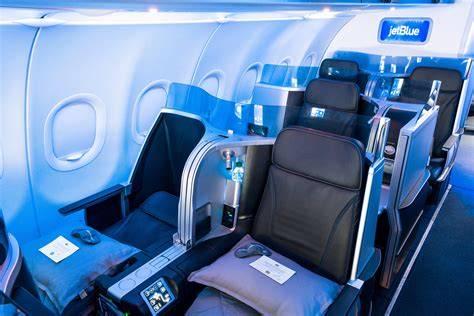
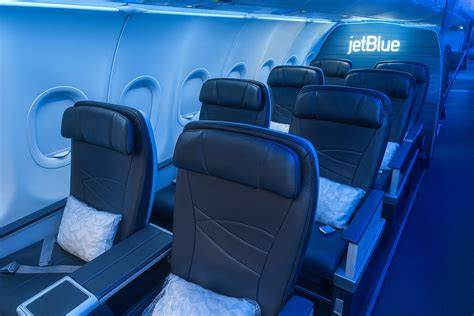
BlueFirst is intended to provide something JetBlue has historically lacked: a true domestic first-class experience on aircraft that do not operate Mint. Rather than using fully lie-flat seats, the cabin will feature premium recliners designed around the expectations of US domestic first-class travelers.
The seats are expected to come from Collins Aerospace’s MiQ premium recliner family, which is already used by multiple airlines. Early planning indicated that BlueFirst would provide eight seats on Airbus A220-300 aircraft and 12 seats on Airbus A320 and non-Mint Airbus A321 aircraft.
Those initial numbers may not represent the final configuration. In a March filing, JetBlue said it planned to install three to four rows of first class on all aircraft, suggesting that some aircraft could receive more BlueFirst seats than originally anticipated.
That change would make the new product more commercially meaningful. A larger premium cabin gives JetBlue more inventory to sell to customers willing to pay for additional space, while also making the product more visible within its overall booking structure.
The airline has already reorganized its product hierarchy around four distinct offerings: Main, EvenMore, BlueFirst and Mint. Main remains the standard economy experience, while EvenMore adds additional legroom and associated airport benefits. BlueFirst becomes the dedicated domestic first-class option, and Mint remains JetBlue’s flagship premium product with fully lie-flat seating.
That structure could make the airline’s fare options easier for customers to understand. Instead of choosing between economy and a much more expensive lie-flat product on routes without Mint, passengers will have an intermediate premium option designed specifically for domestic travel.
BlueFirst Could Change JetBlue’s Cabin Economics
The commercial motivation behind BlueFirst is closely connected to the changing economics of the US airline industry. Premium travel has become increasingly important, with airlines generating stronger demand from travelers willing to pay more for space, comfort and additional services.
JetBlue’s own financial results provide evidence for why the carrier is pursuing the strategy. During the second quarter of 2026, premium revenue per available seat mile increased approximately 13% year over year, according to the supplied reference material. Main Cabin performance was also strong, rising approximately 11%, but premium growth was faster.
For JetBlue, the opportunity is especially significant because of its presence in markets such as New York and Boston, where business travelers and higher-income leisure passengers represent important sources of premium demand.
Until BlueFirst arrives, passengers flying on a non-Mint JetBlue aircraft can purchase EvenMore for additional space but cannot book the type of wide recliner traditionally associated with domestic first class on major US legacy carriers. BlueFirst gives JetBlue another product it can monetize without having to install expensive lie-flat suites throughout its network.
The strategy also fits into JetForward, the airline’s broader turnaround initiative. JetBlue has said that JetForward generated an estimated $470 million in cumulative incremental pretax earnings through June 2026, while its targets call for as much as $950 million in annual incremental pretax earnings by the end of 2027 and approximately $1.2 billion in 2028.
BlueFirst is therefore not simply a cosmetic cabin refresh. It is part of a broader effort to improve the revenue generated by each aircraft and capture more spending from passengers who value premium seating.
The Trade-Off: More Premium Space, Less Economy Pitch
The BlueFirst strategy does come with an important trade-off. Increasing the number of premium seats without dramatically reducing overall aircraft capacity requires JetBlue to find additional space elsewhere in the cabin.
Reports surrounding the retrofit indicate that the airline could reduce standard economy seat pitch from approximately 32 inches to around 30 inches. BlueFirst seats, meanwhile, are expected to provide roughly 36–37 inches of pitch, while EvenMore would remain around 35 inches.
That would create a much clearer separation between JetBlue’s products, but it could also weaken one of the airline’s traditional selling points in economy class.
For years, JetBlue differentiated itself partly through relatively generous economy seating compared with many competitors. Moving standard seats closer together could make BlueFirst more attractive financially while making the Main Cabin experience less distinctive.
This balance will become one of the most closely watched aspects of the rollout. If customers respond strongly to BlueFirst, the additional premium revenue could justify the change. If economy passengers react negatively to tighter seating, however, JetBlue could face criticism that its premium strategy comes at the expense of the broader cabin experience.
September Could Mark the Beginning of a Major Fleet Transformation
The first September modification will represent only one aircraft, but its significance for JetBlue is considerably larger. After months of certification work and nearly two years of product development, BlueFirst is moving from a strategic concept toward a physical presence inside the fleet.
JetBlue has indicated that the product will begin rolling out later in 2026, with sales expected to begin during the fall. The airline’s longer-term objective appears considerably more ambitious, with the carrier aiming to convert most, if not all, of its applicable non-Mint fleet by the end of 2027.
The September 21 date remains unconfirmed by JetBlue, but the FAA certification reported by JonNYC provides a strong indication that the program has entered a new phase. Once the first modified aircraft begins flying, attention will shift from certification to execution: how quickly JetBlue can retrofit aircraft, which routes receive BlueFirst first, how much the seats cost and whether passengers consider the product competitive with domestic first class offered by Delta, United and American.
For JetBlue, the stakes extend beyond introducing another seat. BlueFirst represents an attempt to reshape the airline’s premium cabin strategy, capture a larger share of high-value domestic travel and create a stronger bridge between EvenMore and Mint. With FAA certification reportedly complete, that strategy is now much closer to becoming visible to passengers in the aircraft cabin rather than remaining a promise on a booking screen.