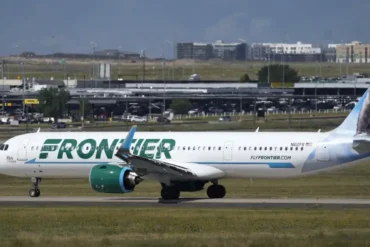
Frontier Airlines has issued an urgent warning to its customers after a sophisticated email phishing campaign began harvesting credit card details from flyers who believed they were claiming a legitimate refund. The US-based ultra-low-cost carrier confirmed the threat through a dedicated notice on its website, stating plainly that it is “aware of an active email phishing campaign targeting our customers.” The scam has spread widely enough across social media and message boards to suggest a far larger exposure than a handful of isolated inboxes, raising uncomfortable questions about how much booking data the attackers already hold.
How the Fake Frontier Refund Emails Trick Passengers
The fraudulent messages are built around a premise that feels urgent and routine at the same time. Recipients are told that duplicate ticketing has affected their reservation and that a refund is waiting, with the email insisting that “the settlement batch for this reservation has already closed.” To release the money, the customer simply has to enter their bank details through a link embedded in the message. That single step is where the con succeeds. Some travelers have already complied, handing over card information to a page designed to resemble a genuine payment portal.
What elevates this campaign above ordinary spam is the specificity of its bait. The emails reportedly carry corresponding confirmation numbers for the actual bookings in question, which makes them almost impossible to dismiss as random noise. Matching a real reservation code to a real traveler implies that the fraudsters obtained data from Frontier’s systems or from a related vendor, and the volume of victims discussing the scheme online points toward a major breach rather than a targeted attack. The airline has not confirmed that characterization, and a spokesperson said only that it is “conducting a thorough assessment of the matter with external experts.”
What Frontier Airlines Says About the Phishing Scam
Frontier’s position is unambiguous. The carrier states that it “does not email customers requesting flight, reservation, payment, or contact detail information,” and it urges anyone receiving such a message not to respond. Customers who need to change a reservation are directed to the Frontier app or its official website instead of any link inside an email. For those who already submitted payment data, the airline’s guidance is to contact your card issuer or financial institution immediately, ideally before fraudulent charges appear. Frontier has also alerted customers by email, through messaging on its website and app, and via its contact centers, while maintaining that there is no impact on its operations.
Passenger Accounts Reveal How Convincing the Scam Is
The human cost of the campaign has played out across Reddit’s r/frontierairlines community, where travelers have documented near-misses and outright losses. One user described entering all of their information and only stopping to search the offer before pressing continue, at which point they realized it was a scam. Another reported that their inbox’s spam filter never flagged the message, allowing it to land alongside legitimate airline correspondence. Caution has spread quickly: some customers have locked their cards after doing nothing more than clicking a link, uncertain whether a single click was enough to expose them.
The strain on customer support tells its own story. One commenter said they waited two hours to reach their bank and three hours to reach Frontier, a backlog consistent with thousands of panicked cardholders calling at once. Perhaps the most sobering assessment came from a traveler who wrote, “I’ve been in cyber defense for eight years: this is the most convincing email I’ve seen.” That endorsement from a security professional underscores why standard advice about poor grammar and obvious typos no longer reliably separates fraud from legitimate airline mail.
Why Booking Data Makes Airline Customers Attractive Targets
Airlines sit on enormous repositories of personally identifiable information, from passport numbers and home addresses to loyalty account balances and stored payment methods. That density of data makes carriers valuable to criminal groups, and it explains why industry cybersecurity spending has climbed steadily even as breaches continue. Frontier is far from the first US airline forced to confront the problem. In July 2022, American Airlines suffered a related compromise in which employee email accounts were accessed, allowing hackers to reach passenger records. American characterized the exposure as affecting “a very small number” of customers, and it said the data involved was personal rather than financial, covering names, addresses, and phone numbers, with no evidence of misuse.
The Frontier incident appears broader in scope and more direct in its financial aim. Rather than quietly siphoning records, the attackers are actively monetizing them by impersonating the airline and prompting victims to authorize payments themselves. This distinction matters because it places the burden of vigilance on travelers who reasonably expect that a message containing their own confirmation number came from the company that issued it.
Steps Frontier Flyers Should Take Right Now
Anyone who receives a message claiming a refund is owed should treat it as hostile until proven otherwise, and proof should never come from a link inside the email. Verify the reservation directly through the Frontier app or by navigating to the airline’s website manually, then compare any refund claim against the booking’s actual status. Flyers who already entered card details should call the number on the back of their card, request a replacement, and monitor statements for unfamiliar charges in the coming weeks. Forwarding the suspicious email to the airline’s customer service channel can help its security team trace the campaign’s reach.
The deeper lesson is structural. Phishing succeeds not because travelers are careless but because attackers now borrow the exact tone, formatting, and reference data of the brands people trust. Frontier’s warning, its dedicated web page, and its external assessment are appropriate responses, yet they arrive after the emails have already reached inboxes. Until carriers can guarantee that booking data never leaks, every confirmation number arriving by email deserves a second look, and every request for payment details deserves suspicion first and compliance never.