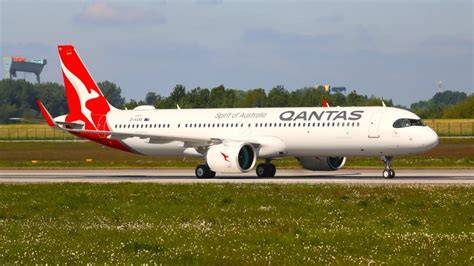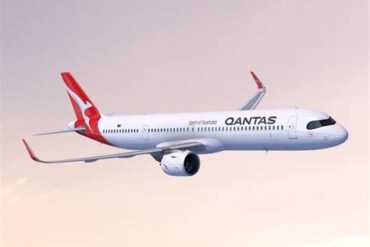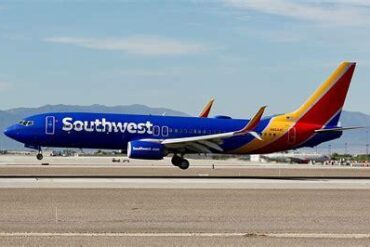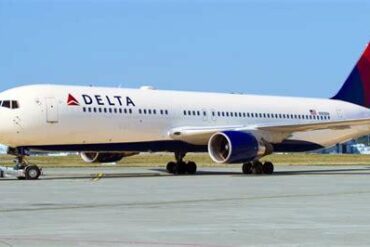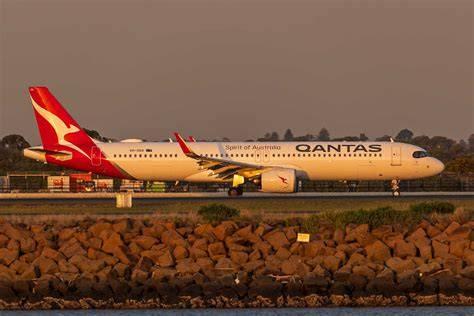
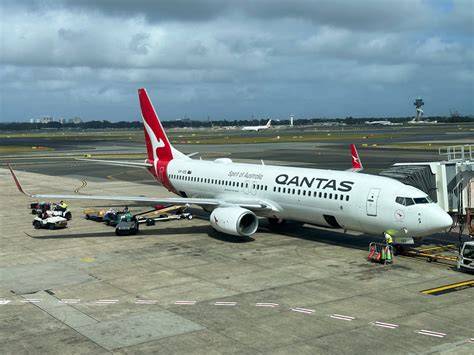
For years, aviation observers have asked whether Qantas is really replacing its Boeing 737-800s with Airbus A321XLRs built for longer routes. The question matters because the aircraft Qantas chooses to succeed the 737-800 will shape how Australia’s busiest domestic corridors and regional gateways operate for the next decade. The 737 fleet carries nearly half of all passengers Qantas flies each year, so every decision about its replacement determines flight frequency, cabin comfort, network reach, and airline profitability across the group.
The short answer is that the replacement is genuine, but it is not the swap most people imagined. Qantas is retiring its 737-800s in favour of an extra-long-range Airbus narrowbody, then deploying the overwhelming majority of those jets on domestic sectors rather than on the far-flung international missions the “XLR” badge was engineered for. That single strategic choice sets Qantas apart from nearly every other airline taking delivery of the type, and it explains why the transition has generated so much debate among analysts, enthusiasts, and frequent flyers.
Qantas A321XLR Replacement Sits Inside Project Winton
The 737-800 succession is a cornerstone of Project Winton, Qantas’ fleet renewal program named after Winton, Queensland, the town where the airline was founded in 1920. Within that framework, Qantas pairs Airbus A321XLRs at the mainline level with Airbus A220-300s for QantasLink, modernising narrowbody flying across tiered route profiles instead of forcing a single airframe to do every job. The A220 covers thinner regional links, the A321XLR carries the trunk capacity, and the widebody fleet handles the long-haul network.
That structure mirrors how demand actually behaves across Australia. Qantas operates some of the world’s highest-frequency single-aisle corridors, including the dense Melbourne–Sydney, Sydney–Brisbane, and Melbourne–Brisbane city pairs, where seat capacity per departure and schedule reliability matter more than range. By choosing an extended-range Airbus narrowbody over a like-for-like 737 MAX replacement, Qantas gains an airframe family with higher passenger capacity and longer-sector reach than a baseline 737-800, allowing capacity to be matched route by route.
How the A321XLR Order Grew From 20 to 48 Aircraft
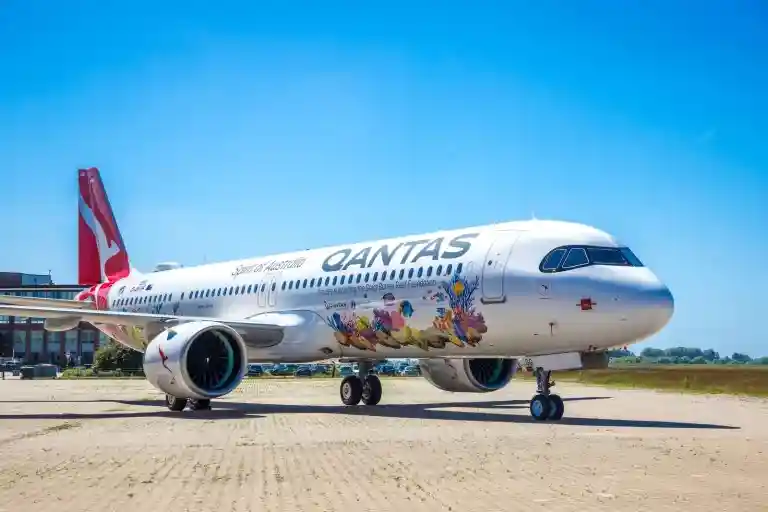
Qantas’ commitment to the A321XLR expanded steadily as fleet renewal requirements crystallised. What began as an initial plan for at least 20 A321XLRs grew to 28 aircraft, and in August 2025 Qantas ordered 20 more, lifting the total to 48 jets explicitly to accelerate 737 retirement. The enlarged order gives Qantas deeper replacement capacity as older single-aisle airframes reach the end of their economic lives while demand stays strong on major domestic city pairs.
Deliveries and early withdrawals have already moved into active operations. Qantas took six A321XLRs during its 2026 financial year ahead of 737 fleet retirements beginning in late 2026, and it signed a seven-year agreement to sell 44 737-800s and 88 CFM56-7B engines to aftermarket specialist AerFin. Initial aircraft exits were already underway in late 2026, with nine more planned for 2027. Together, early arrivals and initial retirements mark the start of a multi-year handover rather than a single dramatic switchover.
Why Qantas Flies Its A321XLRs on Domestic Trunks
The defining feature of the Qantas A321XLR strategy is deliberate and unusual. Most operators reserve the extra-long-range narrowbody for thin, distant international routes where a widebody would be uneconomic, and the broader industry consensus, as noted by Cirium, treats the XLR as a long-haul specialist. Qantas instead leans on the jet as its main high-capacity domestic replacement for the ageing 737-800 fleet across Australia’s busiest trunk corridors.
There is sound commercial logic in that decision. The A321XLR offers up to 5,400 miles (8,700 km) of range, roughly 1,864 miles (3,000 km) farther than the 737, but Qantas does not need to exploit that maximum on every flight to extract value from the airframe. Extra range and cabin capacity in reserve let the airline deploy a single aircraft type across busy domestic trunks while keeping the door open for longer domestic sectors and selected regional international routes as demand warrants. In effect, Qantas is buying network flexibility in bulk and using capacity, not range, as the primary currency.
Vanessa Hudson Sets Out the Case for the Extra-Long-Range Narrowbody
For Qantas, the A321XLR is about network flexibility and opening markets that current narrowbodies cannot serve reliably. Qantas Group CEO Vanessa Hudson has emphasised that the extra-long-range narrowbody gives the airline flexibility to reach destinations its current narrowbody fleet cannot, pairing domestic workhorse duties with international options such as the scheduled Brisbane–Manila service. For an airline spanning vast Australian distances and regional Asian markets, having range in reserve lets Qantas adapt schedules without committing widebodies to thinner routes.
That framing is consistent with the projected earnings impact. Replacing 737-800s with A321XLRs and A220-300s is projected to add between AUD 150 million and AUD 200 million per year to earnings by 2027, as reported by Simple Flying. The financial case rests on lower unit costs, greater seat capacity per departure, and the schedule reliability that comes from a modern, fuel-efficient fleet operating the airline’s highest-frequency routes.
Split Cabin Layouts: Recliners Now, Lie-Flat Suites From 2028
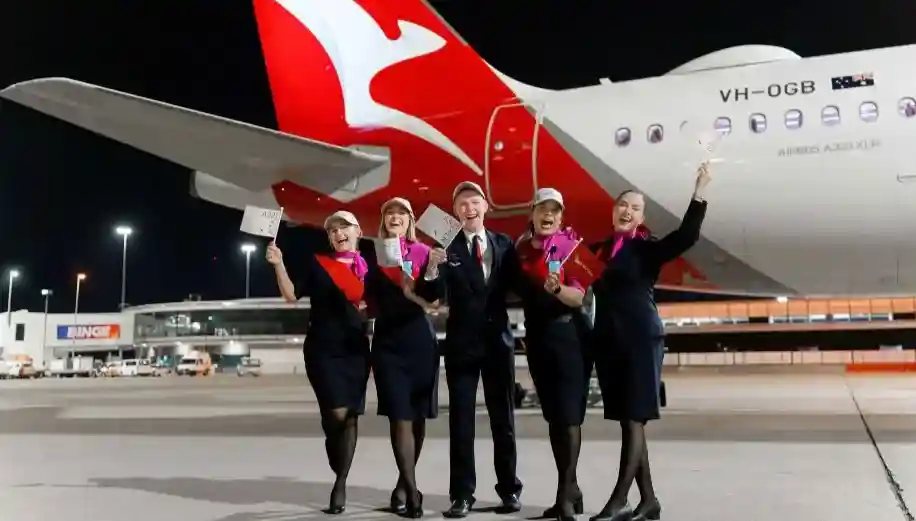
Inside the A321XLR subfleet itself, Qantas is splitting cabin layouts rather than forcing one interior onto every flight. Early domestic-configured A321XLRs carry 197 or 200 seats, including 20 recliner business seats, to maximise capacity on high-demand routes where frequency and seats matter most. From 2028, 16 A321XLRs will introduce lie-flat business suites with sliding doors and 19-inch (48 cm) screens for longer domestic and international sectors where a proper bed becomes a genuine competitive advantage.
That route-matched tiering is central to the strategy, and it carries a visible trade-off. Domestic flyers on the early XLRs receive recliner seats rather than lie-flat beds, because lie-flat hardware would sacrifice too many economy seats on sectors flown up to fifteen times a day. The later tranche of suite-equipped frames gives Qantas a premium product for longer missions such as Brisbane–Manila and potentially other Southeast Asian links, all without introducing a second type into the mainline narrowbody fleet.
The Skeptics: Cargo Theories, Speculation, and Payload Trade-Offs
Outside observers read the aircraft’s role in markedly different ways. Enthusiasts and frequent-flyer commentators, including voices on One Mile At A Time and the r/QantasAirways community, treat the A321XLR as a practical, high-capacity narrowbody that upgrades single-aisle comfort and capacity on busy domestic and regional hops. Others are less convinced. Analytic Flying has floated the theory that cargo capability influenced the selection, an argument that remains speculative rather than Qantas’ stated rationale.
That theory deserves scrutiny. Adding the Rear Center Tank that delivers much of the A321XLR’s extra fuel reduces underfloor cargo volume compared with a standard A321neo, which cuts against the idea that cargo capacity drove the decision. The more defensible reading is the one Qantas itself articulates: long-range capability functions as a strategic buffer for route flexibility and network growth, while the daily workhorse jobs are flown on the domestic network. Analysts will keep testing the economics from every angle, from payload and fuel-tank trade-offs to whether a domestic-heavy fleet needs extra range on every flight.
Retirement Is a Slow, Carefully Choreographed Process
Replacing 737-800s with A321XLRs is neither an overnight swap nor a risk-free transition. Under the seven-year AerFin sale agreement covering 44 737-800s and 88 CFM56-7B engines, retirements roll out gradually, with initial exits in late 2026, nine more planned for 2027, and select remaining 737-800s slated for cabin refurbishments from 2027 to keep older frames competitive during the multi-year handover. The airline has also been choreographing the end of its Boeing era for pilots, sequencing simulator programs and type transitions so that crews are not left without an aircraft to fly.
Cabin teething troubles have also tested how quickly the new narrowbody settles into everyday service. Early A321XLR deliveries drew scrutiny over economy washroom ratios before Qantas added a third economy lavatory, trimming seat count by three from the fourth aircraft onward and planning retrofits for the earliest jets. On the international side, the A321XLR’s debut on Brisbane–Manila shifted from October 25, 2026, to February 1, 2027, leaving Airbus A330-200s on the route in the meantime.
Delivery Risk and Supply-Chain Exposure
Delivery timing and supply-chain exposure remain real variables for Qantas’ fleet planners. Because Qantas built flexibility into its retirement schedule in case A321XLR deliveries slip, any manufacturing or supply-chain bottleneck could keep older 737-800s, or interim widebody assignments, in service longer than initially hoped. That conservatism is sensible: retiring too many 737-800s before replacements arrive would strand capacity on the very routes that generate the group’s cash flow.
Disciplined delivery progression therefore becomes the hinge on which the entire transition turns. Each A321XLR that arrives on schedule unlocks a 737-800 exit; each delay pushes a retirement back and slightly reduces the projected unit-cost benefit. The consequence is that the 737-800 will remain part of the Qantas picture well into the late 2020s, flying alongside its own replacement rather than disappearing on a fixed date.
What the Qantas Narrowbody Fleet Looks Like by 2030
The bottom line is straightforward. Qantas is genuinely replacing its 737-800s with the A321XLR, using a long-range narrowbody primarily to support high-demand domestic flying while retaining extra range for longer domestic and international routes. The A321XLR is not an all-or-nothing long-haul specialist in Qantas colours; it is a flexible, high-capacity trunk aircraft adapted to Australia’s busiest single-aisle corridors, with the transition paced carefully over several years.
For passengers and industry watchers, what matters next is how smoothly deliveries, cabin configurations, and route schedules come together across the late 2020s. With initial 737-800 exits underway, the Brisbane–Manila A321XLR launch set for February 1, 2027, lie-flat business suite frames arriving from 2028, and up to 48 jets ultimately landing in the fleet, Qantas’ narrowbody operation will look substantially different by the end of the decade. The 737-800 era is ending, and the aircraft chosen to end it was built to fly farther than Qantas intends to send it.