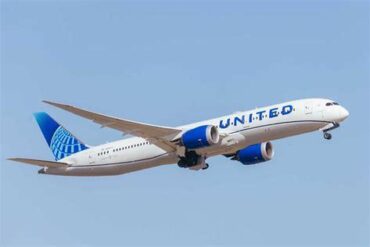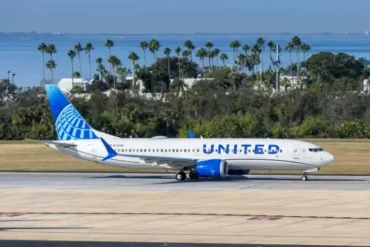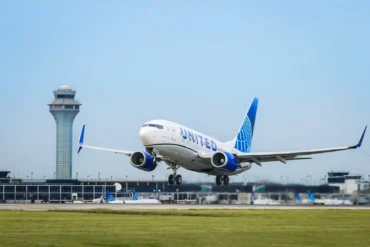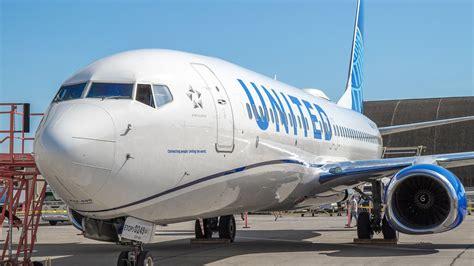
The strategic realignment of fleet operations at Tokyo Narita Airport signals a decisive shift in transpacific aviation dynamics, as United Airlines moves forward its timeline to phase out the aging Boeing 737-800 from its regional Asian network. What was initially planned as a gradual transition has now evolved into a bold, accelerated deployment of the more advanced Boeing 737 MAX 8—a move that underscores both operational urgency and competitive intent.
This earlier-than-expected transition reflects a broader recalibration of United’s Pacific strategy, where efficiency, passenger experience, and network optimization intersect. By advancing the introduction of the MAX 8 to late April, the airline is not merely replacing aircraft—it is redefining the performance baseline for its Narita-based operations.
A Strategic Pivot: Why Narita Still Matters
Despite the rise of Tokyo Haneda as Japan’s primary international gateway, Narita remains a cornerstone of United’s Asia-Pacific network. This enduring relevance traces back to the airline’s acquisition of Pan American World Airways Pacific division, which granted United a unique foothold in the region.
Today, Narita functions as a powerful hub for fifth freedom operations, allowing United to operate flights between Japan and other Asian destinations. This strategic advantage enables the airline to funnel long-haul passengers arriving from the United States into a web of regional routes, effectively extending its global reach without requiring additional long-haul aircraft.
The accelerated fleet upgrade enhances this model significantly. With improved range and efficiency, the MAX 8 allows United to operate thinner routes with greater profitability, reinforcing Narita’s role as a high-leverage transit hub rather than a legacy outpost.
Six Routes Transitioning to the 737 MAX 8
United’s revised deployment plan introduces the 737 MAX 8 across six critical routes, replacing the outgoing 737-800 fleet entirely from Narita. The transition begins with Ulaanbaatar, followed closely by Koror, before expanding to other destinations by August.
The upgraded routes include:
- Guam
- Cebu
- Kaohsiung
- Koror
- Saipan
- Ulaanbaatar
Among these, the connection to Roman Tmetuchl International Airport in Palau stands out as a vital link to Micronesia, while services to Ulaanbaatar highlight United’s reach into less conventional markets.
This network is not случайный—it is meticulously designed to capture niche demand, including tourism, diaspora travel, and strategic regional connectivity. By upgrading all six routes, United ensures consistency in product and performance across its Narita-based short-haul network.
From 737-800 to MAX 8: A Technological Leap
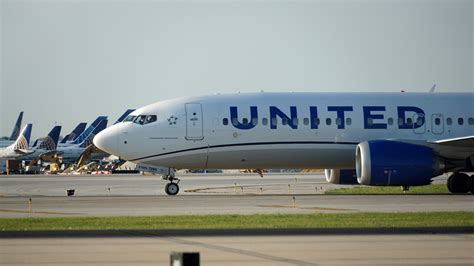
The retirement of the Boeing 737-800 from these routes marks the end of an era defined by reliability but limited by aging technology. In contrast, the MAX 8 introduces a suite of enhancements that directly impact both operational economics and passenger comfort.
At the core of this transition is fuel efficiency. The MAX 8 consumes significantly less fuel per seat, translating into lower operating costs and reduced emissions—an increasingly critical factor in modern aviation.
Inside the cabin, passengers will immediately notice the Boeing Sky Interior, characterized by:
- Sculpted sidewalls and larger overhead bins
- Dynamic LED lighting that adapts to different flight phases
- A noticeably quieter cabin environment
The aircraft accommodates 166 passengers across three classes:
- United First: 16 seats
- Economy Plus: 54 seats
- Economy: 96 seats
Beyond physical comfort, the MAX 8 introduces seatback entertainment and Bluetooth connectivity, features that elevate the onboard experience to match evolving passenger expectations.
Guam as the Operational Anchor
The transformation of United’s Pacific operations is deeply tied to its investment in Antonio B. Won Pat International Airport, which serves as a critical staging ground for the airline’s regional fleet.
Guam is not just another destination—it is a strategic base. With plans to station up to ten MAX 8 aircraft on the island, United is effectively building a localized fleet capable of supporting high-frequency regional operations.
The early arrival of the first MAX 8 in March marked a turning point. The aircraft has already been deployed on routes such as Guam–Nagoya, as well as the famed Island Hopper service, which connects remote Pacific destinations including Chuuk, Pohnpei, and Majuro.
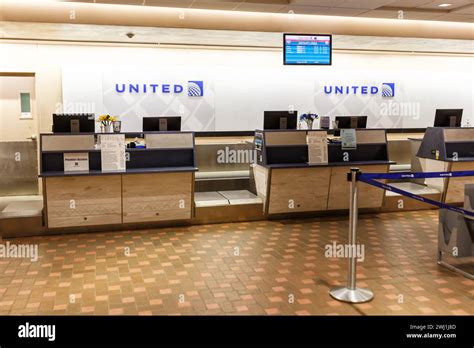
This deployment is complemented by significant infrastructure upgrades at Guam’s airport, including next-generation check-in systems and a redesigned terminal experience. Together, these enhancements create a seamless ecosystem where aircraft performance and ground operations are tightly integrated.
Economic and Competitive Implications
United’s decision to accelerate the MAX 8 rollout is not occurring in isolation—it is a calculated response to intensifying competition across the Asia-Pacific region. Airlines are increasingly deploying fuel-efficient narrowbodies on medium-haul routes, challenging traditional widebody dominance.
By acting early, United secures several advantages:
- Lower cost per seat, improving route profitability
- Greater scheduling flexibility, enabling higher frequencies
- Enhanced passenger appeal, strengthening brand perception
Moreover, the move positions United to better compete with regional carriers that already operate modern narrowbody fleets. In markets where margins are thin and demand fluctuates, the ability to deploy the right aircraft at the right time becomes a निर्णायक factor.
A Forward-Looking Fleet Strategy
The early retirement of the 737-800 from Narita is more than a fleet update—it is a signal of intent. United is aligning its aircraft, network, and customer experience around a unified vision of efficiency and modernization.
As the MAX 8 becomes the backbone of its regional operations, the airline gains a scalable platform capable of adapting to shifting demand patterns. Whether expanding into underserved markets or optimizing existing routes, this aircraft provides the versatility required in an increasingly complex aviation landscape.
In the broader context, this transition reflects a fundamental truth: fleet decisions are strategy decisions. By accelerating its timeline, United is not just keeping pace with industry trends—it is actively shaping them, one route at a time.