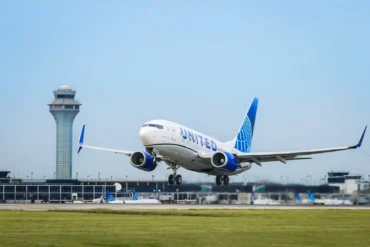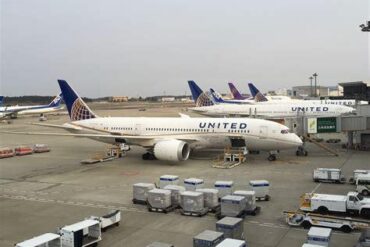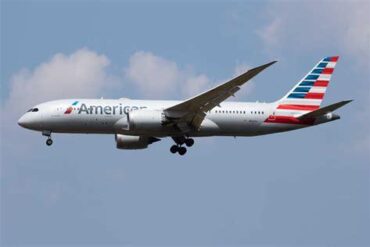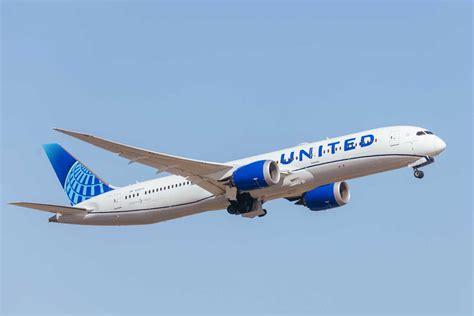
United Airlines is once again expanding its Pacific network with the return of nonstop flights between Chicago O’Hare International Airport and Tokyo Narita, a route that now carries an additional distinction inside the carrier’s long-haul operation. Beginning October 24, the airline will deploy its Boeing 787-8 Dreamliner on the 6,274-mile journey, officially making it the longest nonstop route in United’s global network operated by the smallest Dreamliner variant.
The reinstated service marks a strategic return to Tokyo Narita after a multi-year absence. Before the pandemic, United connected Chicago and Narita using the larger Boeing 777-200ER. The new version of the route reflects a very different era in airline planning, one focused on fuel efficiency, right-sized capacity, and maximizing aircraft flexibility across ultra-long-haul markets.
The route also strengthens United’s already dominant footprint in Japan, where the airline continues to position Tokyo as one of its most important transpacific gateways. While United already flies between Chicago and Tokyo Haneda, the return to Narita restores another layer of connectivity into Asia and the Pacific.
For travelers departing Chicago, the westbound journey is scheduled at 13 hours and 35 minutes, placing it among the carrier’s most time-intensive operations anywhere in the world.
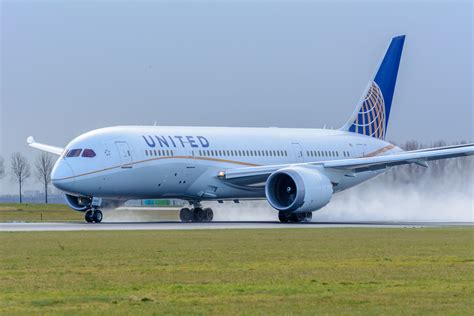
United’s Boeing 787-8 Reaches a New Distance Milestone
At 6,274 miles from point to point, the Chicago-to-Narita service edges past United’s previous longest Boeing 787-8 route between Chicago and Tel Aviv by 94 miles. While that difference may appear marginal on paper, it represents an important operational benchmark for the airline’s Dreamliner fleet strategy.
The Boeing 787-8 was originally designed for long, thin international routes where airlines wanted intercontinental range without the oversized capacity of larger widebody jets. United has steadily leaned into that advantage, particularly as international demand patterns shifted over the past several years.
Using the 787-8 on the Tokyo route demonstrates how airlines increasingly favor efficiency over sheer seat volume. Compared to older aircraft like the Boeing 777-200ER, the Dreamliner burns significantly less fuel while still providing the endurance needed for missions exceeding 6,000 miles.
United’s scheduling also reflects careful optimization of aircraft utilization. Flight UA867 departs Chicago at 11:40 AM and lands at Narita at 3:15 PM the following day local time. The return service, UA868, departs Tokyo at 6:00 PM and arrives back in Chicago at 2:50 PM on the same calendar day thanks to time zone differences crossing the Pacific.
These timings are designed to support onward connections throughout Asia while also feeding United’s massive domestic hub operation at O’Hare.
Why Tokyo Narita Still Matters in 2026
Over the past decade, Tokyo Haneda has emerged as the preferred airport for many airlines because of its proximity to central Tokyo. Narita, located roughly 37 miles from downtown, was once viewed as losing importance in comparison.
Yet United’s latest move shows Narita remains strategically valuable.
Unlike Haneda, Narita offers extensive slot flexibility and continues serving as a major international connecting hub for flights deeper into Asia and the Pacific. United in particular maintains a substantial mini-hub operation at the airport, allowing passengers arriving from the United States to continue seamlessly to destinations that would otherwise require additional connections elsewhere.
The airline currently operates flights from Narita to destinations including:
- Cebu
- Guam
- Kaohsiung
- Koror
- Saipan
- Ulaanbaatar (seasonal)
This regional network transforms Narita into more than simply a Tokyo destination. For United, it remains a crucial transfer point linking North America with secondary Asian and Pacific markets.
Chicago Becomes a Core Long-Haul Dreamliner Hub
The new Narita route also reinforces Chicago O’Hare’s role as one of United’s most important Boeing 787 bases.
Several of the carrier’s longest Dreamliner flights originate from Chicago, including services to Tel Aviv, Munich, Milan, Barcelona, and Frankfurt. The airport’s central geographic location allows United to funnel passengers from across North America into both European and Asian long-haul departures efficiently.
Among United’s top ten longest Boeing 787-8 routes, Chicago dominates the list. That concentration highlights how essential the hub has become for the airline’s international strategy.
The Narita route now leads the rankings:
- Chicago–Tokyo Narita: 6,274 miles
- Chicago–Tel Aviv: 6,180 miles
- Washington Dulles–Tel Aviv: 5,904 miles
- Washington Dulles–Lagos: 5,442 miles
- Washington Dulles–Accra: 5,296 miles
What makes the Tokyo service especially notable is that it is United’s only Asia-bound route among its longest 787-8 operations. Most other flights in the ranking focus on Europe, Africa, or the Middle East.
That distinction underscores the unique operational challenge of Pacific flying, where vast oceanic distances, changing jet stream patterns, and payload management can significantly influence route economics.
A Larger Push Into Japan Is Underway
United’s Narita announcement arrived alongside another headline-grabbing expansion in Japan: the airline’s first-ever flights to Sapporo in Hokkaido.
Starting December 11, United plans to launch seasonal nonstop flights between San Francisco and Sapporo using the larger Boeing 787-9 Dreamliner. The service will operate three times weekly during the winter season, targeting strong demand from ski travelers and tourists heading to northern Japan.
The airline becomes only the second North American carrier to operate the route after Air Canada.
Together, the Narita restoration and Sapporo launch reveal a broader pattern. United is aggressively deepening its Japan network at a time when transpacific demand continues strengthening and Japanese tourism experiences renewed global momentum.
Dreamliner Economics Continue Reshaping Ultra-Long-Haul Flying
United’s decision to assign the Boeing 787-8 rather than a larger aircraft reflects how modern airlines increasingly prioritize flexibility and profitability over maximum seating capacity.
The Dreamliner family has fundamentally altered long-haul network planning by enabling routes that were previously difficult to sustain economically. Aircraft like the 787-8 allow airlines to open nonstop city pairs with lower operating costs while maintaining passenger comfort on flights lasting more than 13 hours.
Passengers on the Chicago–Narita route will also benefit from the aircraft’s traveler-friendly features, including larger windows, improved cabin humidity, lower cabin altitude pressure, and quieter interiors compared to older-generation widebody jets.
For United, the aircraft offers another advantage: adaptability. The carrier can maintain year-round service on demanding long-haul routes without needing the higher passenger volumes required to justify larger jets such as the Boeing 777-300ER.
As airlines continue refining international networks after years of disruption, routes like Chicago to Tokyo Narita illustrate the industry’s evolving formula for success — long range, efficient aircraft, carefully targeted demand, and strategic hub connectivity across multiple continents.