Qatar Airways is preparing to expand its global network with the launch of an ambitious new South American service next month, introducing what will become the airline’s longest scheduled route by block time. The new triangular operation will connect Doha, Bogotá, and Caracas, extending the Gulf carrier’s reach deeper into Latin America while opening faster one-stop connections between South America, the Middle East, Asia, and Australia.
Designed to strengthen connectivity rather than simply add another destination, the new service highlights Qatar Airways’ growing strategy of linking underserved markets through its award-winning Doha hub. The route will also mark a historic milestone, making the airline the first Gulf carrier to operate flights to Venezuela.
A New Triangular Route Expands Qatar Airways’ South American Presence
Beginning July 22, Qatar Airways will inaugurate flights between Hamad International Airport in Doha (DOH), El Dorado International Airport in Bogotá (BOG), and Simón Bolívar International Airport in Caracas (CCS). During the inaugural rotation, the aircraft will operate from Doha to Caracas, continue to Bogotá, and then return directly to Doha.
Following the first flight, however, the operating pattern will change. Scheduled services will depart Doha nonstop for Bogotá before continuing onward to Caracas and finally returning to Doha. This revised routing has been carefully designed to minimize payload restrictions associated with Bogotá’s high-altitude airport, allowing the airline to operate the service more efficiently while maximizing aircraft performance.
The twice-weekly flights will depart Doha every Wednesday and Sunday, creating convenient connection opportunities for passengers traveling between South America and destinations throughout Asia, the Middle East, and Oceania.
Nearly 21 Hours in the Air Creates Qatar Airways’ Longest Scheduled Service
The new operation is remarkable not only because of its geographic reach but also because of its extraordinary duration. Between December and July scheduling periods, the complete one-stop journey reaches a maximum block time of 20 hours and 50 minutes, making it the airline’s longest scheduled route.
Although passengers traveling between Doha and either Bogotá or Caracas will experience a scheduled stop, the service significantly reduces travel complexity compared with existing itineraries that often require multiple airline changes and additional layovers.
Flight QR783 will operate in both directions, spending approximately 90 minutes on the ground in Bogotá before continuing to Caracas. After a scheduled two-hour stop in Venezuela, the aircraft will begin its return journey to Doha.
The route is expected to generate strong demand from travelers connecting through Qatar Airways’ global network, particularly those flying onward to destinations including Australia, China, Japan, South Korea, Lebanon, and the United Arab Emirates.
Boeing 777-200LR Fleet Delivers Long-Range Capability
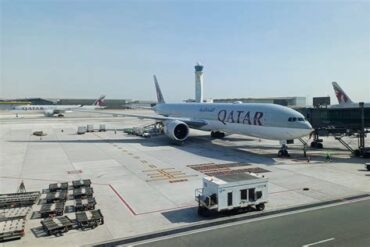
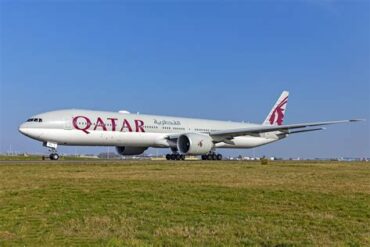
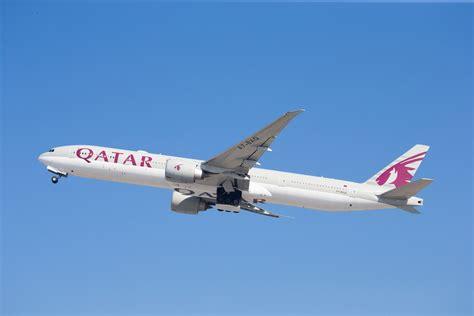
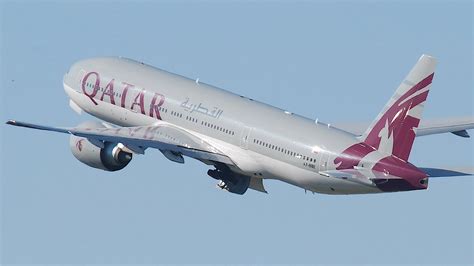
To operate this ultra-long-haul mission, Qatar Airways will deploy its fleet of Boeing 777-200LR aircraft. Although the carrier operates only six examples of the long-range twinjet, the aircraft remains one of the world’s most capable commercial airliners for exceptionally long missions.
Despite averaging more than 16 years in service, these aircraft continue to offer a premium onboard experience that reflects Qatar Airways’ reputation for high-quality international travel.
One of the aircraft’s strongest selling points is the presence of 42 Qsuite Business Class seats, arranged in a spacious 1-2-1 configuration. The staggered cabin layout alternates between forward- and rear-facing seats, offering enhanced privacy for solo travelers while creating ideal paired seating options for couples occupying the center suites.
Behind the premium cabin, 230 Economy Class seats provide flexible seating arrangements that transition from a conventional 3-4-3 layout to wider configurations toward the rear of the aircraft, improving passenger comfort on one of the world’s longest scheduled journeys.

Strategic Expansion Beyond Brazil
Until now, Qatar Airways’ South American network has consisted solely of flights between Doha and São Paulo Guarulhos Airport in Brazil. The addition of Bogotá and Caracas dramatically broadens the airline’s footprint across the continent while providing new travel options for both business and leisure passengers.
The expansion also strengthens Doha’s role as one of the world’s leading global transit hubs. Instead of relying on traditional North American or European gateways, travelers from Colombia and Venezuela will gain direct access to an extensive network spanning Africa, Asia, and the Pacific through a single connection.
For Qatar Airways, the new destinations represent more than network growth. They establish a unique competitive position in a market where nonstop links between the Middle East and northern South America have remained extremely limited.
A Landmark Move for Middle East–South America Aviation
The launch of the Doha–Bogotá–Caracas service represents one of Qatar Airways’ most strategically important network additions in recent years. Combining nearly 21 hours of scheduled flying, premium long-haul service aboard the Boeing 777-200LR, and the distinction of becoming the first Gulf airline to serve Venezuela, the route demonstrates the carrier’s continued commitment to connecting previously underserved international markets.
As global aviation demand continues to recover and long-haul travel expands, this new service reinforces Qatar Airways’ position as one of the industry’s most ambitious network builders, extending seamless connectivity across continents while redefining the possibilities of ultra-long-haul commercial aviation.