The Boeing 737 MAX remains one of the most important narrowbody aircraft families in commercial aviation in 2026. Airlines around the world continue to rely on the type for high-frequency domestic services, regional connectivity, and increasingly long international routes that once required larger aircraft. Yet asking how much a Boeing 737 MAX costs produces a surprisingly complicated answer. The aircraft does not have one universal transaction price.
Boeing has historically published list prices for its commercial aircraft, but those figures are best understood as benchmarks rather than the amount an airline actually pays. Large carriers, leasing companies, and other major customers negotiate contracts individually, often ordering dozens or hundreds of aircraft at a time. Volume discounts, delivery schedules, configuration choices, financing arrangements, and market conditions can all have a major influence on the final deal.
In 2026, the headline figure for a new Boeing 737 MAX can therefore range from roughly $110 million to more than $130 million at list price, depending on the variant. The actual transaction value can be considerably lower. For a major airline placing a large order, negotiated prices may fall well below the published figure, making the economics of the aircraft very different from what the list price initially suggests.
Boeing 737 MAX List Prices in 2026
The first distinction we need to make is between the list price and the real purchase price. A list price is essentially a manufacturer’s reference figure. It provides a common benchmark for the value of an aircraft, but it does not necessarily represent the cash changing hands when a major airline signs a purchase agreement.
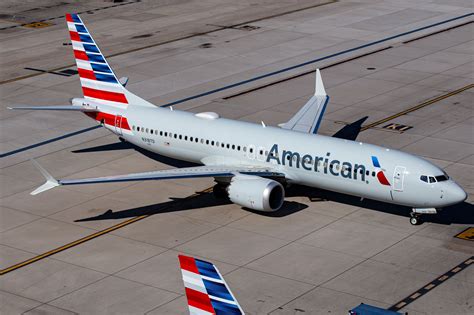
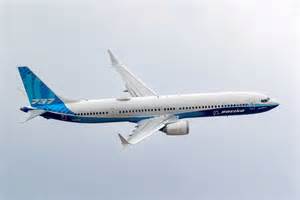
For the Boeing 737 MAX family, industry estimates generally place list prices in the broad $110 million to $130 million-plus range, depending on the model and configuration. The smaller 737 MAX 7 sits toward the lower end, while the larger 737 MAX 9 and 737 MAX 10 occupy the upper end of the family.
The Boeing 737 MAX 8 is commonly associated with a list price of around $120 million. It has become the commercial center of gravity for the MAX program because its combination of passenger capacity, range, fuel efficiency, and operating economics appeals to a remarkably broad group of airlines.
The 737 MAX 9 is larger and generally carries a higher reference price, often estimated at approximately $128 million to $130 million. The 737 MAX 10, as the largest member of the family, typically sits above that level, with historical list-price estimates exceeding $130 million.
These numbers should not be interpreted as simple showroom prices. An airline can specify different cabin layouts, galleys, lavatories, connectivity systems, seats, entertainment equipment, and other options. Those choices can substantially change the value of the aircraft delivered to the customer.
The Boeing 737 MAX 8 Is the Pricing Sweet Spot
Among the four variants, the 737 MAX 8 occupies an especially important position. Its popularity is not simply a result of being the middle-sized model. It offers airlines a practical balance between capacity and operating cost, making it suitable for everything from dense domestic routes to transcontinental and international services.
The aircraft typically accommodates roughly 160 to 180 passengers in common two-class configurations, although actual capacity varies significantly between airlines. Its range also gives carriers considerable flexibility. That combination has made the MAX 8 a particularly attractive replacement for older 737 Next Generation aircraft.
For an airline negotiating a large order, the final price of a MAX 8 could be dramatically below its headline list price. A transaction involving dozens or hundreds of aircraft may incorporate substantial discounts, incentives, credits, and other commercial arrangements. Consequently, an airline might acquire an aircraft with a nominal list price around $120 million for a significantly lower effective price.
This is why published list prices can sometimes create a misleading impression of what airlines actually spend. The larger the strategic relationship between Boeing and the customer, the more complicated the commercial agreement can become.
How Much Do Airlines Actually Pay for a 737 MAX?
There is no single publicly available figure that represents the average transaction price for every Boeing 737 MAX in 2026. Aircraft contracts are negotiated privately, and the commercial terms can vary enormously from one customer to another.
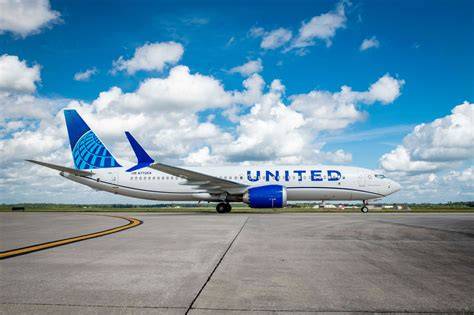
Historically, large airline orders have sometimes involved discounts of 40% to 60% or more from published list prices, although the exact effective discount on any individual aircraft is difficult to establish. Such figures should therefore be treated as industry estimates rather than a guaranteed discount available to every buyer.
Consider a hypothetical 737 MAX 8 with a $120 million list price. A 40% reduction would bring the nominal aircraft value to approximately $72 million, while a 50% reduction would produce roughly $60 million. A 60% reduction would imply about $48 million. These calculations illustrate why the difference between list price and transaction value can be enormous.
However, we should not assume that every airline can buy a new MAX 8 for $48 million. A major carrier with hundreds of aircraft on order may possess considerably more negotiating leverage than a small airline buying only a handful of jets. Delivery positions can also have substantial economic value when manufacturers have extensive backlogs.
The final contract may also include elements that make the headline aircraft price difficult to isolate. Spare engines, training, maintenance support, spare parts, warranties, customer credits, and other services can be bundled into a broader agreement.
Boeing 737 MAX 7, MAX 8, MAX 9, and MAX 10 Prices
The four members of the Boeing 737 MAX family share a common design philosophy, but their economics are not identical. Each variant targets a slightly different part of the single-aisle market.
The 737 MAX 7 is the smallest model. It is designed for airlines that want relatively high efficiency on thinner routes where a larger aircraft might not generate sufficient demand. Its smaller capacity generally places it at the lower end of the MAX family’s pricing structure.
The 737 MAX 8 is the volume leader. Its size and capabilities make it suitable for a huge variety of routes, and its enormous order book reflects that flexibility. For many airlines, it represents the most balanced option in the entire family.
The 737 MAX 9 stretches the fuselage to provide additional passenger capacity. While it retains substantial commonality with the MAX 8, its longer structure and greater capacity increase its value to airlines serving high-demand routes.
At the top of the range is the 737 MAX 10. It is designed to carry even more passengers and compete directly in the upper end of the narrowbody market, particularly against the Airbus A321neo. Its larger size naturally contributes to a higher price, although its commercial value depends heavily on how effectively an airline can fill the additional seats.
Why Aircraft Prices Change With Market Conditions
The cost of a 737 MAX in 2026 cannot be separated from the wider aircraft market. Commercial aircraft are not commodities with fixed prices that remain unchanged from one year to the next.
When airline demand is strong and manufacturers have extensive backlogs, Boeing has greater leverage during negotiations. Airlines may be reluctant to sacrifice valuable delivery positions, particularly when older aircraft are approaching retirement and replacement capacity is urgently needed.
The opposite can happen during a major industry downturn. If airlines are cancelling or deferring orders, manufacturers may become more willing to offer incentives to preserve production activity and maintain customer relationships.
Production capacity is particularly important in 2026. Supply-chain constraints, engine availability, labor challenges, certification schedules, and manufacturing disruptions can all influence how quickly aircraft reach customers. An aircraft with an earlier delivery slot can have considerably greater economic value than an otherwise identical aircraft arriving several years later.
For airlines, the question is therefore not simply, “What is the price of a 737 MAX?” It is also, “When can we receive it, and what will that aircraft allow us to replace or add to our network?”
Leasing Changes the Economics of a 737 MAX
Airlines do not necessarily need to purchase Boeing 737 MAX aircraft outright. Aircraft leasing is a major part of the global commercial aviation business, and many carriers operate aircraft owned by specialist lessors.
Companies such as AerCap and Air Lease Corporation can place enormous aircraft orders and negotiate pricing with Boeing on the basis of their scale. Instead of the airline paying the entire purchase price, the lessor acquires the aircraft and leases it to the carrier under a multi-year agreement.
For an airline, leasing can reduce the immediate capital requirement. Rather than committing tens of millions of dollars to purchase an aircraft outright, the carrier pays a recurring monthly lease payment while retaining the operational benefits of the jet.
A new 737 MAX 8 can command lease payments reaching hundreds of thousands of dollars per month, depending on market conditions, aircraft age, financing costs, maintenance status, contract structure, and other factors. The lease rate therefore reflects much more than the aircraft’s original Boeing invoice.
This structure also spreads risk. An airline that does not want to own the aircraft until the end of its economic life may prefer a lease that provides greater fleet flexibility.
What About Used Boeing 737 MAX Aircraft?
The secondary market adds another dimension to the question of Boeing 737 MAX pricing. Used aircraft can provide airlines with a way to obtain relatively modern technology without paying the full economic cost associated with a brand-new aircraft.
A secondhand 737 MAX’s value depends on age, flight cycles, engine condition, maintenance status, configuration, remaining useful life, and market demand. A nearly new aircraft with low utilization can retain substantial value, while an older example with significant accumulated cycles will command a different price.
The used market can be especially attractive when airlines need capacity quickly. A carrier may be able to acquire or lease an available aircraft rather than waiting years for a new delivery slot.
Nevertheless, the market value of a used MAX is not simply the original purchase price minus depreciation. Aircraft values respond to supply and demand throughout their lives. Changes in fuel prices, airline profitability, financing costs, passenger demand, and competing aircraft types can all influence what a used aircraft is worth.
Why the Boeing 737 MAX Remains Expensive
The Boeing 737 MAX program was launched in 2011 as the successor to the 737 Next Generation family. Boeing introduced the CFM LEAP-1B engine, aerodynamic refinements, advanced winglets, and other improvements intended to deliver major efficiency gains.
The first MAX entered commercial service in May 2017 with Malindo Air, now known as Batik Air Malaysia. The program subsequently experienced one of the most serious crises in modern commercial aviation following the crashes of Lion Air Flight 610 and Ethiopian Airlines Flight 302.
The global 737 MAX grounding beginning in March 2019 resulted in extensive software changes, certification work, training revisions, and delivery delays. The aircraft eventually returned to commercial service, but the program’s history continued to influence Boeing’s production and certification plans.
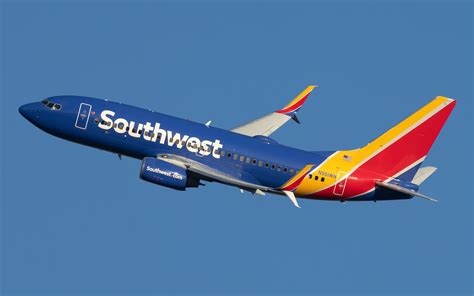
By 2026, the MAX has nevertheless become a central component of Boeing’s narrowbody strategy. Major operators including Southwest Airlines, United Airlines, and Alaska Airlines rely heavily on the family, while thousands more aircraft remain on order or in service globally.
The scale of the program matters because airlines are not simply buying an airplane. They are buying into an ecosystem of commonality, pilot training, maintenance infrastructure, spare parts, simulator availability, and operational experience.
How Much Does a Boeing 737 MAX Cost in 2026?
So, what number should we use when answering the original question?
For a new aircraft, a reasonable 2026 list-price range is approximately $110 million to more than $130 million, depending on the specific MAX variant and configuration. The MAX 8 sits around the $120 million reference level, while the MAX 9 and MAX 10 generally occupy higher territory.
The actual negotiated purchase price can be substantially lower, particularly for large orders. Discounts of 40% to 60% have historically been discussed within the industry, although actual contract economics vary and are rarely disclosed in full.
That means a large airline could potentially secure an effective aircraft price well below $100 million, while a smaller or less strategically important buyer could face a higher effective price. Leasing provides another route into the MAX market, with monthly payments replacing the enormous upfront capital commitment of outright ownership.
Ultimately, the cost of a Boeing 737 MAX in 2026 is best understood as a range rather than a single number. The list price tells us what Boeing’s aircraft has historically been benchmarked at. The negotiated price tells us more about the commercial relationship between Boeing and its customer. The market value tells us what the aircraft is worth under current supply-and-demand conditions.
For airlines planning fleet growth or replacement, that distinction is crucial. A $120 million list price does not necessarily mean a $120 million transaction, just as a discounted purchase price does not represent the complete economic cost of operating the aircraft. Financing, maintenance, engines, crew training, airport charges, fuel consumption, residual value, and lease terms all shape the aircraft’s true financial impact.
In 2026, the Boeing 737 MAX remains a multi-million-dollar investment even after aggressive negotiation. Its popularity, operating efficiency, extensive airline support network, and ability to serve thousands of routes explain why carriers continue placing substantial orders. The most accurate answer to how much a Boeing 737 MAX costs in 2026 is therefore simple but nuanced: roughly $110 million to $130 million-plus at list price, but potentially far less in a real negotiated transaction.