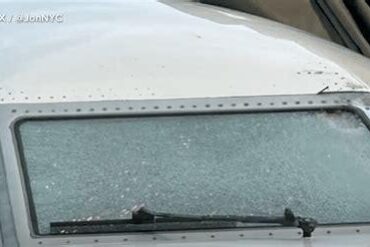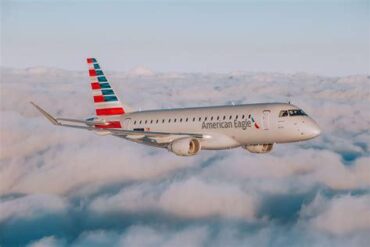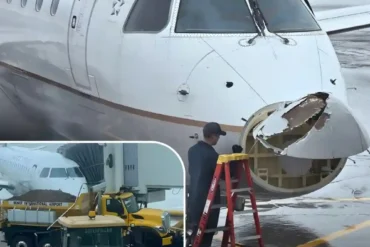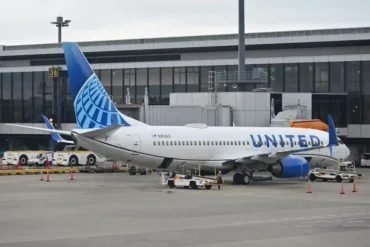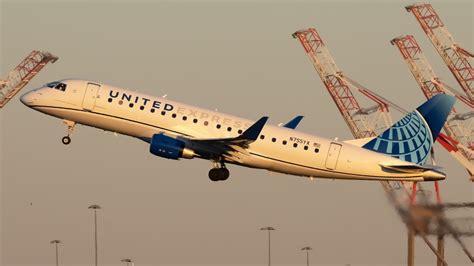
A United Express regional flight carrying 72 people was forced to return to Houston after its cockpit windshield suffered a major failure shortly after takeoff. The Embraer E175, operated by Mesa Airlines for United Airlines, was flying UA6309 from Houston George Bush Intercontinental Airport to El Paso International Airport when the crew reported that the windshield had shattered and declared an emergency.
The aircraft, registered N87360, had departed Houston on Sunday and was climbing normally when the problem developed. Several layers of the windshield reportedly broke apart, with glass falling into the cockpit. The crew halted the climb at approximately 13,000 feet rather than continuing toward cruising altitude, then turned the aircraft back toward Houston for an emergency landing.
The situation was serious, but the crew maintained control of the aircraft and brought it safely back to George Bush Intercontinental Airport roughly 35 minutes after departure. Houston Fire Department personnel responded to the emergency call and met the aircraft after it landed. Passengers were subsequently moved to another aircraft and continued their journey to El Paso later that afternoon.
United Express Flight UA6309 Windshield Failure
According to the available account, the damaged windshield was on the first officer’s side of the cockpit. The crew’s radio transmission made clear that the failure was more extensive than a superficial crack. During the emergency call, the crew reported that the glass had broken completely through at least one layer and declared a mayday before returning to the airport.
There was no reported evidence that the incident involved depressurization or a bird strike. That distinction is important because cockpit windshields are engineered as multilayer structures designed to withstand substantial aerodynamic loads and maintain cockpit integrity even if one layer becomes damaged.
The aircraft was taken out of service after landing and remained subject to inspection and maintenance. At this stage, the exact reason for the windshield failure has not been established. Determining whether the problem originated from the windshield itself, its installation, the heating system, or another factor will require a detailed technical examination.
What Could Cause an Aircraft Windshield to Shatter?
Without the results of an investigation, assigning a specific cause to the UA6309 windshield failure would be premature. Modern cockpit windshields are complex components that incorporate multiple layers, bonding materials, structural elements, and electrical heating systems. A defect in any of these areas can potentially create a serious problem.
One possible area investigators could examine is windshield installation and maintenance. Incorrect fasteners, improper installation procedures, or damage introduced during maintenance can affect how a windshield handles aerodynamic and pressurization loads. Electrical anti-ice and anti-fog systems may also receive attention because cockpit windows are heated to prevent ice formation and maintain visibility.
Moisture intrusion into windshield laminates is another potential concern. If moisture reaches electrical components inside the windshield, it can contribute to deterioration, short circuits, or electrical arcing. However, none of these possibilities has been identified as the cause of the United Express incident.
Previous Cockpit Windshield Failures
Commercial aviation has experienced several dramatic cockpit windshield failures. One of the best-known cases occurred in 2018, when Sichuan Airlines Flight 8633 suffered a windshield failure while cruising at approximately 32,000 feet. The aircraft, an Airbus A319, experienced a catastrophic cockpit window failure, and the first officer was partially pulled toward the opening. The crew nevertheless completed a successful emergency landing.
Another relevant incident occurred in 2015, when a Frontier Airlines Airbus A319 experienced windshield damage during a flight toward New Orleans. The crew reportedly observed arcing and sparks before cracks rapidly spread across the windshield.
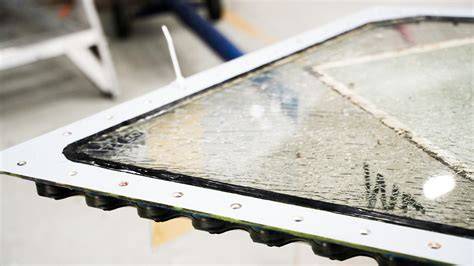
The most famous example remains British Airways Flight 5390 in 1990. The BAC One-Eleven was climbing through approximately 17,300 feet when the captain’s windshield failed. Captain Timothy Lancaster was partially ejected from the cockpit by the pressure difference, but cabin crew members held him against the aircraft while the first officer landed safely at Southampton.
The subsequent investigation found that incorrectly sized bolts had been installed during maintenance. The fasteners were too small and too short to properly secure the windshield, allowing the pressure differential to overcome the installation.
Investigation Will Determine Why the United Jet Windshield Failed
The United Express incident was far less severe than some historical windshield failures because the crew recognized the problem early and returned to Houston before reaching normal cruising altitude. The successful landing also meant that passengers could be transferred to another aircraft rather than remaining stranded after an extended emergency response.
The FAA is expected to examine the event, while the NTSB could also become involved depending on the classification and circumstances of the incident. Investigators and maintenance personnel will likely inspect the damaged windshield, attachment points, heating system, surrounding cockpit structure, and available maintenance records.
For now, the key fact is that UA6309 suffered a serious cockpit windshield failure after departing Houston with 72 people aboard, declared an emergency, and landed safely. The final explanation will depend on physical evidence and technical findings rather than speculation, particularly because several different mechanical or structural factors can produce similar windshield damage.