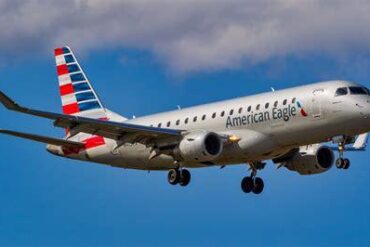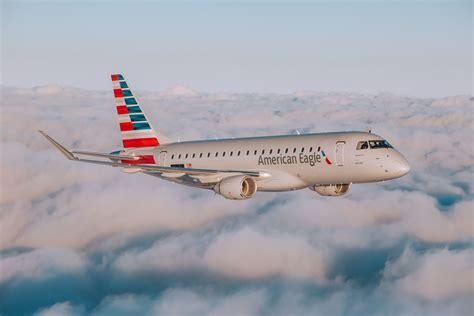
A routine American Eagle regional flight from Dallas/Fort Worth to Lexington turned into a serious aviation emergency after severe thunderstorms forced three consecutive missed approaches, leaving the Embraer E175 with only about 30 minutes of fuel remaining. The crew ultimately diverted to Evansville Regional Airport in Indiana after declaring an emergency and warning air traffic control that there was “no fuel for a go-around.”
Flight AA3927, operated by Envoy Air under the American Eagle brand, departed Dallas/Fort Worth International Airport at approximately 2:09 p.m. on Tuesday. The 76-seat Embraer E175 was scheduled to reach Blue Grass Airport in Lexington, Kentucky, after roughly two hours in the air. Instead, deteriorating weather disrupted the flight at two separate airports and pushed the aircraft far beyond its planned operating time.
The first difficulty occurred during the approach to Lexington. As the E175 approached Runway 22 at Blue Grass Airport, the crew encountered conditions severe enough to abandon the landing at approximately 2,200 feet. Rather than continue holding over Lexington while thunderstorms affected the airport, the pilots diverted toward Louisville Muhammad Ali International Airport, approximately 70 miles away, which was the designated alternate.
Three Consecutive Approaches Go Wrong
The diversion did not immediately solve the problem. Weather conditions around Louisville were also deteriorating, forcing the crew to reconsider its landing options after reaching the alternate airport. The aircraft descended below 600 feet while approaching Runway 35R at Louisville, but the crew initiated another go-around rather than continue an approach that could not safely be completed.
A second attempt followed on Louisville’s parallel Runway 35L. Once again, the weather prevented a successful landing. The aircraft climbed away from the airport at approximately 1,500 feet, marking the third consecutive approach that had been abandoned. At this point, the flight had spent considerably longer in the air than originally planned, and the available fuel margin was becoming a critical operational concern.
Go-arounds are a normal and important part of commercial aviation. A flight crew is expected to abandon an approach whenever the runway environment, weather, aircraft position, or other conditions are unsuitable for landing. The danger comes when repeated missed approaches consume the fuel reserves that were intended to protect the aircraft against precisely these kinds of disruptions.
AA3927 Declares a Fuel Emergency
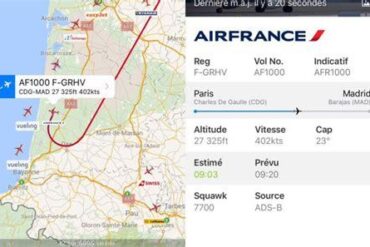
By the time AA3927 had been airborne for approximately two hours and 40 minutes, the aircraft was operating more than 30% beyond its scheduled flight duration. After the third go-around, the crew squawked 7700, the internationally recognized transponder code for a general emergency.
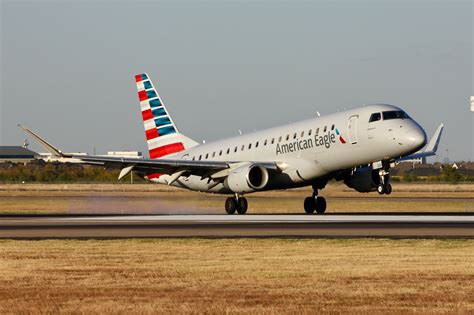
Air traffic control directed the aircraft toward Evansville Regional Airport, roughly 100 miles away in Indiana. According to reports surrounding the incident, the E175 had approximately 30 minutes of fuel remaining. One of the pilots made the seriousness of the situation particularly clear by asking controllers to keep the runway available because the aircraft had “no fuel for a go-around.”
That statement is significant because a go-around requires additional fuel, altitude, and maneuvering time. The crew was not saying that the aircraft had literally run out of fuel; rather, the remaining fuel margin had become sufficiently limited that another unsuccessful landing attempt could have created an unacceptable situation.
The E175 subsequently landed safely on Runway 22 at Evansville approximately three hours after its departure from Dallas/Fort Worth. The successful landing ended a rapidly escalating sequence in which thunderstorms had repeatedly removed the crew’s planned landing options.
Why the Fuel Margin Became Critical
Commercial aircraft do not normally depart with only enough fuel to reach their scheduled destination. Regulations and airline procedures require additional fuel for circumstances such as delays, holding, diversions and alternate-airport operations. Domestic flights also generally carry a final reserve designed to provide additional protection if the flight encounters unexpected problems.
The incident illustrates why those reserves exist, but it also demonstrates how quickly multiple disruptions can consume them. The original plan involved flying from Dallas/Fort Worth to Lexington. Instead, the E175 attempted Lexington, diverted to Louisville, conducted two more approaches there, and finally continued to Evansville.
The Federal Aviation Administration has reportedly opened an investigation into the incident. The investigation will be important in determining the precise fuel calculations, weather conditions, dispatch planning, alternate-airport considerations and decisions made during the flight.
The Aircraft Returned to Service
The passengers were not stranded in Evansville for an extended period. After refueling, the E175 operated a short flight from Evansville back to Lexington, arriving in time to continue the aircraft’s planned operation. The return service to Dallas/Fort Worth ultimately departed Lexington at approximately 8:47 p.m., more than three hours behind its scheduled 5:44 p.m. departure.
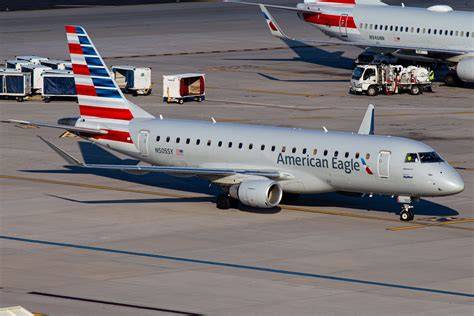
The aircraft involved was N285NN, an Embraer E175 operated by Envoy Air, American Airlines’ largest wholly owned regional subsidiary. Envoy’s E175 fleet can accommodate up to 76 passengers in a three-cabin configuration, including first class, Main Cabin Extra and the main cabin.
The incident occurred during a broader period of severe weather across the eastern United States, with significant delays also affecting major airports such as Atlanta, Charlotte, Chicago O’Hare and Washington Dulles.
AA3927 ultimately ended safely, but its sequence of three missed approaches provides a stark reminder of how rapidly weather can transform a normal regional flight into a fuel-management emergency. For airline crews, the priority remains unchanged: a runway can always be tried again, but only if the aircraft has enough fuel to safely make that decision.