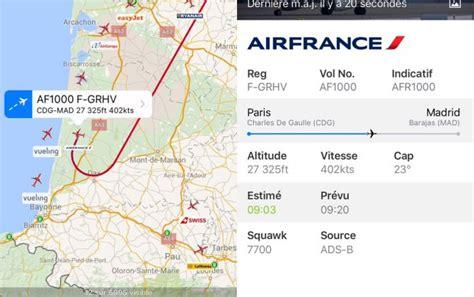
A routine morning journey took a dramatic turn on June 28, 2025, when Air France Flight AF1000, en route from Paris to Madrid, declared a mid-air emergency and returned to Charles de Gaulle Airport only 23 minutes after takeoff. The incident has since raised urgent questions about aviation safety, operational resilience, and the airline’s response mechanisms.
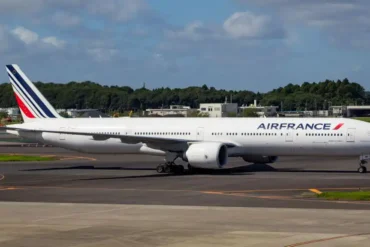
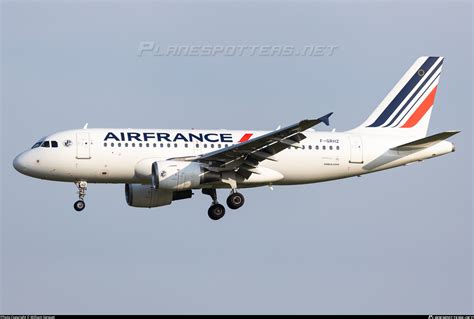
The flight, operated by an Airbus A319 registered as F-GRHZ, departed runway 26R at 07:26 CEST with clear skies above and no signs of trouble. But as the aircraft climbed to 10,000 feet, the calm routine abruptly shifted. Pilots squawked 7700, the international transponder code for an emergency, signaling a serious issue onboard.
A Sudden Turn: Emergency Over French Skies
The declaration of an emergency set off a chain reaction both in the cockpit and on the ground. Air traffic controllers cleared airspace to prioritize the descending aircraft. Passengers aboard felt the tension rise as the flight path veered sharply. Originally destined for the Spanish capital, the plane instead carved a looping arc over northern France, returning toward the airport it had just left.
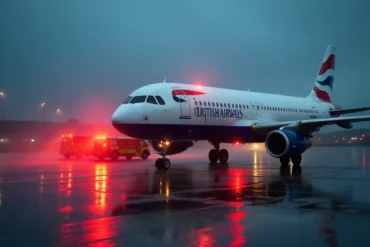
Within minutes, the Airbus began a controlled descent and lined up for an emergency landing on the same runway it had departed from. Emergency vehicles were deployed to meet the aircraft, their lights illuminating the tarmac in a stark contrast to the morning calm.
Technical Glitch Forces Early Return
Initial reports suggest the issue was technical in nature, although Air France has yet to disclose the exact cause. According to flight data, the A319 halted its ascent shortly after reaching cruising altitude and maintained level flight for a few minutes before commencing the return.
Sources close to the matter indicate possible electrical or hydraulic complications. These issues, while manageable in-flight, often prompt precautionary returns to base rather than risk a continuation into unfamiliar airspace.
The aircraft landed safely without incident, with no injuries reported. Ground teams ushered passengers into the terminal while a replacement aircraft was arranged for a rescheduled departure at 09:30 CEST.
Emotional Whiplash for Passengers
For those onboard, the transition from routine to high-stress unfolded in seconds. What began as a peaceful flight toward the Iberian Peninsula rapidly morphed into an ordeal marked by flashing indicator lights, audible alerts, and an urgent mid-air turnaround.
Passengers recounted clenching their seats as the captain calmly announced the return to Paris. While no panic ensued, the atmosphere was tense. One traveler later posted on social media, describing the eerie quiet in the cabin as passengers exchanged anxious glances.
Safety Protocols Triggered Swiftly
Despite the drama, aviation analysts affirm that the crew’s response followed textbook protocol. The decision to squawk 7700 and return immediately is standard when safety cannot be fully assured. In fact, such actions underscore a culture of risk-averse aviation management that prioritizes lives over schedules.
The aircraft’s crew, trained rigorously for such scenarios, remained composed. Air traffic controllers facilitated a clean route back to the airport. Emergency responders were ready before the wheels touched down.
Operational Disruption Across Europe
The ripple effect was immediate. European airspace is a carefully timed ballet of arrivals and departures. A single emergency return like AF1000’s creates a domino effect, leading to delayed flights, reassigned crews, and tighter runway windows.
Madrid-Barajas Airport, already bracing for summer travel surges, adjusted to accommodate the rescheduled flight. Meanwhile, travelers with connections in Madrid faced revised itineraries. From business travelers to holidaymakers, the incident briefly unstitched the fabric of a continent’s tightly linked air network.
Social Media Lights Up
As soon as the emergency unfolded, aviation trackers and social media lit up. Live radar maps showed the aircraft circling back. Hashtags like #AF1000 and #AirFranceEmergency trended regionally as speculation flooded the digital space.
Some shared screenshots of flight paths. Others expressed gratitude for the safe landing. Still, a palpable thread of anxiety wound through online conversations, reflecting broader public concerns about air travel reliability.
Air France Under the Spotlight
The incident has brought renewed scrutiny to Air France, one of Europe’s most prestigious carriers. With a legacy built on luxury, efficiency, and high safety standards, even a minor technical hiccup invites intense examination.
The airline has invested substantially in modernizing its fleet, implementing digital diagnostics, and refining maintenance protocols. Yet, events like AF1000 show that no system is immune to the unexpected. The challenge now lies in investigation transparency and customer reassurance.
A spokesperson confirmed that Air France has launched an internal review and is cooperating with French aviation authorities. The flight data recorder and cockpit voice recordings will be analyzed as part of a broader technical audit.
The Airbus A319: Reliable Yet Not Infallible
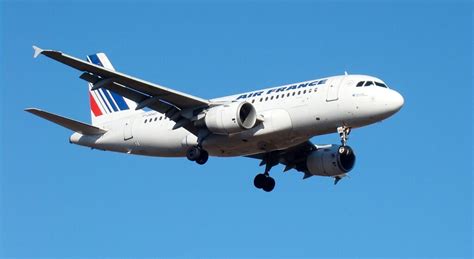
The Airbus A319 remains a cornerstone of European short-haul fleets. Known for fuel efficiency and advanced avionics, it forms the backbone of numerous intra-EU routes. However, its complexity means even minor irregularities can trigger serious caution.
AF1000’s aircraft—F-GRHZ—is part of a well-maintained fleet. Nevertheless, aviation experts note that even top-performing airframes can experience sudden system failures. From electrical faults to sensor anomalies, the reasons are manifold and rarely predictable.
Each incident like this is logged and cross-referenced against global safety databases. Patterns are hunted down. Maintenance teams use findings to refine procedures and preempt similar failures in the future.
A Glimpse into the Complexity of Air Travel
Though the flight lasted less than half an hour, it revealed volumes about modern air travel’s inner workings. Every flight involves meticulous planning, inter-agency coordination, and the precision execution of contingency protocols.
In AF1000’s case, all systems worked as intended when it mattered most. The redundancy of aircraft systems, the training of pilots, and the quick reactions of ATC staff ensured a safe outcome. But that doesn’t diminish the psychological impact.
Trust is an invisible component of every boarding pass. When it’s shaken, airlines must work twice as hard to restore it.
Looking Ahead: Madrid, At Last
By mid-morning, passengers were being rebooked. Some accepted the delay with quiet relief, thankful for their safety. Others, pressed for time, scrambled to re-coordinate meetings and hotel check-ins in Madrid.
Yet the overwhelming sentiment was gratitude. The ordeal had ended without injury, without chaos. But it had also exposed the thin line between routine and crisis in aviation.
The replacement flight departed around 09:45 CEST, with many of the original passengers onboard. For them, Madrid awaited—just a few hours later than expected.
The Final Descent: Lessons from AF1000
AF1000’s emergency return wasn’t a disaster—it was a demonstration. It proved how serious technical issues are met with decisive action, how airline systems can pivot under pressure, and how communication makes the difference between fear and confidence.
The skies over Europe remain some of the busiest on Earth. On any given day, thousands of aircraft crisscross the continent. Each one operates under the unyielding standards of modern aviation. But as AF1000 showed, even the most well-oiled systems must contend with the unpredictable.
As investigators work to finalize their findings, Air France has a chance to lead by example—by sharing those lessons, strengthening internal systems, and reinforcing public trust.
Madrid still beckons. And passengers will continue to fly, bolstered by the knowledge that when emergencies arise, the industry can—and does—respond with skill, speed, and unrelenting professionalism.