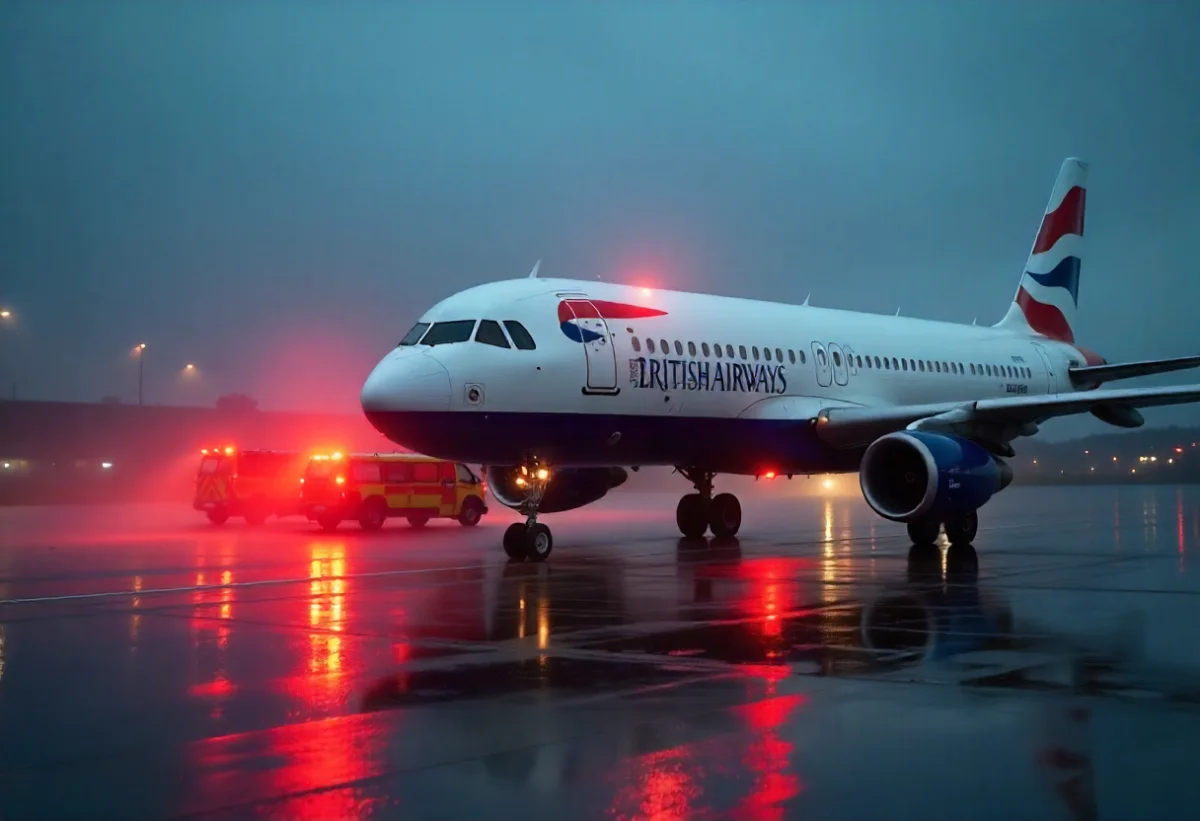
On the morning of July 26, 2025, British Airways flight BA1410, en route from London Heathrow to Belfast International Airport, was forced to divert to Manchester Airport after the flight crew declared a general emergency due to suspected pressurization issues. The Airbus A319-131, carrying 150 passengers and crew, departed at 08:05 BST and had been airborne for only 30 minutes when the pilots initiated emergency protocols and squawked 7700, the international transponder code indicating a general emergency.
The Emergency Unfolds at 30,000 Feet
Shortly after departure, pilots on board flight BA1410 identified an issue that suggested a potential loss of cabin pressure—a critical anomaly that demands immediate attention. The aircraft was cruising at altitude when the cockpit indicators alerted the crew to irregularities. Responding swiftly, the pilots initiated a controlled descent and entered a holding pattern while coordinating with air traffic control (ATC) to identify the nearest safe airport for diversion.
Manchester Airport, equipped with full emergency services and large enough to accommodate the Airbus A319, was selected as the diversion point. Emergency crews were pre-positioned on the tarmac, and the aircraft landed safely with no reported injuries or further mechanical complications. Passengers remained calm throughout the ordeal, aided by clear communication from the cabin crew, whose rapid and professional response has been praised.
Inside the Decision to Divert: Aviation Protocols in Action
In aviation, time-sensitive decisions during emergencies often make the difference between a safe outcome and potential disaster. British Airways flight BA1410 exemplified how proper training and swift execution of established safety protocols can lead to a successful resolution even under pressure.
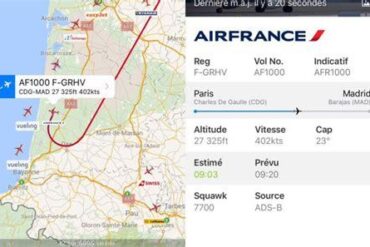
The aircraft’s transponder was set to 7700, signaling an all-purpose emergency to both ATC and nearby airports. This signal is not used lightly; it indicates a situation requiring immediate attention and priority landing clearance. Though it does not necessarily specify the nature of the emergency, in this case, it was later confirmed to be linked to a pressurization concern.
The flight crew’s decision to descend to a lower altitude was a textbook response to such an issue. Lower altitudes reduce the differential pressure between the cabin and the external atmosphere, alleviating strain on the fuselage and oxygen systems until the aircraft can land safely.
Passenger Experience and Onboard Procedures
During such emergencies, passenger safety remains the airline’s top priority. The BA1410 crew instructed passengers to remain seated, fasten seatbelts, and follow emergency instructions. Oxygen masks were not reported to have deployed, suggesting that the situation remained within controlled limits throughout the descent.
Upon landing, passengers were calmly disembarked and assisted by ground personnel. British Airways immediately began organizing alternative transport arrangements to get travelers to their final destination in Belfast, including rebooking and compensation where applicable.
A Closer Look at British Airways’ Response
British Airways issued a statement shortly after the incident, affirming that the safety of their passengers and crew is paramount. The airline commended the professionalism of the flight crew and Manchester Airport’s swift emergency response. Investigations into the aircraft’s pressurization systems are already underway to determine whether the warning was triggered by a sensor fault, environmental condition, or a genuine mechanical issue.
This event underscores the importance of regular maintenance, crew training, and contingency planning, all of which worked effectively in this case. British Airways has assured customers that the incident will be thoroughly reviewed, and any necessary technical adjustments will be implemented immediately.
Broader Implications for Air Travel Safety
While incidents involving cabin pressurization are rare, they are taken extremely seriously in the aviation industry. Cabin pressure anomalies can lead to hypoxia, a dangerous condition where passengers and crew are deprived of sufficient oxygen. Modern aircraft are equipped with automated pressurization systems, which are constantly monitored by sensors and manually overseen by flight crews.
In most cases, pilots are trained to descend rapidly to 10,000 feet, where supplemental oxygen is no longer required. The goal is to stabilize the internal cabin pressure while simultaneously identifying the nearest suitable airport for diversion—a task that must be executed with both urgency and precision.
Recent Safety-Related Incidents Within British Airways
This latest event comes shortly after another emergency involving British Airways flight BA2203, a Boeing 777-200 bound for Cancun from Gatwick Airport on July 15, 2025. That flight was forced to return to Gatwick following reports of toxic fumes in the cabin. Passengers required medical attention upon landing, and the aircraft underwent an immediate inspection.
Although entirely separate in nature, both incidents highlight the unpredictable challenges that major airlines can face. British Airways, with its vast network and diverse fleet, continues to navigate these hurdles through technological modernization, enhanced training, and operational resilience.
British Airways’ Fleet Modernization and Route Expansion
Despite isolated incidents, British Airways is pushing forward with fleet renewal and route expansion as part of a broader strategic vision for 2025 and beyond.
New Route Additions
British Airways recently launched direct flights to Osaka, Japan, expanding its reach into the Japanese market amid rising demand from both tourists and business travelers. Similarly, increased services to Cape Town and Nairobi are set to improve connectivity between the UK and African destinations, catering to both leisure and corporate travelers.
Aircraft Upgrades
In tandem with these expansions, British Airways has begun phasing in the Airbus A350 and Boeing 787 Dreamliner across its long-haul fleet. These state-of-the-art aircraft offer better fuel efficiency, lower emissions, and enhanced cabin comfort, aligning with the company’s goal of becoming a more sustainable airline.
The airline’s £1.4 billion annual fuel expenditure is being tackled through the integration of newer aircraft and sustainable aviation fuel initiatives. These measures are crucial for reducing both operational costs and environmental impact.
What This Means for Future Flyers
While emergencies like that of BA1410 are unsettling, they also serve as a reassurance of the rigorous safety frameworks underpinning modern commercial aviation. British Airways, in particular, has demonstrated its ability to manage unexpected scenarios while minimizing disruption to passengers.
Passengers flying with the airline in the coming months can expect enhanced customer service, new entertainment options, and a more personalized journey experience. From redesigned cabin interiors to next-generation aircraft, British Airways continues to focus on both safety and comfort.
Final Thoughts: Lessons from BA1410
The successful handling of British Airways flight BA1410’s emergency diversion is a testament to modern aviation’s robustness and the professionalism of airline crews. Though the incident interrupted travel plans, it ended with zero injuries and minimal disruption, a best-case scenario in the face of potential crisis.
Travelers should take confidence from this outcome and remember that every commercial flight is backed by layers of safety protocols, highly trained personnel, and support systems designed to keep them safe. While the skies may hold unpredictability, airlines like British Airways remain committed to ensuring that every journey concludes safely, regardless of the challenges en route.