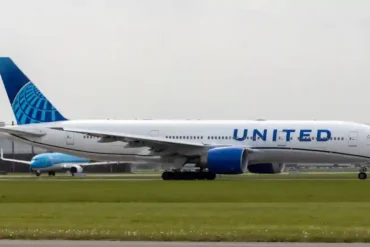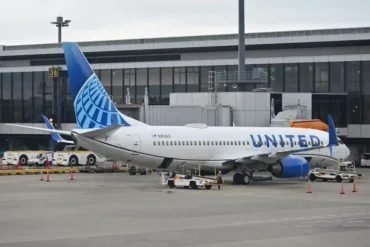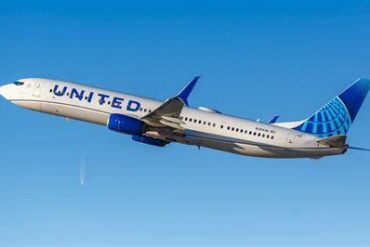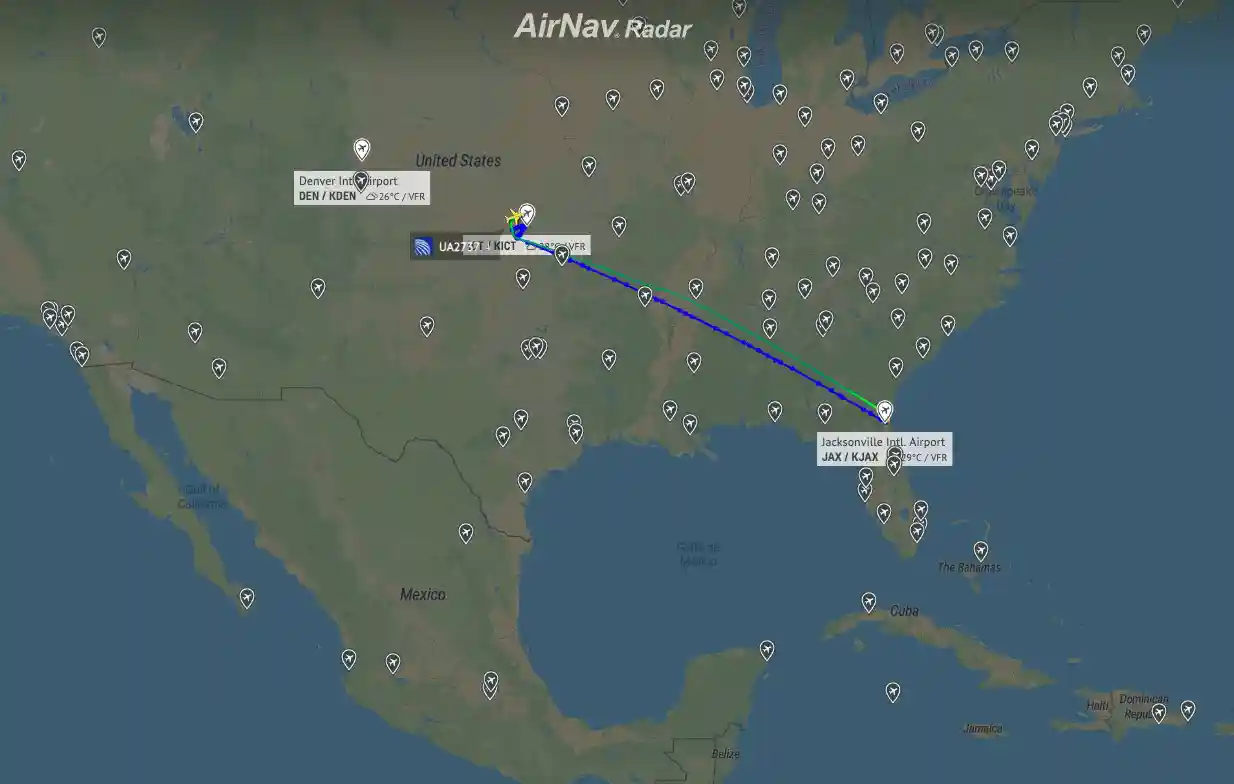
On the morning of June 27, 2025, a routine United Airlines flight became the focus of national attention after declaring a mid-air emergency and executing an unscheduled diversion to Wichita, Kansas. The aircraft involved, a Boeing 737 MAX 8 operating as Flight UA2737, had departed Jacksonville International Airport en route to Denver, before abruptly changing course mid-flight.
A Calm Takeoff Turns Into High-Altitude Alarm
Flight UA2737 took off at precisely 08:34 EDT, following its intended path westward across the continental United States. For over two hours, passengers experienced what appeared to be a normal flight. That calm was suddenly interrupted when the cockpit transmitted a squawk 7700—the universal transponder code for an emergency.
In an instant, the aircraft shifted from routine cruise to high-priority tracking by air traffic control centers. The crew acted swiftly, altering course toward the nearest suitable airport: Wichita Dwight D. Eisenhower National Airport. Passengers, sensing the aircraft’s descent and deviation, grew tense as the cabin atmosphere transformed.
Wichita Steps In as an Emergency Lifeline
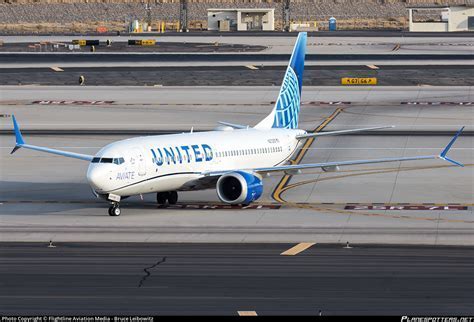
The aircraft, bearing the registration N17363, landed safely at Wichita after 2 hours and 15 minutes in the air. Emergency responders surrounded the plane as it rolled to a halt on runway 19R, lights flashing and protocols unfolding with precision. Although no injuries were reported, the abrupt diversion has reignited public scrutiny over both the airline and the aircraft model.
Boeing 737 MAX 8: Perpetual Vigilance and Public Scrutiny
The Boeing 737 MAX 8 is no stranger to headlines. After two catastrophic crashes in 2018 and 2019, the model was grounded globally until 2020, undergoing extensive scrutiny and software overhauls. Though the aircraft has since returned to service with all regulatory clearances, each new incident involving the MAX 8 invites fresh concern.
United Airlines is one of the model’s largest U.S. operators, deploying the MAX 8 across high-demand domestic and transborder routes. The recurrence of any issue—whether mechanical or otherwise—on this aircraft type immediately prompts intensified focus from aviation authorities, media outlets, and public travelers alike.
Inside the Cabin: Anxiety and Uncertainty in the Skies
Reports from passengers onboard UA2737 describe a flight that went from serene to surreal. After noticing an unusual change in altitude and flight path, travelers were informed of a diversion due to a technical irregularity. Despite the crew’s professionalism and composure, emotional tension mounted quickly.
Many travelers, already uneasy about the aircraft type, found their fears validated. The incident stirred memories of past MAX disasters, even though the causes remain unknown at this stage. Social media quickly amplified their stories, with posts capturing mid-air apprehension and ground-side relief spreading across platforms within minutes.
Investigations Underway: FAA and NTSB Mobilize
By protocol, a squawk 7700 declaration mandates an automatic investigation. The Federal Aviation Administration (FAA) and the National Transportation Safety Board (NTSB) have confirmed that a full review is in progress. Key data sources include cockpit voice recordings, flight data logs, and post-flight maintenance inspections.
Aviation analysts emphasize that emergencies can stem from a range of non-catastrophic issues: from instrument warnings to pressure anomalies. Yet in a climate of heightened sensitivity, the burden of proof lies with investigators to clearly determine and publicly explain what triggered UA2737’s diversion.
Operational Disruption and Logistical Fallout
The sudden grounding of a Boeing 737 MAX 8 creates a domino effect throughout United Airlines’ tightly orchestrated operations. Flights are scheduled based on a precise matrix of aircraft rotations, crew assignments, and gate availabilities. The removal of one aircraft—even temporarily—forces reshuffling, delays, or cancellations on connected legs.
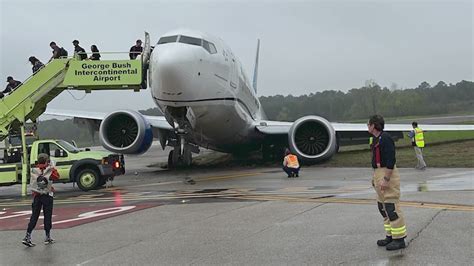
At Wichita Airport, emergency services and ground operations worked rapidly to accommodate the unscheduled arrival. Passengers disembarked, some visibly shaken, while customer service teams coordinated onward travel options. Though Wichita is not a major United hub, the staff handled the situation with urgency and care.
Brand Implications: United Faces a New PR Crossroads
United Airlines has spent years trying to transform its public image, investing heavily in aircraft upgrades, customer experience enhancements, and on-time reliability. Events like the UA2737 emergency challenge those efforts in real time.
In today’s digital ecosystem, airline brands live and die by real-time perception. Passengers tweet. Videos go viral. News stories surge across feeds. For United, the handling of this incident—both technically and publicly—will determine how quickly it can restore confidence.
Transparent communication, swift updates, and demonstrable action steps will be key. United must assure both travelers and regulators that safety remains uncompromised and that the MAX 8 continues to earn its place in the fleet.
The Human Cost: Emotional Reverberations for Passengers
Beyond the mechanical implications, a mid-air emergency leaves emotional marks. For many on board, it was their first time facing an unplanned landing. Even seasoned travelers report a renewed sense of vulnerability when a flight changes course abruptly and lands surrounded by emergency vehicles.
In the days following the incident, some passengers might seek counseling, request compensation, or avoid flying altogether. Airlines, recognizing the psychological aftershocks of such events, are increasingly investing in post-incident support teams, offering not just rebooking assistance but emotional reassurance.
MAX 8 Under the Spotlight—Again
This incident once again places the 737 MAX 8 under the magnifying glass. Despite millions of successful flights since its return to service, the model’s reputation has not fully recovered in the public consciousness. Every anomaly reignites debate over whether the aircraft is truly safe, or merely statistically acceptable.
Manufacturers like Boeing and operators like United must continue proving—through engineering rigor and operational transparency—that the MAX is a modern aircraft ready for the future, not a flawed machine haunted by past design errors.
Safety as a Relentless Pursuit
The aviation sector is built on layers of safety—hardware, software, human skill, regulatory oversight, and real-time responsiveness. UA2737’s safe landing in Wichita is a testament to those layers working in concert. But every incident becomes a data point in a broader trend line.
Authorities will dissect the event thoroughly. Engineers will review logs. Pilots will update training modules. Nothing in aviation is left to chance once an emergency is declared. That culture of relentless vigilance is what has made flying the safest mode of transportation globally.
What Comes Next for United, Wichita, and MAX Travelers
For United Airlines, recovering from this moment means more than repairing a plane. It means sustaining credibility, honoring affected passengers, and assuring the flying public that every route remains secure. Wichita’s unexpected moment in the national spotlight showcases the importance of regional airports being prepared for high-stakes arrivals.
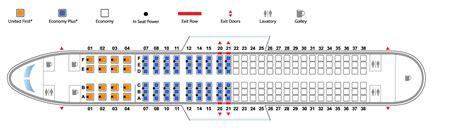
As for passengers boarding MAX 8 aircraft this week and beyond, some will do so nervously. Others will trust the statistics. But all will be reminded that modern aviation, while dazzlingly safe, is not immune to the unexpected.
Every squawk 7700 is a story in itself—about systems pushed to their limits, humans rising to challenges, and an industry that never stops evolving. The skies remain open. The questions remain urgent. And the journey continues.