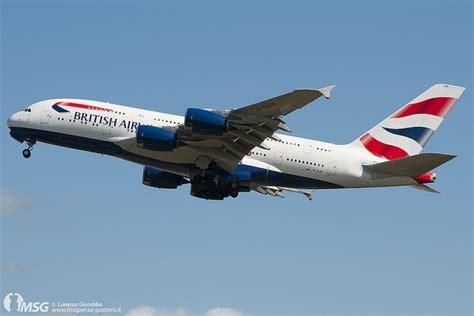
A British Airways Airbus A380 operating flight BA54 from Johannesburg to London Heathrow was forced to turn around after spending roughly seven hours in the air when its weather radar became unusable. The aircraft, registered G-XLEJ, departed Johannesburg Airport (JNB) at approximately 9:15 p.m. on August 8, expecting to make the overnight journey to Heathrow Airport (LHR). Instead, the enormous four-engine aircraft eventually returned to its departure airport, landing at around 2:45 a.m.
The unusual incident illustrates why an apparently modest equipment problem can become a significant operational issue on a long-haul flight. The A380 remained mechanically capable of flying, and there was no reported engine failure or loss of primary flight control. However, the crew could no longer rely on an essential system used to identify and avoid hazardous weather. With BA54 routed across Central Africa, the absence of dependable weather information presented a risk that the pilots were unwilling to accept.
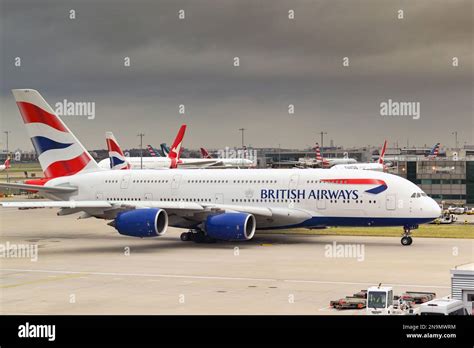
British Airways BA54 Turns Around Over Central Africa
According to ACARS messages reportedly shared after the event, the weather radar generated a warning shortly after takeoff. The warning subsequently disappeared, but the problem did not simply resolve itself. The radar display continued to show substantial clutter or “noise,” preventing the flight crew from obtaining a reliable picture of the weather ahead.
The crew reportedly investigated the malfunction and attempted to determine whether the system could be restored. A backup arrangement was also unavailable. With the radar effectively unusable, the pilots eventually concluded that continuing toward Europe was not appropriate. By that point, BA54 had already traveled deep into Central African airspace, meaning the decision required the aircraft to reverse course and fly thousands of miles back toward Johannesburg.
The route itself made the situation particularly important. A flight between Johannesburg and London crosses regions around the equator where powerful convective thunderstorms can develop rapidly. These storms can contain severe turbulence, hail, heavy precipitation and dangerous wind changes. Flying through such an environment without dependable weather radar would leave the crew with significantly less information when selecting a safe route.
Why Weather Radar Is Critical on an Airbus A380
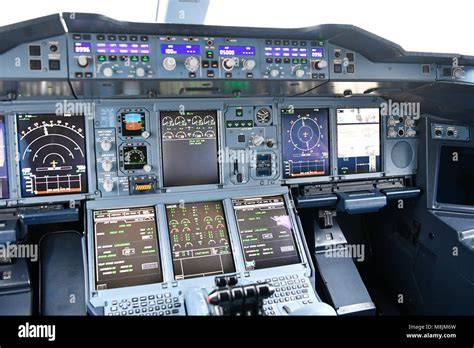
Airborne weather radar is not simply a convenience for pilots. It is an important tool for identifying precipitation and assessing the intensity and location of potentially hazardous weather. The radar antenna installed in the aircraft’s nose transmits radio waves and analyzes the signals reflected from water droplets and other precipitation.
Modern systems can provide pilots with a detailed representation of weather cells ahead of the aircraft. By interpreting radar returns, crews can identify areas of intense precipitation and make strategic decisions about avoiding them. Weather radar does not literally see clouds or turbulence, but the information it provides can reveal the atmospheric conditions associated with serious hazards.
This becomes especially important for an aircraft such as the A380. The giant Airbus typically cruises at approximately Mach 0.85, giving it a speed of around 490 knots, or roughly 908 km/h. At that velocity, a crew may have relatively little time to respond when encountering rapidly developing convective weather.
Storms, Hail and Wind Shear Increase the Risk
Severe thunderstorms can produce conditions that are hazardous even to a large widebody aircraft. Strong convective turbulence can impose substantial loads on the airframe and cause injuries among passengers and crew. Hail presents another serious concern because large ice particles can damage aircraft structures, windshields and engines.
Wind shear is another major threat. A particularly dangerous form of wind shear can occur when powerful downdrafts spread outward near the ground, producing rapid changes in wind direction and speed. Microbursts are especially hazardous during takeoff and landing because an aircraft operating close to the ground has limited altitude and energy available to recover.
For BA54, the problem was therefore not simply that the pilots could not obtain a comfortable weather picture. The malfunction affected their ability to make informed decisions during a flight crossing areas where significant convective activity can occur. Continuing without the required equipment would have introduced an avoidable risk.
The A380’s Weight Created Another Challenge
Returning to Johannesburg after several hours also presented a practical problem: the A380 carries an enormous quantity of fuel for long-distance missions. An aircraft departing South Africa for London can still be carrying substantial fuel reserves after reaching Central Africa.
Because of the aircraft’s weight, the crew reportedly considered the need to dump fuel before landing. The ACARS communications also indicated that additional holding or pattern time might have been required to reduce the aircraft’s weight sufficiently. Fuel dumping is a controlled procedure used when an aircraft needs to land below its permitted maximum landing weight and cannot safely burn enough fuel during the remaining flight.
The requirement demonstrates how a relatively straightforward technical problem can develop into a complex operational event. The aircraft had fuel for a long-haul flight, but the very fuel that would normally provide valuable range became a factor that had to be managed during the unexpected return.
A Seven-Hour Flight That Went Nowhere
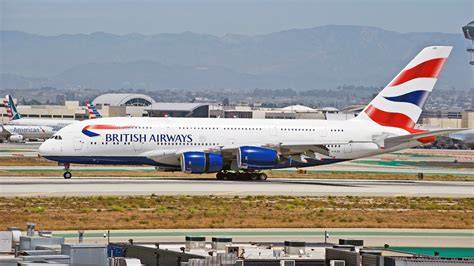
Flight-tracking data indicated that BA54 departed Johannesburg at approximately 9:15 p.m. and eventually landed back at JNB around 2:45 a.m. The aircraft therefore spent roughly seven and a half hours airborne without reaching its intended destination.
For passengers, such an outcome was understandably frustrating. Travelers expecting to wake up in London instead spent much of the night aboard an aircraft that ultimately returned to the city they had left. Yet from an operational perspective, the decision reflects the fundamental principle that governs commercial aviation: an aircraft should only continue when the crew has the equipment and information necessary to operate safely.
The incident also highlights the difference between an aircraft being technically capable of flying and an aircraft being operationally suitable for a particular flight. An A380 can remain perfectly capable of producing thrust, maintaining altitude and navigating while suffering a weather radar malfunction. That does not mean the aircraft should continue a long overnight journey through potentially stormy regions without the ability to adequately identify weather hazards.
Safety Takes Priority Over Schedule
British Airways’ BA54 incident is a reminder that modern airliners depend on hundreds of interconnected systems, each serving a specific operational purpose. Some failures immediately affect the aircraft’s ability to fly, while others affect the crew’s ability to safely manage the environment around it.
In this case, the weather radar failure did not bring down the A380 or prevent it from physically continuing toward London. Instead, it removed an important layer of situational awareness at a time when weather avoidance was particularly important. Faced with persistent radar problems and no dependable backup, the crew chose the conservative option: return to Johannesburg.
The result was an extraordinary flight path for an aircraft designed to connect distant cities efficiently. BA54 spent hours in the darkness over Africa before turning around, carrying its passengers back to the airport from which it had departed. It was an inconvenient outcome, but the decision underscores a principle that remains far more important than an arrival time: when critical weather information cannot be trusted, getting everyone safely back on the ground comes first.