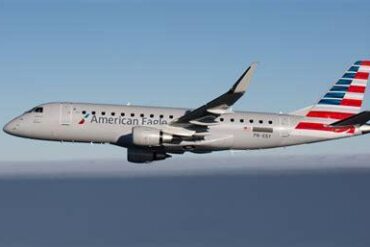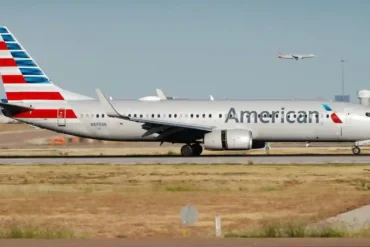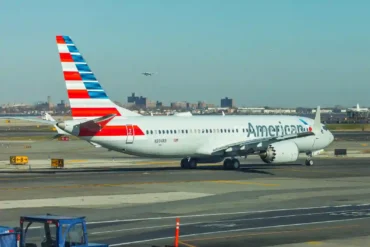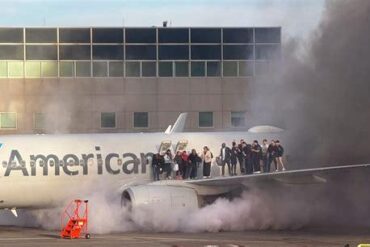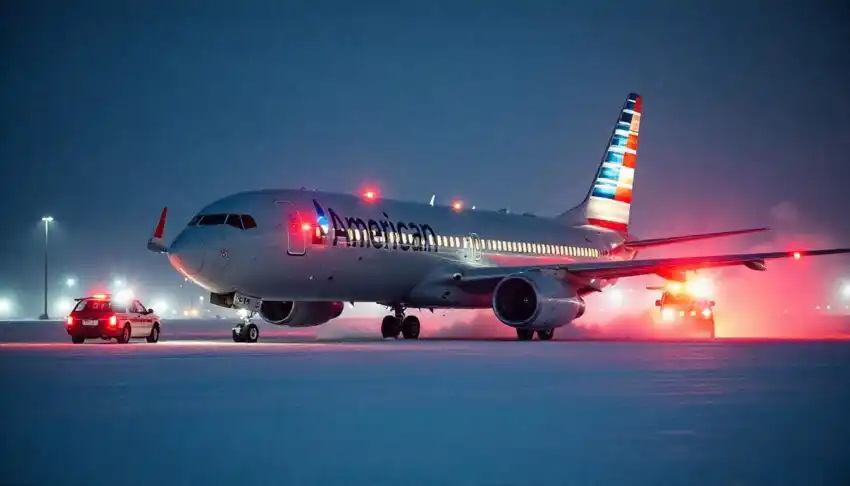
In the early hours of a busy Monday morning, American Airlines Flight 449 was forced to return to Des Moines International Airport shortly after takeoff, following a mechanical failure that disrupted what was intended to be a routine journey to Chicago O’Hare International Airport. The flight, which carried 119 passengers, made an emergency landing within just 35 minutes of departure, avoiding what could have been a much more dangerous situation.
The aircraft departed Des Moines at approximately 6:05 a.m., bound for one of the nation’s busiest airports. However, just minutes after reaching cruising altitude, the flight crew detected a mechanical irregularity significant enough to warrant immediate action. The pilot, without delay, initiated a turnaround and requested clearance for an emergency return.
By 6:40 a.m., the aircraft safely touched down back in Des Moines. There were no injuries reported during either the flight or evacuation process. Passengers were calmly guided off the plane, a testament to the professionalism and training of the American Airlines crew.
Calm Amidst Crisis: Crew and Passengers React
Inside the cabin, tension rose as the plane began to deviate from its expected flight path. But flight attendants maintained a composed presence, regularly updating passengers and minimizing panic. According to several onboard, the atmosphere remained largely calm, with passengers expressing appreciation for the clear communication from the flight deck.
One traveler en route to a family celebration in Chicago described the moment as “unsettling,” but commended the crew’s response. “We didn’t know what the issue was at first, but the crew kept us informed. Their calmness helped keep everyone collected,” she said. Another passenger echoed similar sentiments, highlighting how vital real-time transparency was in keeping spirits steady.
Aircraft Investigation Underway
Following the landing, maintenance teams immediately began inspecting the aircraft. While American Airlines has confirmed that the root cause was mechanical, they have yet to release specific details. Such incidents typically trigger a formal inspection overseen by the Federal Aviation Administration (FAA), which may include a post-incident review and, if necessary, a safety bulletin.
Technicians spent several hours examining the aircraft on the tarmac. According to airport sources, the plane will not resume flight operations until cleared by maintenance and regulatory inspectors. American Airlines emphasized that safety remains its primary concern.
A Disrupted Morning: Rebookings and Reactions
The unexpected return upended morning schedules for many travelers. Passengers originally scheduled to arrive in Chicago by mid-morning were forced to reassess their plans. While a portion of the group opted to wait for the same aircraft pending clearance, others rebooked on later flights, including American’s 1:50 p.m. and 5:56 p.m. departures from Des Moines to Chicago.
American Airlines gate agents remained on-site throughout the day to assist affected travelers. Meal vouchers, hotel accommodations for those choosing to stay overnight, and rebooking assistance were among the remedies offered. Some passengers successfully caught late connecting flights from Chicago, while others postponed their trips entirely.
One businessman, on his way to a corporate meeting in downtown Chicago, told reporters he had to cancel in-person attendance but appreciated the crew’s response. “You never want to hear the word ’emergency’ on a flight, but the way they handled it made me feel safe,” he said.
Flight Operations Remain Steady
Despite the disruption, Des Moines International Airport operations remained unaffected overall. According to airport officials, no delays or cancellations were attributed to Flight 449’s return. The incident was managed swiftly with coordination between airport ground control and the American Airlines station team.
Airport communications director Lisa Harding confirmed the facility followed standard emergency procedures and worked closely with airline personnel to ensure minimal disruption. “Our priority is always safety first, but also maintaining the comfort and clarity passengers need in high-stress moments,” she said.
The Unknown Fault: What Happens Next?
While the exact mechanical failure has not been detailed, aviation experts suggest it may have involved a pressurization anomaly, sensor failure, or hydraulic system alert, all of which can justify a rapid return. Aircraft are designed with multiple redundancies, but standard protocol dictates that even non-critical faults be assessed on the ground if flagged mid-flight.
American Airlines will be expected to submit a report to the FAA outlining the cause, corrective actions taken, and any follow-up inspections. Depending on findings, the aircraft might undergo further servicing or be temporarily pulled from active rotation.
A Reminder of Air Travel Realities
Though modern aviation boasts an exceptional safety record, the incident serves as a sobering reminder of how quickly air travel plans can shift. The majority of passengers had expected a 60-minute hop between Midwestern cities; instead, they found themselves navigating flight cancellations, airport layovers, and sudden changes to their day.
Yet, through the lens of safety, the outcome stands as an example of effective emergency protocol. A quick-thinking pilot, informed and composed flight crew, and timely ground coordination combined to neutralize a potentially dangerous scenario. Not a single injury was reported, and the aircraft suffered no known damage.
Broader Context: Summer Travel Stress
The incident unfolded amid a record-breaking summer travel season, where packed terminals and weather-related delays already strain airline operations. For carriers like American Airlines, every emergency response is both a test and a testament to training, systems, and procedures in place.
Despite the morning’s disruption, passengers acknowledged the professionalism of the airline’s team. “We got scared, sure,” said a mother traveling with two children, “but they did everything right. I’d rather be delayed and safe than the alternative.”
Moving On
By day’s end, most passengers had either departed on later flights or returned home with plans to resume travel later in the week. Though Flight 449 did not reach its original destination on schedule, it did reach safety — and that, above all else, is what mattered.
American Airlines has not released a timeline for the aircraft’s return to service, but has reiterated its commitment to thorough inspections and safety-first policies. The FAA is expected to follow up with a preliminary report in the coming days, which may shed more light on the root cause of the mechanical failure.
For now, what remains is a narrative of professionalism in the face of adversity, the kind of response that reaffirms confidence in commercial aviation. The passengers may have missed their appointments, meetings, or family events, but they walked away safely — a powerful outcome in any crisis above 10,000 feet.