The National Transportation Safety Board (NTSB) has released a preliminary report detailing the harrowing moments aboard American Airlines Flight AA1006, which caught fire while taxiing to the gate at Denver International Airport (DIA) on March 13, 2025. The flight, which originated from Colorado Springs Airport, was en route to Dallas Fort Worth International Airport when it was forced to divert due to mechanical issues with its right engine. What started as a seemingly routine diversion escalated into a full-blown emergency that left 12 passengers injured and caused extensive damage to the aircraft.
Engine Vibrations Lead to Emergency Diversion
According to the NTSB’s report, engine trouble first appeared during takeoff from Colorado Springs. The first officer, who was handling the controls at the time, was alerted by the captain monitoring the instruments to high vibration readings in the right engine. Despite the concern, the crew continued the takeoff before opting to divert the aircraft to Denver after consulting with American Airlines’ dispatch center.
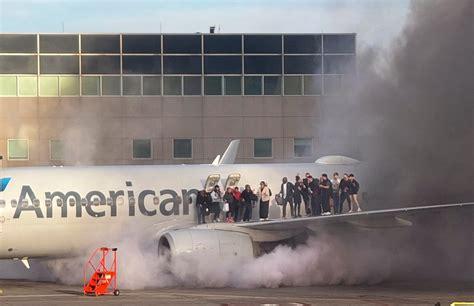
As the aircraft approached Denver, the flight crew remained calm and proceeded with a normal approach and landing. The situation onboard remained stable during descent, with no signs yet of the chaos that would soon follow. Once the plane touched down and completed its five-minute taxi to the assigned gate, the engines were shut down. Moments later, however, passengers began shouting “fire” and “smoke” as smoke visibly entered the cabin.
Cabin Panic and Swift Evacuation
Inside the aircraft, panic ensued. According to the NTSB, a flight attendant attempted to contact the cockpit via intercom to alert the pilots of the smoke but received no response. Another attendant had to physically knock on the cockpit door, urgently informing the crew of the worsening conditions. Meanwhile, passengers stood up, desperate to escape the increasingly smoke-filled cabin.
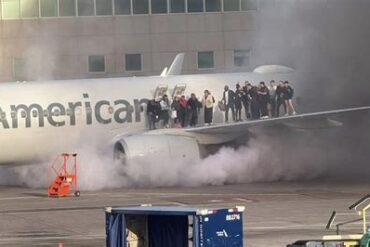
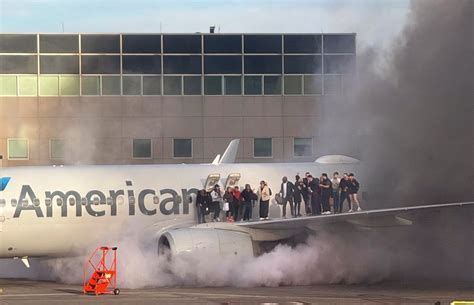
Recognizing the imminent danger, flight attendants initiated an emergency evacuation. Several passengers exited through window exits onto the left wing, where they were helped to the ground using available ground equipment including belt loaders, ladders, and emergency vehicles stationed nearby.
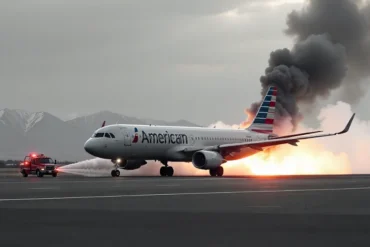
While the aircraft fire and rescue services at DIA had not yet arrived, gate ramp personnel acted swiftly, extinguishing the fire within a minute using ramp-based firefighting equipment. By the time the DIA emergency response trucks reached the aircraft, the flames had been subdued, though thermal hotspots were still detected.
One of the three responding trucks specifically targeted the right side of the aircraft, using water to douse heat signatures identified near the right aft fuselage and inboard wing. This immediate action helped prevent the fire from escalating, but the incident left behind a trail of destruction.
Evidence of Fluid Leak and External Damage
Video surveillance from airport operations captured a steady stream of fluid leaking from under the right engine as the aircraft taxied to the gate. The NTSB has since confirmed this fluid trail was most likely leaking fuel, contributing to the ground fire once the aircraft came to a stop.
Post-incident, the aircraft was towed to a maintenance hangar where a detailed inspection began. Investigators discovered visible burn marks, heat distress, and soot deposits extending from the right engine nacelle to the right main landing gear wheel well. The heat damage was concentrated, indicating a localized fire, consistent with a fuel-fed ground fire.
Mechanical Faults Found in Engine and Fuel System
The technical examination unearthed a series of troubling mechanical failures. Though the right engine nacelle remained physically intact, dark streaking and thermal damage indicated a fire initiated after landing. Notably, all fan blades were accounted for, yet one exhibited a fractured platform, hinting at mechanical stress during flight.
Even more alarming were the findings related to the variable stator vane (VSV) assembly. A fuel fitting lockwire on the VSV was found to be loosely installed and oriented incorrectly, which violated proper installation procedures. Moreover, the VSV actuator rod end was inadequately secured, allowing fuel to leak from the fitting—a likely source of the fire.
Additional damage included a fractured weld on the VSV rod end muscle line, and an obstructed 6 o’clock seal drain line on the inboard thrust reverser half, which had been improperly sealed with excess sealant. These compounding failures significantly undermined the integrity of the engine’s fuel system.
Communication Gaps During the Emergency
The report also revealed communication breakdowns during the emergency. The lack of immediate contact between the cabin and cockpit crew at a critical juncture raised concerns about protocol adherence and the effectiveness of intra-crew communication. It was only after persistent knocking on the cockpit door that the flight crew was made fully aware of the situation, prompting the evacuation sequence.
This delay may have exacerbated passenger anxiety and contributed to minor injuries during the chaotic disembarkation. Fortunately, the swift action of the flight attendants and ground personnel prevented a potentially far worse outcome.
Injuries and Damage Assessment
Of the 178 individuals on board—two flight crew, four cabin crew, and 172 passengers—12 passengers sustained minor injuries, primarily during the evacuation process. These injuries included sprains, abrasions, and smoke inhalation. No crew members were injured.
The aircraft itself, however, did not fare as well. It suffered substantial damage, particularly around the right wing, engine area, and landing gear bay. The long-term operational viability of the aircraft remains under evaluation.
Ongoing Investigation and Industry Implications
The NTSB has emphasized that this is a preliminary report, and further analysis is underway. Investigators are now focused on determining how such an apparent installation error in the fuel system escaped detection during regular maintenance checks. This raises red flags about quality control, inspection routines, and the training of maintenance personnel involved in high-risk components like fuel lines and engine assemblies.
A final report is expected to explore whether the maintenance oversight was isolated or systemic within the airline’s operations or among its contractors. The Federal Aviation Administration (FAA) has been notified, and American Airlines has pledged full cooperation with the ongoing probe.
Conclusion: A Close Call with Lessons to Learn
The incident involving Flight AA1006 stands as a stark reminder of how minor mechanical lapses can lead to life-threatening emergencies. While no lives were lost and injuries were relatively minor, the episode has triggered deep concern within the aviation community.
As the investigation continues, this event will likely become a case study in aircraft safety, maintenance protocols, and crew emergency response. It underscores the importance of strict adherence to technical procedures, robust inter-crew communication, and rapid ground support readiness.
More importantly, it will serve as a critical touchpoint in improving aviation safety standards, helping to prevent similar emergencies in the future and restoring public confidence in the safety of commercial air travel.
American Airlines has not yet released a separate internal report, but in a statement, it reaffirmed its commitment to passenger safety, noting that the actions of the flight and ground crews aligned with emergency response protocols. The airline continues to cooperate with federal investigators.
Until then, the charred metal and haunting moments inside Flight AA1006 remain a powerful testament to how swiftly the skies can turn perilous—and how crucial preparedness, communication, and technical precision are in preserving life.