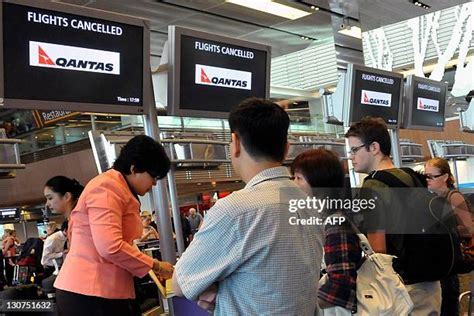
Singapore’s Changi Airport has been thrown into disarray following a string of mechanical failures on Qantas Airways’ Airbus A380 aircraft, creating a nightmare scenario for travelers attempting to return to Australia. What was initially expected to be a routine departure from the city-state spiraled into a prolonged disruption, leaving hundreds of passengers stranded for days and exposing the fragility of Qantas’ long-haul operations.
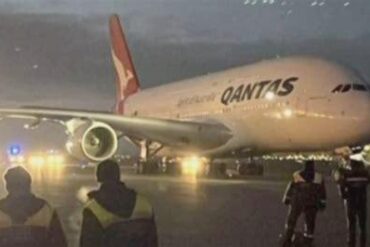
The debacle unfolded late on Monday, July 14, when Qantas Flight QF82—scheduled to depart from Singapore to Sydney at 8:45 PM—was abruptly grounded due to a critical, unspecified mechanical issue onboard the A380. Though passengers remained hopeful after boarding, they were instructed to disembark close to midnight, only to learn hours later that the flight was cancelled entirely by 2:30 AM. Qantas arranged hotel accommodations for affected passengers, but that marked only the beginning of a sequence of rescheduling headaches and confusion.

Repeated Delays Erode Trust as Passengers Remain in Transit Hell
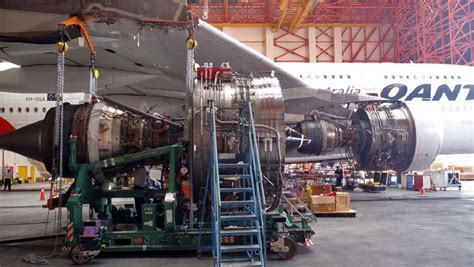
Following the cancellation, Qantas initially promised a replacement flight at 9:00 AM Wednesday, giving stranded passengers a sense of hope. But that promise dissolved when the new departure was once again pushed back, eventually being rescheduled for 12:30 AM Thursday—an astonishing delay of over 52 hours since the original flight time. Qantas attributed these prolonged setbacks to the complex repair work required on the A380, underscoring the immense burden of maintaining a fleet of aging aircraft.
These delays weren’t isolated. Qantas Flight QF81, inbound from Sydney, faced a six-hour delay, highlighting the wider ripple effect caused by the A380 fleet crisis. The airline, operating just 10 Airbus A380s, found its operational backbone collapsing under the pressure, particularly with two units already inactive and grounded in Victorville, California.
Mechanical Woes Mount as Sydney Incident Adds Fuel to the Fire
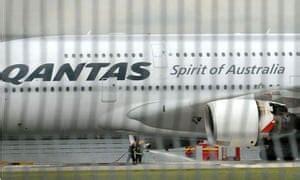
Compounding Qantas’ misery was a separate but equally disruptive incident in Sydney, where another A380—while stationary—was struck by an aerobridge, resulting in significant engine damage. This mishap grounded a flight destined for Johannesburg for over 21 hours, further reducing Qantas’ active A380 capacity and stressing intercontinental operations.
This wasn’t an isolated incident either. In Brisbane, a Qantas Boeing 737-800 suffered a cracked windscreen after another aerobridge collision earlier this year. These back-to-back ground mishaps have called into question the operational oversight within key Australian airports, especially concerning high-value wide-body aircraft.
The Cost of Keeping Aging Giants in the Sky
The Airbus A380, though a marvel of engineering, is no longer in production. Since the cessation of manufacturing in 2021, airlines like Qantas face an uphill battle keeping the massive double-deckers service-ready. Qantas has plans to keep its A380 fleet operational until 2032, banking on their long-range capacity and high-density seating, particularly for routes to Asia, Europe, and the United States.
But the cost is clear: maintaining an A380 is resource-intensive. With age, the likelihood of unscheduled maintenance increases, which can easily disrupt carefully planned timetables. These most recent incidents highlight how even one mechanical issue can snowball into multinational delays, affecting hundreds of passengers and placing enormous stress on customer service and logistics teams.
Passengers Voice Outrage Over Poor Communication and Support
Despite public apologies and logistical efforts—including hotel stays, meal reimbursements, and transport—many affected travelers reported that Qantas’ communication was disjointed, slow, and insufficient. Social media platforms were flooded with passenger complaints, many voicing frustrations over missed connections, school returns, and work commitments.
“I understand that things break,” one passenger posted on X (formerly Twitter), “but what I don’t understand is being left in the dark, hour after hour, with no updates and no options.” Others criticized Qantas for not providing clearer alternate flight solutions, especially for families with children or travelers with urgent needs.
Qantas issued a formal statement acknowledging the impact of the delays, emphasizing that engineering teams were working around the clock to address the issue and return the A380 to operational status. However, the damage to the airline’s reputation was already unfolding in real-time online, garnering media attention and passenger backlash.
Strain on Resources Amid High-Demand Travel Season
This unfolding crisis couldn’t have arrived at a worse time. With the summer travel season in full swing, capacity demands on airlines are soaring. Qantas, having increased its A380 frequency to Singapore to cater to rising seasonal traffic, now faces a logistical bottleneck. The absence of two functional A380s and another crippled by ground handling incidents has left the airline’s international routes in precarious balance.
Moreover, rerouting passengers to other flights or partner airlines has proven difficult, with most long-haul carriers already operating at near-maximum capacity. This bottleneck has contributed to extended delays for customers, making it virtually impossible to rebook quickly without exorbitant rebooking costs or convoluted multi-leg itineraries.
Qantas’ Safety Record Holds, but Challenges Mount
Despite the operational mess, it’s crucial to highlight that Qantas still maintains one of the world’s strongest safety records. These delays and mechanical issues, while disruptive, have not involved any risk to life or inflight emergencies. The airline’s swift ground-based response to safety issues reflects a strong commitment to passenger well-being, even as it struggles to deliver seamless service.
That said, reliability is increasingly becoming an equally important metric as safety, especially in the post-pandemic world of volatile travel demands and heightened passenger expectations. Airlines must now balance engineering perfection with customer experience, and Qantas’ performance in Singapore reveals serious weaknesses in that balancing act.
Can Qantas Sustain Its Superjumbo Strategy Until 2032?
With only a few global operators still flying the Airbus A380, Qantas stands at a crossroads. The airline has committed to extending the life of the fleet for another seven years, but this incident demonstrates the risks of that strategy. As aircraft age, they not only demand more maintenance but also become less compatible with emerging airport infrastructure and ground operations standards.
The repeated use of older planes without significantly modernizing maintenance systems, predictive analytics, and parts supply chains could mean more frequent grounding events, more dissatisfied passengers, and deeper financial damage.
Qantas must now make a choice—either invest heavily in upgrading its existing A380s to prevent recurring problems, or gradually phase them out in favor of more modern long-range aircraft like the Boeing 787 Dreamliner or Airbus A350.
Looking Ahead: Recovery, Reputation, and Reflection
The Singapore A380 debacle offers a cautionary tale for Qantas and the aviation industry at large. It shows how even legacy carriers with strong reputations can falter under the weight of outdated infrastructure and poor crisis management. As the airline works to get its aircraft back in the sky, the real challenge lies in restoring passenger trust and demonstrating resilience in the face of operational adversity.
If Qantas aims to sustain long-term loyalty, it must double down on:
- Proactive fleet maintenance strategies
- Transparent and timely passenger communication
- Contingency planning for peak travel periods
- Ground operation protocols to avoid avoidable damage
The airline’s swift repair and compensation efforts may have addressed the most immediate crisis. Still, for hundreds of stranded travelers in Singapore this week, the wounds of delay and mismanagement will not heal easily.
Until Qantas implements long-term operational reforms, the airline will continue to walk a tightrope between its storied past and an uncertain future—one mechanical failure away from the next crisis.