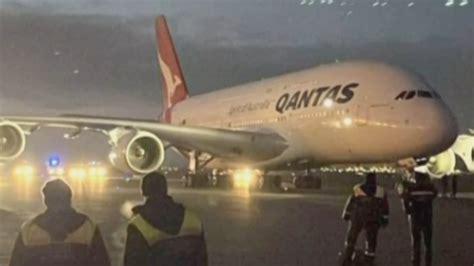
Qantas Airways has issued an official apology to passengers after a medical emergency forced Flight QF2, traveling from London to Singapore, to make an unplanned landing in Baku, Azerbaijan, leaving hundreds of passengers stranded overnight in a country where the airline does not typically operate.
The incident unfolded when a woman in her 60s suffered a serious cardiac episode mid-flight, prompting the crew to take decisive action. According to onboard Australian doctor Hamish Urquhart, the situation escalated quickly, necessitating urgent medical intervention.
Medical Emergency Forces Mid-Flight Turnaround
The Qantas Airbus A380 was cruising smoothly through its intercontinental route when the medical emergency struck. Dr. Urquhart, who was one of several medically trained passengers aboard, recounted the gravity of the moment. “The lady was really quite unwell and needed intravenous access while we were trying to land, which was a bit challenging,” he said in a statement to the ABC.
Recognizing the severity of the passenger’s condition, the flight crew initiated a 180-degree turn mid-air to redirect the aircraft to the nearest suitable international airport—Heydar Aliyev International Airport in Baku.
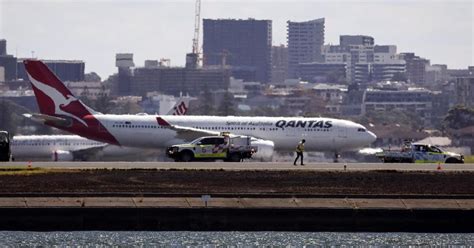
The maneuver was described as “dramatic” by passengers and aviation experts alike. The aircraft touched down safely, but the unplanned diversion set off a cascade of logistical challenges for both passengers and crew.
Crew Time Limits Prevent Immediate Continuation
Despite the successful landing, the operating crew had reached the legal limit of their duty hours, making it impossible to resume the journey to Singapore immediately. Safety regulations prohibit commercial airline staff from operating beyond a certain number of continuous hours without adequate rest, forcing the flight into an overnight delay.
As a result, Qantas provided hotel accommodation for all passengers and began working urgently behind the scenes to resolve the situation. A Qantas spokesperson confirmed, “We apologise to customers for the disruption and are working to get them on their way to Singapore as soon as possible.”
Unfamiliar Terrain Presents Maintenance Hurdles
Compounding the delay is the fact that Qantas has no regular operations in Baku, meaning there is no resident maintenance crew certified to inspect and clear the aircraft for takeoff. Routine checks are mandatory before the aircraft can resume flying after an unscheduled stop of this nature.
In response, Qantas dispatched a qualified A380 engineer from London to Azerbaijan to carry out a full technical inspection and clear the aircraft for onward travel. This additional delay is a required safety protocol, not a reflection of any mechanical failure.
Passenger Reactions and In-Flight Assistance
The atmosphere on board during the diversion was tense but orderly, according to multiple passenger accounts. Dr. Urquhart played a pivotal role in stabilizing the patient until medical staff in Baku could take over. “I worked with other medical professionals onboard to get the situation under control. It was certainly one of the more dramatic flights I’ve been on,” he said.
Passengers expressed a mix of relief at the aircraft’s safe landing and frustration over the sudden halt to their plans. Some documented their experiences on social media, with images showing the massive aircraft parked on an isolated stretch of the tarmac.
The Importance of Medical Preparedness in Aviation
This incident highlights the ongoing importance of medical preparedness aboard long-haul international flights. Airlines like Qantas equip their flights with basic medical kits and emergency defibrillators, but rely heavily on volunteer assistance from medically trained passengers in serious incidents.
While Qantas has not released detailed information about the woman’s current condition, reports suggest she was transported to a hospital in Baku for further treatment.
Airline’s Public Response and Ongoing Efforts
Qantas has acknowledged the inconvenience caused and emphasized that the decision to divert was made purely for passenger safety. “Our QF2 London to Singapore service diverted to Baku in Azerbaijan earlier today due to a medical incident on-board,” a company spokesperson reiterated in a follow-up statement.
The airline has promised to compensate affected passengers according to their policies and international aviation guidelines. As of the latest update, the flight was scheduled to resume its journey once the engineer completes the necessary checks and the new crew is fully rested.
This is not the first time an international flight has had to make an emergency landing for medical reasons. However, the unusual location and extended delay have brought this particular incident into sharp focus, drawing media attention across Australia and Southeast Asia.
Operational Implications for Qantas
Though not operationally catastrophic, this incident underscores the challenges airlines face when navigating global routes with limited service footprints in certain regions. With no existing infrastructure in Azerbaijan, Qantas had to mobilize staff and resources across borders to manage an unexpected disruption.
Analysts say that while the airline handled the situation with professionalism, the event exposes a gap in contingency planning for rare diversion scenarios. Nevertheless, aviation safety experts commended the decision to divert, noting that medical emergencies must always take precedence over itinerary commitments.
Conclusion: Safety First, But At a Cost
The Qantas diversion to Baku is a stark reminder of the unpredictable nature of international travel. While the airline’s swift response and medical coordination likely saved a life, the inconvenience faced by nearly 500 other passengers cannot be understated.
With increasing demand for international travel resuming post-pandemic, airlines must continue refining their emergency response protocols and build strategic partnerships in lesser-served regions to avoid future disruptions of this magnitude.
In the end, Qantas upheld its reputation for prioritizing safety—but not without exposing the operational complexities of flying globally in an increasingly interconnected but still unevenly supported aviation network.
The aircraft, flight crew, and affected passengers are expected to arrive in Singapore later today, marking the end of a journey that will be remembered far more for what happened above the Caspian Sea than for any scheduled departure or arrival time.