Passengers aboard a World2fly long-haul flight from Holguín, Cuba to Prague endured an unexpected three-day delay after a dramatic aborted takeoff involving a serious engine malfunction on an Airbus A330-300. What began as a routine leisure charter flight on January 10 quickly escalated into a complex aviation incident that raised questions about aircraft condition, communication transparency, and operational resilience.
The flight, operating under the number 2W-8548, was preparing for departure from Holguín Frank País Airport when the crew initiated a high-speed rejected takeoff. During acceleration down the runway, a sudden technical failure forced the pilots to abort at the final stage, bringing the widebody aircraft to a halt near the runway’s end. The aircraft was then returned to the apron, and the flight was officially canceled.
Passengers were informed that the aircraft could not continue and were transferred to local hotels, where they would remain for three full days while a replacement aircraft was arranged. For many travelers, this meant an unplanned extension of their stay in Cuba, along with mounting uncertainty about when they would finally reach Europe.
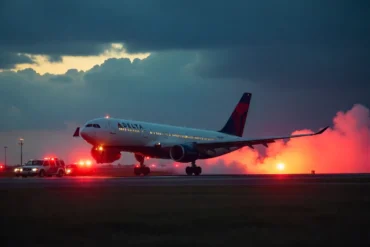
According to multiple passenger accounts reported by aviation safety observers, the incident unfolded rapidly and violently. Witnesses described a tire burst during takeoff, followed by debris being sucked into the aircraft’s left engine, causing immediate damage and visible flames. One passenger, speaking to Czech media, recounted how the engine began to burn moments after the tire disintegrated, emphasizing that the captain’s decisive braking likely prevented a far more serious outcome.
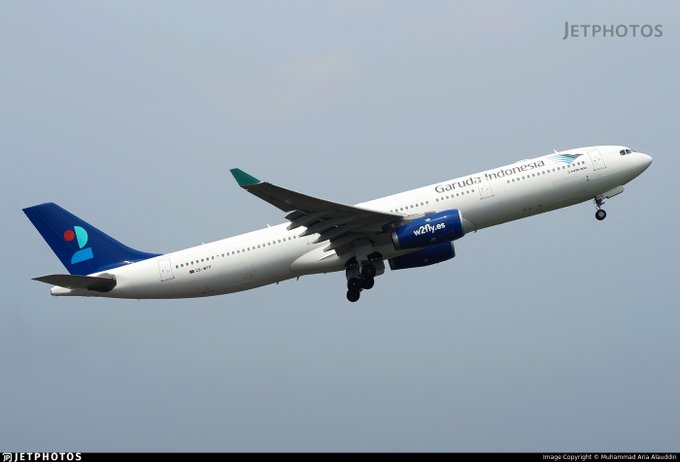
The aircraft involved was an Airbus A330-300 registered as EC-OND, a widebody jet configured for high-density leisure travel. Following the aborted takeoff, the aircraft remained grounded in Holguín, unable to operate further flights. The visual evidence described by passengers—including fire and engine damage—stood in contrast to the airline’s initial public explanation.
Conflicting Explanations Deepen Passenger Frustration
World2fly later stated that the rejected takeoff was caused by a bird strike, a claim that immediately conflicted with passenger testimony and statements from the associated travel agency. Representatives for Fischer, the Czech tour operator with clients on board, openly disputed the bird strike explanation, asserting that no bird impact occurred and that passengers were misinformed at the time of the incident.
This discrepancy has fueled criticism over communication transparency, particularly as passengers attempted to understand the severity of the event that left them stranded far from home. While rejected takeoffs are a trained and controlled safety procedure, the presence of flames, engine damage, and tire debris suggests a more complex mechanical failure than initially acknowledged.
Three Days Grounded as Replacement Aircraft Is Sourced
With EC-OND unable to fly, World2fly was forced to source an alternative aircraft capable of operating the long-haul sector to Central Europe. That solution arrived on January 13, when passengers were finally flown to Prague aboard an Airbus A330-200 operated by Privilege Style, registered as EC-NZJ.
During the delay, affected travelers were accommodated in hotels with full-service and all-inclusive meal plans, a move that helped mitigate immediate discomfort but did little to erase the disruption. Upon arrival in Prague, passengers were also informed they would receive approximately $699 (€600) in compensation through their travel agencies, reflecting EU passenger rights frameworks for extended delays.
A Troubled Aircraft History Raises Broader Questions
The incident has drawn additional scrutiny due to the aircraft’s recent operational history. Just weeks earlier, the same Airbus A330-300 experienced a hydraulic system failure while operating a separate World2fly flight from Phu Quoc to Prague, via Sharjah. That malfunction caused a delay of roughly 15 hours, forcing passengers to spend the night at the airport before continuing their journey.
According to fleet data, EC-OND is approximately 12.8 years old and joined World2fly after being transferred from Sichuan Airlines, where it had operated since 2013. The aircraft spent several months in storage at Shanghai Pudong Airport before entering World2fly service in mid-2025, a transition period that often requires intensive maintenance checks and reliability monitoring.
World2fly’s Rapid Growth Meets Operational Reality
World2fly, launched in 2022 and owned by the Iberostar tourism group, has rapidly expanded its long-haul leisure network across the Atlantic. The airline operates a fleet of Airbus A330-300 and A350-900 aircraft configured for high-capacity, single-class travel, serving vacation-heavy routes between Europe, the Caribbean, and Asia.
While growth has positioned World2fly as a significant player in the leisure charter market, incidents like the Holguín engine failure highlight the operational pressure placed on airlines integrating older widebody aircraft into demanding long-haul schedules. For the passengers stranded in Cuba, the event was not just a delay, but a vivid reminder of how quickly a routine flight can turn into an extended ordeal when mechanical reliability and communication falter.