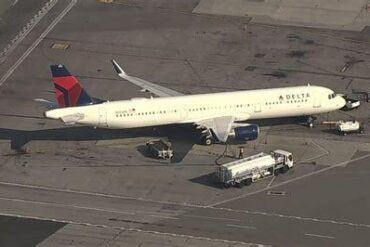
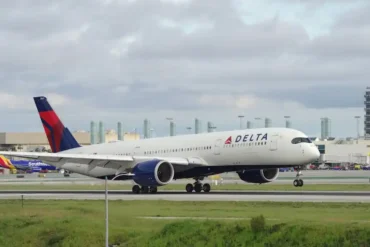
In a high-stakes aviation emergency, Delta Air Lines Flight DL183, an Airbus A330-300 traveling from Rome Fiumicino Airport (FCO) to New York John F. Kennedy International Airport (JFK), made a dramatic emergency landing on July 26, 2025, after experiencing a critical hydraulic system failure mid-flight. The incident, involving 279 passengers, underscores the resilience of modern aviation procedures and the expertise of flight crews when faced with in-flight crises.
The Emergency: Hydraulic System Failure Over the Atlantic
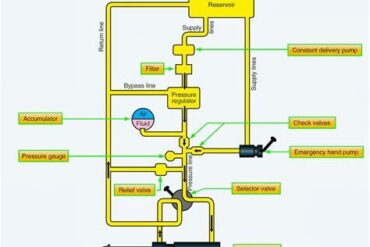
The flight, operated by an A330 registered as N804NW, had been uneventful during its transatlantic journey until a malfunction in one of its primary hydraulic systems occurred while cruising over the Atlantic. This failure critically disabled nose wheel steering and necessitated manual deployment of the landing gear, two essential functions typically handled by hydraulic power.
Hydraulic system failures in large commercial jets are rare but particularly concerning due to their impact on flight-critical systems. The crew, upon identifying the fault, swiftly declared an emergency with Boston Center air traffic control. This proactive measure ensured that ground teams and controllers had adequate time to prepare for an extraordinary arrival at JFK.
Air Traffic Coordination: Precision Under Pressure
Communication between the flight crew and air traffic controllers was seamless throughout the ordeal. Upon declaring the emergency, the pilots worked closely with ATC to chart a safe and controlled descent toward JFK. The crew specifically requested emergency response units to be positioned upon landing, a precautionary step considering the inability to taxi and the increased risk during touchdown.
ATC cleared DL183 for a visual approach to Runway 31L, granting the aircraft a 15-mile base-to-final approach. This extended approach gave pilots sufficient time to execute the intricate process of lowering the landing gear manually while maintaining controlled descent speeds. At one point, the final approach speed was briefly increased to 191 knots to maintain optimal traffic sequencing before stabilizing at a standard 145 knots for landing.
Manual Gear Deployment: A High-Stakes Procedure
Deploying the landing gear manually was one of the most delicate aspects of this emergency. Normally hydraulically powered, the gear’s manual release system is a backup designed precisely for these situations. The process requires careful timing, precision, and coordination between pilots to ensure all components lock into place.
With nose wheel steering inoperative, the pilots also had to prepare for the challenge of landing a heavy widebody aircraft that would be unable to maneuver on the ground without external assistance. The flight deck’s crew resource management ensured every checklist item was executed methodically, emphasizing safety above all.
Touchdown at JFK: A Controlled End to a Tense Flight
After an intense approach, Delta DL183 touched down safely on Runway 31L at JFK. Emergency response units, including firefighting and medical teams, were already stationed along the runway, prepared for any contingency. Despite the aircraft’s inability to steer post-landing, the touchdown itself was smooth, with braking systems performing normally.
As anticipated, the aircraft required assistance to clear the runway. A tug vehicle was dispatched immediately to tow the A330 to its designated gate area. Thanks to the professionalism of the crew and the ground teams, the process was executed efficiently, and passengers were able to disembark without incident.
Passenger Experience and Safety Measures
Throughout the incident, the cabin crew kept passengers well-informed, mitigating panic and maintaining calm during the unfolding emergency. Passengers reported that the crew’s composure was reassuring, a reflection of Delta’s emphasis on emergency preparedness. Importantly, no injuries were reported among the 279 passengers or crew members onboard.
The successful management of this situation highlights the importance of rigorous emergency training for flight crews and demonstrates how effective communication between cockpit, cabin, and ground personnel can prevent potential disaster.
The Role of Technology and Training in Crisis Management
Modern aviation safety is heavily reliant on real-time communication and precision technology, both of which played crucial roles in this emergency. The use of Precision Approach Path Indicator (PAPI) lights assisted the crew during the final alignment, and robust transatlantic coordination between ATC centers facilitated a safe descent.
The incident also reaffirms the value of advanced cockpit design and the Airbus A330’s redundant safety systems, which allowed pilots to retain essential flight functions despite the hydraulic failure. Crew resource management—a core aspect of airline training—was critical to ensuring a systematic approach to problem-solving in the cockpit.
Investigating the Failure: Next Steps
As with any major in-flight emergency, this incident will undergo thorough review by both Delta Air Lines and the National Transportation Safety Board (NTSB). Investigators will examine the root cause of the hydraulic failure, which could involve components such as hydraulic pumps, actuators, or associated lines. Findings from this investigation will be pivotal in enhancing maintenance protocols and preventing similar events in the future.
While mechanical malfunctions remain rare in commercial aviation, this case serves as a reminder of the ongoing need for stringent maintenance programs and continuous training to ensure crews are prepared for any contingency.
A Testament to Professionalism and Coordination
The safe conclusion of Delta Flight DL183’s journey underscores the exceptional skill of the flight crew, the unwavering support of air traffic controllers, and the rapid deployment of emergency services at JFK. Each party played a vital role in transforming what could have been a catastrophic situation into a controlled and injury-free landing.
This emergency landing exemplifies the layered safety culture of modern aviation, where aircraft design, pilot expertise, ATC collaboration, and ground response systems converge to protect lives.
Looking Ahead: Lessons for the Aviation Industry
As the investigation progresses, the aviation community will draw lessons from this incident to refine emergency response procedures and strengthen technical systems. For passengers, the event serves as a reassurance that even in worst-case scenarios, commercial aviation remains one of the safest modes of travel thanks to rigorous planning and the professionalism of those at the controls.
Ultimately, the safe landing of Delta Flight DL183 stands as a remarkable example of aviation resilience, demonstrating that in moments of crisis, preparation, teamwork, and cutting-edge technology can make the difference between tragedy and triumph.