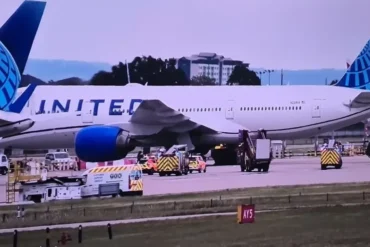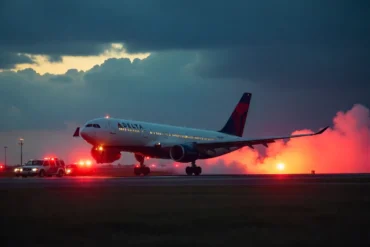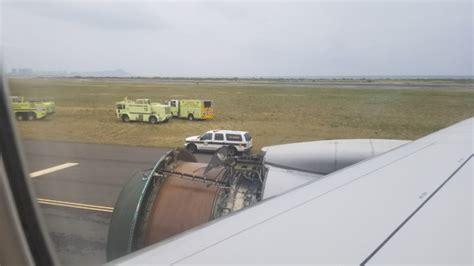
On May 31, 2025, a routine United Airlines flight from San Francisco to Sydney was abruptly interrupted when an engine failure forced the aircraft to make an emergency landing in Honolulu, Hawaii. The long-haul flight, operated by a Boeing 777-200ER, was mid-journey across the Pacific when the flight crew declared an emergency and rerouted the aircraft to Daniel K. Inouye International Airport (HNL).
Emergency Mid-Ocean: Engine Trouble Over the Pacific
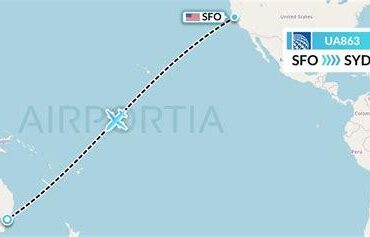
Flight UA863 departed San Francisco International Airport (SFO) at 08:31 UTC, bound for Sydney Kingsford Smith Airport (SYD). Approximately five hours into the transpacific journey, the aircraft experienced a technical malfunction that, according to early but unconfirmed reports, stemmed from a failure in one of its General Electric GE90 engines.
Flight data from FlightRadar24 shows a distinct turn in the flight path as the aircraft began its diversion toward Hawaii, a critical decision given its remote mid-Pacific location. The pilot made the emergency landing at 14:27 UTC, where emergency response teams were on standby at Honolulu Airport.
Aircraft Details: Aging Jet With Proven History
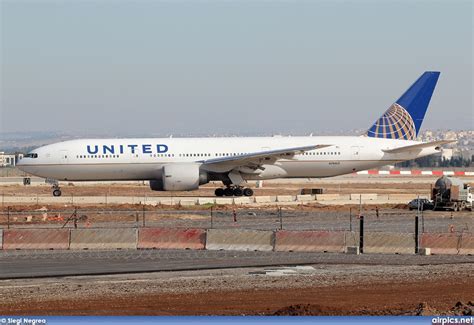
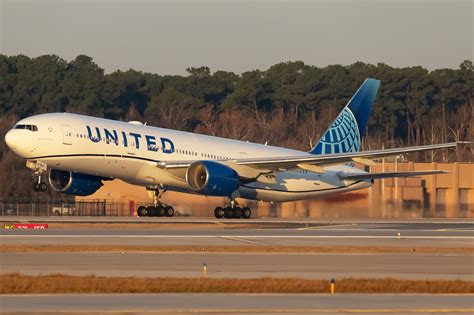
The aircraft in question, a Boeing 777-222ER bearing the registration number N78002, is a 26.7-year-old twin-engine widebody jet. While still certified for commercial use, its age places it among the older aircraft in United’s international fleet. According to Planespotters.net, the aircraft has reliably served high-demand international routes and is powered by two GE90-94B engines, renowned for their thrust and range capabilities but also requiring consistent maintenance as they age.
Though aged, the aircraft had no prior significant maintenance issues reported publicly before this incident. However, its long service life raises critical questions about engine wear and the importance of stringent oversight for aircraft nearing the upper thresholds of commercial use.
A Rapid Descent to Safety: Pilot Execution and ATC Coordination
Upon detecting the issue, the flight crew acted decisively, contacting air traffic control and requesting immediate clearance to divert. With limited options over the Pacific, the choice of Honolulu was both logical and necessary, providing full emergency support capabilities and facilities for widebody aircraft.
Passengers onboard UA863 remained largely calm during the incident, according to preliminary social media posts. There was no reported cabin depressurization or loss of communication, and the descent appeared orderly and controlled. The pilot reportedly kept passengers informed of the developing situation, a key component in maintaining order during in-flight emergencies.
Similar Precedent: January 2025 Engine Incident
This event is not isolated. Earlier this year, on January 3, 2025, another United Airlines Boeing 777-200ER, operating flight UA1828 from Orlando (MCO) to Chicago O’Hare (ORD), encountered engine failure roughly one hour after takeoff. The aircraft, registered as N221UA, diverted to Hartsfield-Jackson Atlanta International Airport where it landed safely.
That aircraft was also an aging 23.6-year-old Boeing 777, powered by Pratt & Whitney PW4000 engines. In that case, too, the flight crew initiated standard emergency procedures, made a timely descent, and landed the aircraft without incident. All passengers disembarked safely.
The two incidents—occurring within five months—raise ongoing concerns about engine reliability and fleet aging across major U.S. carriers. Although the aircraft types and engine manufacturers differ, both underscore the increasing pressure on legacy widebody aircraft as they approach three decades of service.
Implications for United Airlines and FAA Scrutiny
United Airlines, based in Chicago, operates one of the world’s largest fleets of Boeing 777s, particularly for long-haul intercontinental routes like San Francisco to Sydney. As of 2025, these routes demand endurance and reliability from both crew and aircraft. While the Boeing 777-200ER remains a workhorse in many international fleets, incidents such as this prompt renewed scrutiny over operational reliability, especially for aircraft over 25 years old.
The Federal Aviation Administration (FAA) has not yet issued a public statement but is expected to open an investigation. FAA inspections will likely focus on maintenance logs, engine performance history, and crew response protocols. The aircraft will remain grounded in Honolulu until a full diagnostic inspection can be completed.
Additionally, the National Transportation Safety Board (NTSB) may also participate, particularly if structural or design-related flaws are suspected in the engine or airframe.
Passenger Experience: Calm Response Amid Uncertainty
Although there were no injuries reported, passengers were understandably shaken. Social media posts suggest the crew communicated clearly throughout the ordeal. One passenger noted: “The pilot calmly explained the issue and told us we’d be landing in Honolulu. It wasn’t what we planned, but we’re thankful everyone’s okay.”
United Airlines arranged overnight accommodations for passengers and is reportedly coordinating rebooking on alternative flights to Sydney. However, with limited direct connections from Honolulu to Australia, passengers are expected to face significant delays.
Aircraft Aging and the Case for Fleet Renewal
This latest event spotlights a growing concern among aviation safety experts: the aging of widebody aircraft in commercial service. The Boeing 777-200ER, while a historically reliable model, is increasingly being replaced by more modern aircraft like the Boeing 787 Dreamliner and Airbus A350, both offering improved fuel efficiency, lower emissions, and modern safety systems.
United Airlines has placed orders for next-generation widebodies, including the Boeing 787-9, but still relies heavily on its older 777 fleet for ultra-long-haul operations. The decision to retain older aircraft, despite rising maintenance demands, is influenced by global supply chain backlogs, delivery delays, and cost-saving measures.
This incident may act as a catalyst for United and other legacy carriers to accelerate fleet modernization or retire aging aircraft sooner than previously planned. Maintenance alone may no longer offset the increased risk posed by decades-old jets operating strenuous long-haul routes over water.
Conclusion: A Controlled Outcome With Unsettled Questions
While no injuries were reported, and the flight landed safely, the emergency diversion of United flight UA863 raises important questions regarding fleet age, engine reliability, and operational readiness. The professionalism of the flight crew and the successful emergency procedures highlight the resilience of aviation protocols, but the event adds to a growing list of mechanical incidents involving older Boeing 777 aircraft.
As regulators begin to examine this incident, and engineers analyze the failed engine, one thing is clear: safety remains paramount, but the age of aircraft is becoming a more central topic in the commercial aviation industry. Until full diagnostics and investigations are released, the aviation community and flying public alike await further clarity on what caused this mid-ocean emergency—and what steps will be taken to prevent the next one.