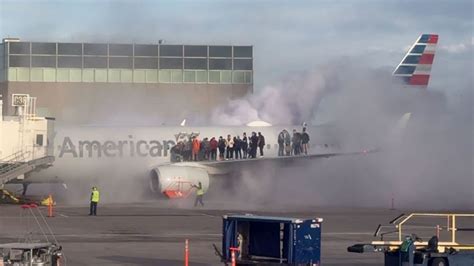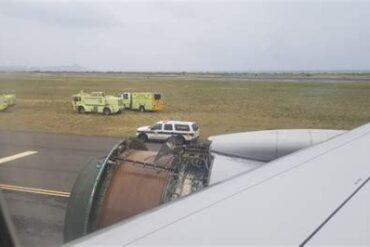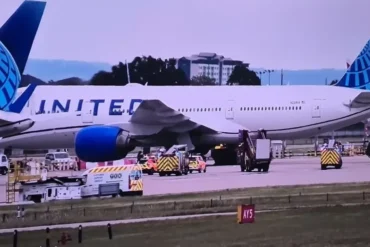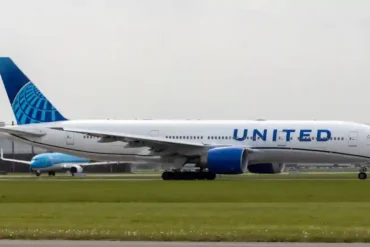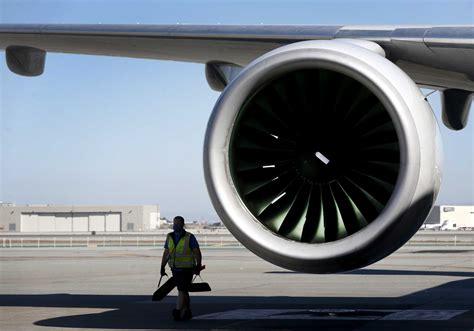
United Airlines faced a dramatic and potentially catastrophic event on Monday when Flight UA889, a scheduled route from Beijing Capital International Airport to San Francisco International Airport, was abruptly canceled following a serious engine fire during takeoff. The incident, involving a Boeing 777-200 aircraft, has drawn widespread attention due to the dangerous nature of the mechanical failure and the swift, professional response that averted any injuries.
Engine Catches Fire Moments Before Takeoff
At approximately 4:30 p.m. local time, Flight UA889 began its standard departure procedure. As the aircraft accelerated down the runway, the right engine suddenly ignited, sending visible flames and smoke trailing from the engine casing. According to initial reports from Global Times, the onboard systems detected an abrupt loss of power, prompting the flight crew to abort takeoff immediately.
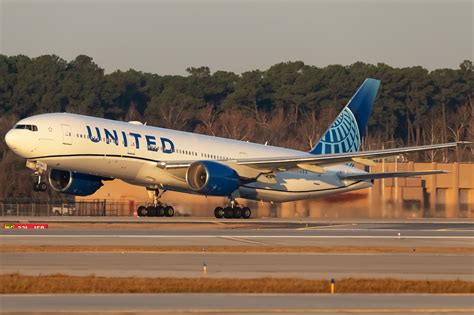
United Airlines later confirmed that the engine failure occurred while the aircraft was still on the ground, allowing pilots to execute a high-speed rejected takeoff maneuver—a standard but complex safety protocol employed when a critical failure occurs at high speed during the takeoff roll. The aircraft came to a controlled and safe stop, with no reported injuries among the 229 passengers and crew onboard.
Rapid Emergency Response Averts Disaster
Once the aircraft stopped on the runway, emergency vehicles swiftly approached and began fire suppression efforts on the smoldering engine. Beijing Capital International Airport’s fire crews were on the scene within moments, following their internationally regulated response protocol. Passengers were safely evacuated using shuttle buses, rather than emergency slides, which was made possible by the aircraft remaining intact and upright on the tarmac.
Airport officials later disclosed that preliminary assessments pointed to a mechanical malfunction that may have impacted both engines, though the full scope of the failure remains under investigation. This raises potential questions about systemic issues, either within the aircraft’s design or its maintenance cycle.
Passenger Experience: Fear, Relief, and Confusion
Passenger accounts describe a moment of confusion and panic as the cabin filled with the smell of smoke and the aircraft jerked to a halt. Some travelers reported seeing flames reflected in the windows, while others initially thought the jolt was a routine braking maneuver. Crew members acted quickly and professionally, instructing passengers to remain calm and preparing for a possible evacuation, which fortunately was not necessary.
“We just heard a loud pop and then saw this bright flash outside the window,” said Lena Waters, a San Francisco resident returning home from a business trip. “The plane came to a sudden stop, and you could tell the crew was immediately on high alert.”
Airline Response and Customer Support
United Airlines was quick to enact its contingency protocols, providing hotel accommodations, meal vouchers, and rebooking options to the stranded travelers. A replacement flight, UA3045, was scheduled to depart Tuesday at 5:30 p.m. local time, and passengers were given priority rebooking and updates via mobile notifications and customer service desks within the airport.
“Safety is our highest priority,” said a United Airlines spokesperson in an official statement. “We are grateful to our flight crew and airport emergency teams for their quick response and professionalism.”
Boeing 777 Safety Record and Previous Incidents
The Boeing 777-200 has long been considered one of the most reliable wide-body jets in commercial aviation, but recent incidents have spotlighted vulnerabilities in engine systems. In February, another United flight—UA1382 from Houston to New York—was halted during takeoff due to engine smoke and fire, prompting an emergency evacuation.
These repeated incidents involving United’s 777 fleet have triggered heightened scrutiny from aviation regulators and airline safety analysts. In both cases, quick decision-making by the flight crew and the aircraft’s robust design played a pivotal role in preventing tragedy. However, the pattern of engine-related anomalies is raising questions within the industry.
“Two incidents in such a short span point to either maintenance lapses or potential engine component defects,” commented Dr. Emilia Roth, an aviation systems analyst at the International Air Transport Research Bureau. “It’s imperative that these failures are fully dissected and communicated transparently.”
Aviation Authorities Launch Investigation
Both Chinese aviation authorities and the U.S. Federal Aviation Administration (FAA) have announced coordinated investigations into the incident. The Civil Aviation Administration of China (CAAC) has initiated a technical review, which will include examining engine maintenance logs, black box data, and crew testimonies. The FAA has dispatched safety liaison officers to work alongside Chinese counterparts.
The engine in question, reportedly a Pratt & Whitney PW4000 series, has been previously involved in a handful of high-profile failures over the past decade. This particular line of engines has been subject to multiple airworthiness directives, most notably following the 2021 Denver incident, where a United 777 suffered an uncontained engine failure mid-flight.
Industry-Wide Implications and Traveler Confidence
This latest event underscores the pressing need for comprehensive oversight and proactive maintenance protocols. With global air travel rebounding post-pandemic, traveler confidence hinges heavily on the perceived safety of the aircraft they board. High-visibility incidents like this not only rattle consumers but also place enormous pressure on airlines and manufacturers to ensure transparency and implement corrective measures.
United Airlines has not grounded its remaining 777 fleet as of this report, but analysts anticipate internal fleet reviews and potential temporary service suspensions on routes involving older aircraft models until the investigation yields actionable conclusions.
Conclusion: A Wake-Up Call for Modern Aviation
While no injuries occurred, and the professional handling of the incident reflects the resilience of aviation safety protocols, the fire aboard UA889 is a sobering reminder of the stakes involved every time an aircraft takes to the sky. This event will likely serve as a case study in pilot decision-making, mechanical vulnerability, and emergency coordination for years to come.
As the investigation unfolds, both passengers and industry leaders will watch closely, hoping for answers—and reassurances—that the skies remain as safe as we trust them to be.