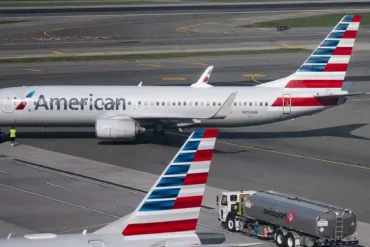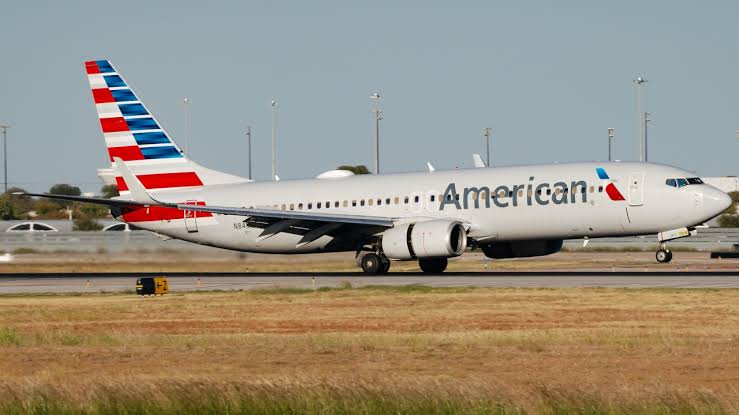
A routine early morning flight from Fresno Yosemite International Airport (FAT) to Dallas/Fort Worth International Airport (DFW) was canceled on Friday after an American Airlines Boeing 737-800 experienced a suspected engine backfire shortly after pushback. The incident occurred moments after passengers had boarded and the aircraft began moving away from the gate, triggering a precautionary response from airport emergency crews.
Operating as American Airlines Flight AA2653, the aircraft had pushed back just two minutes behind its scheduled departure time of 5:41 AM. As the aircraft prepared to taxi toward the runway, pilots received an alert indicating a possible engine fire. Following standard safety procedures, the crew immediately stopped the departure process and returned the aircraft to the gate while emergency personnel inspected the situation.
The Fresno Fire Department responded to the aircraft after the warning was reported. Although the aircraft was seen surrounded by emergency vehicles, firefighters did not discover visible flames or smoke coming from the Boeing 737-800. Officials later suspected that the event may have been related to an engine backfire rather than an active fire situation.
American Airlines Boeing 737 Returns to Gate After Engine Warning
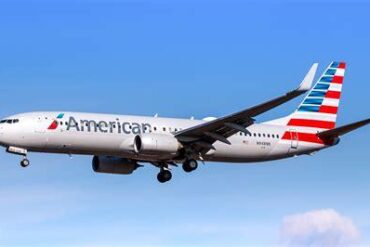
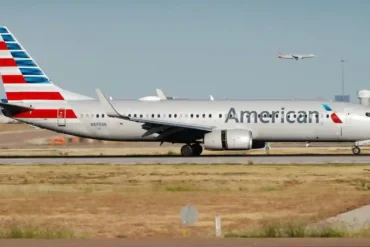
The aircraft involved in the incident was a 13.4-year-old Boeing 737-800 registered as N920NN. The aircraft, carrying serial number 31165, was delivered to American Airlines on March 14, 2013. Before the Fresno incident, flight tracking data showed that the aircraft had operated regularly without major operational disruptions.
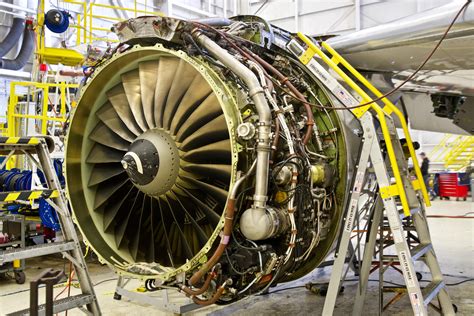
The narrowbody jet is configured to carry 172 passengers, including 16 seats in Domestic First Class and 156 seats in the Main Cabin. It is powered by two CFM International CFM56-7B24 engines, one of the most widely used engine models on Boeing 737 Next Generation aircraft around the world.
After the aircraft returned to the gate, passengers safely exited the plane and were rebooked onto alternative services. No injuries were reported among passengers, crew members, or emergency responders. The aircraft remained on the apron at Fresno while maintenance teams investigated the cause of the unusual engine event.
What Causes an Aircraft Engine Backfire?
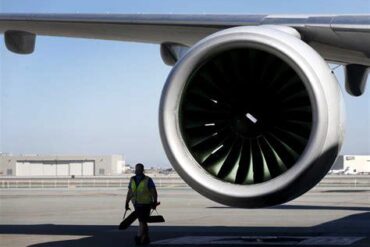
An engine backfire is a rare occurrence where unburned fuel ignites outside the normal combustion area of an engine. While the term is more commonly associated with automotive engines, similar events can occur in aircraft powerplants under certain abnormal conditions.
Several technical issues can contribute to an engine backfire, including incorrect fuel-air mixtures, ignition timing problems, malfunctioning components, or fuel system irregularities. In more serious cases, an uncontrolled ignition event can damage exhaust components or other engine parts.
However, a reported backfire does not automatically indicate severe engine damage. Modern commercial aircraft engines are designed with multiple monitoring systems that allow flight crews and maintenance personnel to identify abnormal conditions quickly. In this case, the warning system prompted a cautious response before the aircraft entered the runway environment.
Fresno to Dallas Flight Disrupted After Safety Precaution
Flight AA2653 was scheduled to operate American Airlines’ daily nonstop service between Fresno and Dallas/Fort Worth, a route connecting California’s Central Valley with the airline’s largest hub in Texas. The flight typically takes around three and a half hours and covers approximately 1,313 miles (2,113 kilometers).
Fresno Yosemite International Airport serves as an important transportation hub for California’s San Joaquin Valley and provides access to popular destinations including Yosemite National Park, Kings Canyon National Park, and Sequoia National Park. The airport handles services from several major airlines, with American Airlines operating nonstop flights to Dallas/Fort Worth and Phoenix Sky Harbor International Airport.
According to transportation data, American Airlines is the largest mainline carrier at Fresno, accounting for a significant portion of airport operations. Regional airlines also play a major role at the airport, operating flights on behalf of several major US carriers.
Investigation Continues Into Boeing 737-800 Incident
The cancellation of AA2653 highlights the strict safety procedures followed by commercial airlines when aircraft systems provide unexpected warnings. Rather than continuing toward departure, the flight crew chose the safest option by returning to the gate and allowing emergency teams and maintenance personnel to evaluate the aircraft.
At this stage, American Airlines has not confirmed the exact cause of the engine warning or whether any mechanical damage occurred. Maintenance inspections will determine whether the Boeing 737-800 requires repairs before returning to service.
For passengers, the disruption resulted in delays and rebooking rather than a dangerous situation. The quick response from the flight crew, airport emergency services, and airline staff ensured that the suspected engine problem was handled safely while investigators worked to understand what caused the warning.