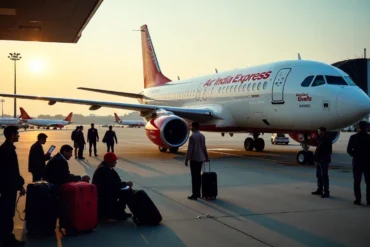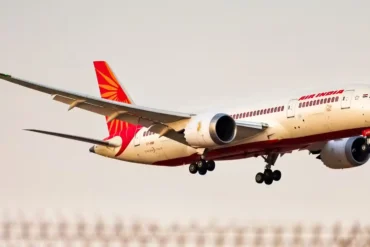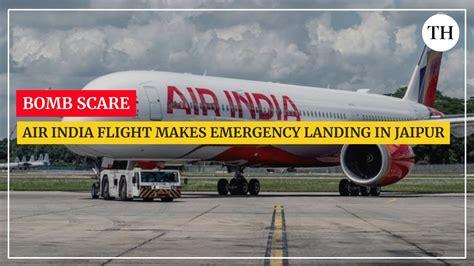
Air India Flight AI612, operating a routine domestic route from Jaipur to Mumbai, was forced to execute an emergency return to Jaipur International Airport just 18 minutes after takeoff on Saturday, July 26, 2025. The flight crew made the precautionary decision after identifying a suspected technical issue, thereby reaffirming Air India’s longstanding commitment to passenger safety and strict adherence to aviation protocols.
Emergency Decision: A Precautionary Return Based on Protocol
The incident began shortly after Flight AI612, a scheduled service bound for Mumbai Chhatrapati Shivaji Maharaj International Airport, lifted off from Jaipur International Airport. Within minutes of reaching initial altitude, the flight crew received a possible indication of a technical malfunction in the aircraft’s systems. Although the exact nature of the anomaly was not disclosed publicly, the decision to return was executed in line with international aviation safety standards, which stipulate that even minor technical alerts must be treated with utmost seriousness.
The pilot in command quickly informed Air Traffic Control (ATC) and initiated a return route, following standard operating procedures for such in-flight situations. The flight landed safely in Jaipur, with no reported injuries or distress among the passengers or crew members on board.
Swift Action Underscores Industry-Wide Safety Best Practices
In a statement following the incident, Air India emphasized that the decision to abort the original journey was made in full compliance with the airline’s rigorous safety framework. Such actions are not only routine but expected under international airworthiness guidelines, which mandate that potential risks are eliminated at the earliest opportunity, regardless of the disruption it causes to the flight schedule.
While the aircraft had only been airborne for approximately 18 minutes, the prompt return served as an example of how aviation safety culture prioritizes proactive response over reactive measures. In this case, err on the side of caution was the mantra, and the airline followed through decisively.
Technical Evaluation and Safety Clearance
Once safely on the ground, the aircraft was immediately grounded and subjected to an exhaustive inspection by the airline’s maintenance engineers and ground safety team. The troubleshooting phase involved cross-verification of onboard diagnostics, flight control systems, and environmental checks. Ultimately, the suspected technical issue was determined to be a false alarm, with no faults found in the aircraft’s operational systems.
Following completion of the mandatory safety checks and system diagnostics, Air India’s flight operations team cleared Flight AI612 for service. The flight departed again for Mumbai after a brief but necessary delay, resuming its schedule with reassured passengers and a clean technical slate.
Human Oversight and Technological Systems Working in Tandem
The case of Flight AI612 highlights a fundamental truth in modern aviation: even the most advanced aircraft systems require human oversight to interpret and manage risk appropriately. Despite the use of real-time diagnostic tools, automated alerts, and redundant safety systems, the judgment of the flight crew and ground engineers remains the most critical asset in ensuring passenger safety.
Air India’s seasoned flight crew not only followed protocol but did so with a level of efficiency and professionalism that reflects training, preparedness, and operational discipline. These qualities are paramount in aviation safety and form the bedrock of the airline’s operational philosophy.
Broader Context: Indian Aviation and Technical Incidents in 2025
The incident involving AI612 is not isolated. In fact, it comes within a context of increased reporting of in-flight technical issues across the Indian airline industry. Just two days earlier, an Air India Express flight had to return to Calicut International Airport due to a malfunction in the air conditioning system, further indicating a trend of early and decisive intervention by Indian carriers.
According to recent data released by the Directorate General of Civil Aviation (DGCA), as of July 21, 2025, there have been 183 technical incident reports filed by five major Indian airlines. Notably, Air India and Air India Express together accounted for 85 of these incidents, a statistic that underscores both the technical challenges of modern aviation and the robust reporting culture that Indian carriers are increasingly adopting.
These figures are not necessarily a sign of deteriorating safety; rather, they reflect improved transparency, regulatory compliance, and a willingness to confront potential issues head-on, rather than risk even minor compromise in aircraft safety.
Passenger Perspective: Inconvenience Versus Assurance
While events like these may disrupt travel plans and cause temporary frustration, the underlying priority is always passenger welfare. The precautionary landing of AI612 disrupted schedules, but it ensured that passengers remained safe and that all contingencies were addressed before proceeding further. This is a non-negotiable element of responsible aviation.
Passengers should understand that returning to the departure airport due to a suspected fault is not a sign of weakness in the airline’s system but evidence that the system is functioning exactly as intended. That Air India chose the safer route reflects not only a compliance mindset but also a culture of accountability and transparency.
Looking Ahead: Constant Vigilance and Evolution in Safety Protocols
Air India has emphasized its continued efforts to improve technical diagnostics, enhance crew training, and collaborate closely with aircraft manufacturers and safety regulators. Incidents like AI612’s emergency return are seen not as setbacks but as opportunities to reaffirm and upgrade safety mechanisms.
From flight crew readiness to ground control coordination, the aviation safety ecosystem is constantly being fine-tuned. Air India’s conduct in this instance mirrors international best practices, reinforcing trust in both the airline and the broader aviation framework that governs it.
Aviation Safety in the Era of Increasing Air Traffic
India’s civil aviation sector is experiencing exponential growth, with millions of passengers flying every week. As air traffic increases, the frequency of minor technical alerts may naturally rise, not necessarily as a reflection of poor maintenance, but due to the complexity and density of modern flight operations.
Therefore, the real benchmark for aviation excellence is not the absence of issues but the effectiveness of the response. By this standard, the handling of Air India Flight AI612 stands out as a model case of risk identification, operational discipline, and swift resolution.
Final Reflections: Incident Reinforces Aviation’s Core Ethos
The safe return and eventual departure of Air India Flight AI612 offers a clear reminder of what remains paramount in aviation—uncompromised passenger safety. Despite the false nature of the alert, the airline’s decisive and transparent actions demonstrated how established protocols and well-trained personnel can mitigate perceived risks swiftly and effectively.
For both the traveling public and the aviation community, incidents like these emphasize the non-negotiable nature of safety-first thinking. Passengers may have lost some time, but they gained the reassurance that no shortcuts were taken and every system—technical or human—performed exactly as expected.
In an industry where seconds count and decisions carry enormous consequences, Air India’s handling of Flight AI612 represents not just procedural compliance, but a deep and enduring commitment to preserving the trust and lives of those it serves.