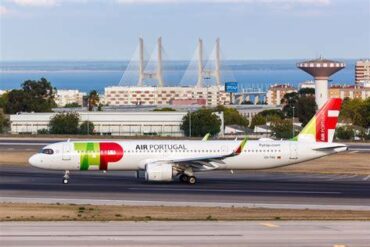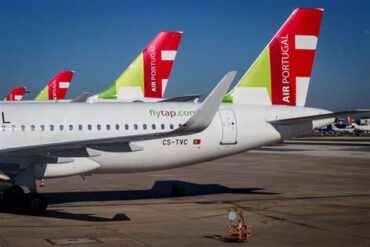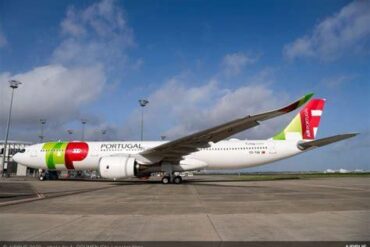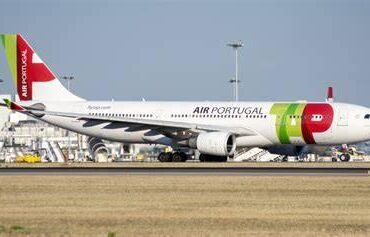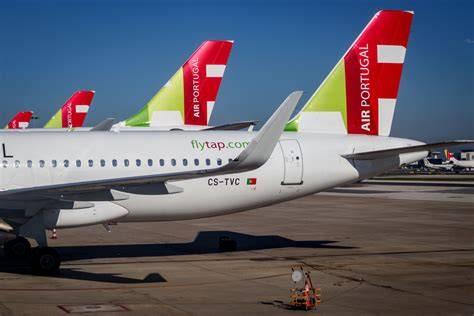
TAP Air Portugal is preparing a significant expansion of its transatlantic footprint for summer 2027, with the Star Alliance member planning a new nonstop service linking Porto’s Francisco Sá Carneiro Airport (OPO) to Dulles International Airport (IAD) outside Washington DC. The Portuguese flag carrier will operate the long-haul link three times weekly using its Airbus A321LR fleet, a deliberately pragmatic choice that keeps capacity aligned with a secondary-market route carrying strong but not widebody-scale demand.
TAP Air Portugal’s New US Route Kicks Off With the Summer Schedule
According to AeroRoutes, the Porto to Washington Dulles route begins on March 30, 2027, timed precisely to the IATA summer schedule switchover, when airlines reshuffle slots, aircraft assignments and seasonal frequencies across their networks. Flights will run on Tuesdays, Thursdays and Saturdays, giving travelers a clean three-day rhythm for both eastbound and westbound planning. The westbound sector from Porto to Dulles carries a maximum block time of eight hours 35 minutes, placing the city pair firmly in the 9-hour US nonstop bracket that TAP is now building its Porto strategy around.
The schedule itself reveals how carefully TAP has matched departure windows to connecting flows and aircraft utilization. On Saturdays, flight TP263 leaves Porto at 5:10 PM and lands at Dulles at 10:45 PM local time. The Tuesday and Thursday departures move later, pushing back to 7:20 PM with a 10:55 PM arrival. In every case the Airbus A321LR faces a tight 90-minute turnaround on the ground, before the 7.5-hour return leg, TP264, departs at 10:15 PM on Saturdays and 12:25 AM on Wednesdays and Fridays. That compressed ground time is a hallmark of narrowbody long-haul economics, where aircraft productivity drives profitability.
Widebody Comfort Concerns Meet a Premium-Heavy Narrowbody Cabin
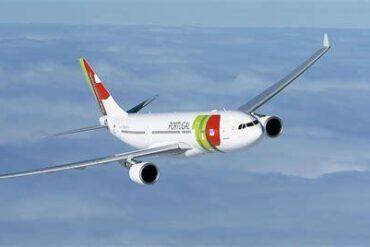
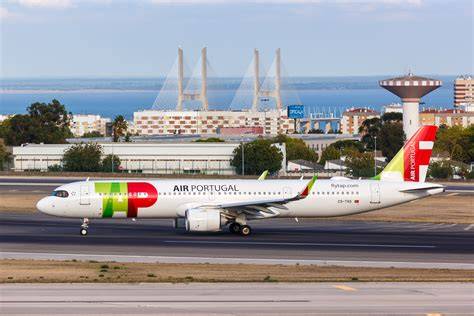
The A321LR is a long-range narrowbody twinjet, and TAP uses it exclusively for its transatlantic services out of Porto. Its extended range and materially lower capacity than the carrier’s Airbus A330 family widebodies make it an ideal fit for routes with genuine demand that cannot consistently fill a twin-aisle jet. That lower seat count protects load factors and yields on thinner city pairs, but it also raises legitimate comfort concerns on flights approaching nine hours. TAP addresses part of that tension at the front of the aircraft, where 16 business class flatbeds sit in an alternating 2-2 and 1-1 layout, the latter delivering sought-after single “throne” seats with direct aisle access on both sides.
Behind the premium cabin, 155 economy seats are arranged in the classic 3-3 configuration, a familiar formula for cost-conscious transatlantic travelers who prioritize a direct routing over cabin width. The configuration reflects the aircraft’s true mission: TAP’s A321LRs are relatively premium-heavy for a narrowbody, and that density of flatbeds signals exactly which passenger TAP expects to win on the Porto–Washington corridor, namely the business traveler trading connecting itineraries for a nonstop.
Boston and Newark Show the Porto Strategy Already Works
TAP already operates two transatlantic routes from Porto, both serving the East Coast of the United States with the same A321LR hardware. Cirium scheduling data shows the airline connects Portugal’s second-largest city with Boston Logan International Airport (BOS) and Newark Liberty International Airport (EWR). The Boston service runs just twice weekly in winter but doubles to four flights a week when the summer schedule takes effect in late March. Newark is served more or less daily throughout the year, with a slight dip to six weekly flights in February.
Newark carries particular strategic weight because it is a hub for fellow Star Alliance member United Airlines, enabling TAP to feed connecting traffic across the United States. Washington Dulles plays a nearly identical role, and that alliance logic matters just as much as local demand in explaining why Porto gets a third US destination. The route also arrives amid major corporate change: Lufthansa has officially signed a $1.2 billion deal to purchase a 44.9% stake in TAP Air Portugal, positioning Lisbon as its seventh hub and targeting Latin American growth.

Lisbon’s Slot Crunch Makes Porto Growth Essential
TAP’s primary hub is Humberto Delgado Airport (LIS) in Lisbon, and its transatlantic network from the Portuguese capital is far larger, reaching nine US destinations plus two in Canada. Montreal is served three times weekly and Toronto eight times weekly this November, while Newark leads the US portfolio with an average of 13 weekly departures, followed by Boston with 12 and Miami with 11. Less-than-daily flights connect Lisbon with Chicago, Washington Dulles, Los Angeles, New York-JFK, Orlando and San Francisco.
Yet slot restrictions at Lisbon constrain that growth. With runway and terminal capacity heavily allocated, adding frequencies at Humberto Delgado is difficult and often commercially impossible. Porto therefore becomes the release valve: a growing airport with available slots, a catchment of millions, and proven appetite for direct US flights. The Porto to Washington Dulles route extends that playbook into the American capital region and gives travelers from northern Portugal a genuinely competitive nonstop option, while TAP hedges its exposure to Lisbon’s bottlenecks and diversifies its long-haul revenue base ahead of Lufthansa’s investment taking hold.