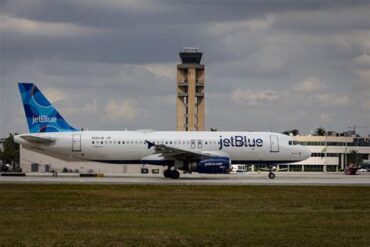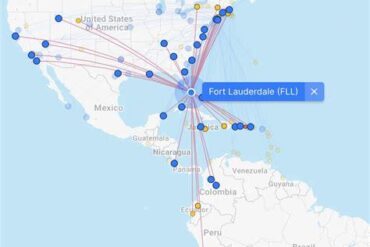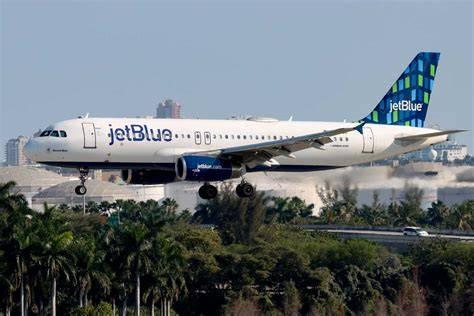
JetBlue Airways has confirmed a major expansion of its Fort Lauderdale-Hollywood International Airport (FLL) footprint with the launch of two new daily international services to Grand Cayman and Tegucigalpa, Honduras, beginning in February 2027. The announcement, made on Thursday, raises JetBlue’s international reach from FLL to a total of 20 destinations, cementing the airport’s transition from a leisure-heavy springboard into a genuine gateway to Latin America and the Caribbean. The timing matters as much as the routes themselves. These additions arrive barely nine months after Spirit Airlines’ collapse in May, and they represent the clearest signal yet that JetBlue intends to absorb the void its former rival left behind rather than simply defend its existing turf. For South Florida travelers, the practical effect is a wider menu of nonstop options at introductory fares; for the airline, it is a calculated bet that demand in the region still runs ahead of supply.
New Routes, Launch Dates and Intro Fares
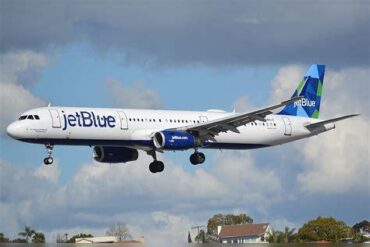
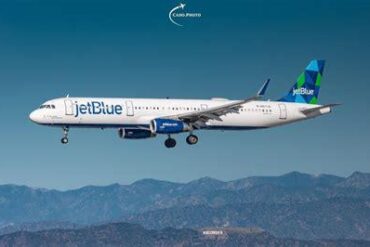
The Grand Cayman service commences on February 23, 2027, linking FLL with Owen Roberts International Airport (GCM). Two days later, on February 25, JetBlue begins flying to Palmerola International Airport (XPL) in Comayagua, the facility that serves the Honduran capital of Tegucigalpa. Both routes will operate daily year-round using a mix of Airbus A220 and A320 family aircraft, an efficient pairing that suits the stage lengths involved. Departures from Fort Lauderdale are timed for mid-morning to midday, with the Grand Cayman flight leaving at 12:20 PM and returning from GCM at 3:10 PM, while the Honduras service departs FLL at 10:05 AM and returns from XPL at 1:05 PM. Introductory one-way fares start at $99 to Grand Cayman and $183 to Honduras, pricing designed to seed the market quickly and build local awareness in the weeks before launch.
Why Honduras Is a Genuine First
The Palmerola route carries particular strategic weight because it marks JetBlue’s first-ever service to the Tegucigalpa area, complementing the carrier’s existing operation to San Pedro Sula. That pairing gives JetBlue coverage of Honduras’ two most significant commercial and diaspora corridors, and it aligns with the visiting friends and relatives (VFR) traffic that has historically anchored South Florida’s Central American links. Daniel Shurz, JetBlue’s Senior Vice President of Network Planning, framed the move around that customer base, saying the airline is “grateful for the way customers across South Florida continue to embrace JetBlue” and is “committed to delivering even more of the destinations and travel options they’re looking for.” He added that the new service to Honduras and Grand Cayman strengthens “Fort Lauderdale’s role as a key gateway to Latin America and the Caribbean.”
Grand Cayman Rounds Out JetBlue’s Caribbean Playbook
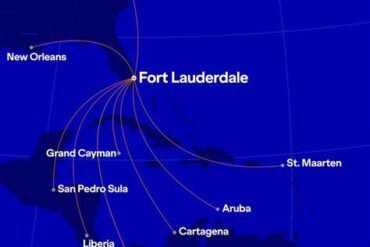
Grand Cayman is technically a return rather than a debut. JetBlue introduced the island in December 2025 through short-lived service, and the 2027 relaunch suggests the carrier has reworked the schedule economics rather than abandoned the market. The island joins a Caribbean network at FLL that has been rebuilt at remarkable speed, with restored and new services to Aruba, Sint Maarten, Cartagena, Liberia, and San Pedro Sula all launched or restored in December 2025. JetBlue is also layering in seasonal capacity: temporary daily flights to Port of Spain will operate between January 29 and February 15 to capture Trinidad and Tobago’s Carnival, one of the region’s most reliable demand spikes. Combined with recent additions to Barranquilla and Cali in Colombia, JetBlue expects to exceed 150 daily departures at FLL during winter peaks, its largest schedule in the airport’s history.
The Numbers Behind the Fort Lauderdale Push
The scale of JetBlue’s international build-out at FLL is best understood through Department of Transportation data. An analysis of DOT T-100 International Segment figures through August shows the airline offered almost 1.7 million international seats in the first eight months of the year, a 33.4% year-on-year increase. That growth is not merely a matter of adding frequency to familiar markets. Guayaquil exploded 451.4% to 94,000 seats, Santiago in the Dominican Republic expanded from 812 seats to 91,190, and Guatemala City climbed 124.0% to 81,648. Santo Domingo rose 32.2% to 126,984, San José in Costa Rica gained 9.2% to 94,218, and Nassau edged up 9.3% to 225,434. Newer entrants such as Liberia, Cartagena, Sint Maarten, San Pedro Sula, Aruba, and Grand Cayman all posted meaningful seat counts almost from a standing start.
Where JetBlue Is Trimming to Grow
Expansion at FLL has not been uniform, and JetBlue’s network planners have been willing to withdraw capacity where returns disappointed. Montego Bay recorded the steepest decline, falling 33.9% to 131,016 seats, while Kingston dropped 12.3% to 212,390, Punta Cana slipped 13.1% to 124,689, and Cancún declined 8.8% to 149,232. Those reductions reflect a deliberate reallocation rather than a retreat: the carrier is concentrating aircraft where demand is strongest and diversifying away from a small cluster of saturated leisure markets. The net effect is a Fort Lauderdale base that is broader, more resilient, and less exposed to a single destination’s seasonal swings.
Load Factors Prove Demand Has Not Peaked
The most persuasive evidence that JetBlue has room to keep growing sits in the post-Spirit performance data. Comparing May through August 2026 with the same period a year earlier, international seat capacity at FLL rose 33.0% from 716,613 to 953,134, yet passenger traffic climbed faster still, surging 45.8% from 568,837 to 829,330. Average load factors jumped from 79.4% to 87.0%, an improvement of 7.6 percentage points. That figure outpaces Delta Air Lines’ roughly 85% average on international routes and makes Fort Lauderdale the top-performing base in JetBlue’s entire network. Adding capacity while simultaneously filling a larger share of it is the clearest sign that unmet demand remains.
Loyalty and Ancillary Revenue Ride Along
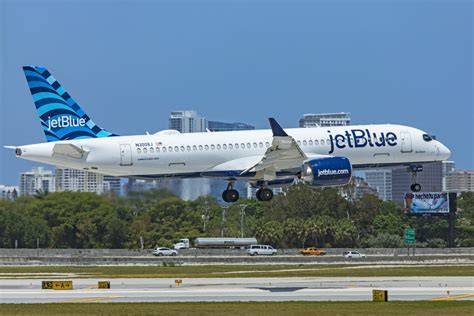
Volume growth of this kind carries commercial benefits well beyond the ticket counter. JetBlue reported 20% year-on-year loyalty revenue growth in Q3 2026 and a 55% increase in co-branded credit card acquisitions across South Florida, both of which flow directly from a denser, more attractive route map. A traveler who can reach Grand Cayman or Tegucigalpa nonstop is far likelier to concentrate spend on a single airline’s loyalty program than one forced to connect. The new routes therefore function as a customer acquisition engine as much as a capacity story, deepening relationships in a market where JetBlue now holds the leading position.
What the 2027 Expansion Signals
Two daily flights and two modest fare teasers will not by themselves determine JetBlue’s fortunes in South Florida, but the pattern they complete is instructive. Since Spirit’s collapse on May 2, JetBlue has moved from opportunist to incumbent at FLL, reaching 20 international destinations, pushing past 150 daily departures, and posting load factors that lead its own network. The unresolved question is whether rapid passenger growth can be converted into stronger yields and durable commercial returns once introductory pricing fades. For now, the Grand Cayman and Honduras launches suggest JetBlue’s answer is to keep expanding until the market tells it otherwise, and travelers in South Florida stand to benefit from that ambition in the meantime.